CM Dhami Credits PM Modi for Uttarakhand Road Expansion
Synopsis
Chief Minister Pushkar Singh Dhami, through the official CMO handle, credited PM Narendra Modi's leadership for unprecedented road connectivity growth in Uttarakhand, highlighting All Weather Roads and expressways as making travel faster, safer, and more accessible across the Himalayan state.
Key Takeaways
The Chief Minister's Office of Uttarakhand quoted CM Dhami crediting PM Narendra Modi for the state's road connectivity expansion on 26 June 2026 .
The statement highlighted All Weather Roads, expressways , and other road projects as making travel more convenient, safer, and faster.
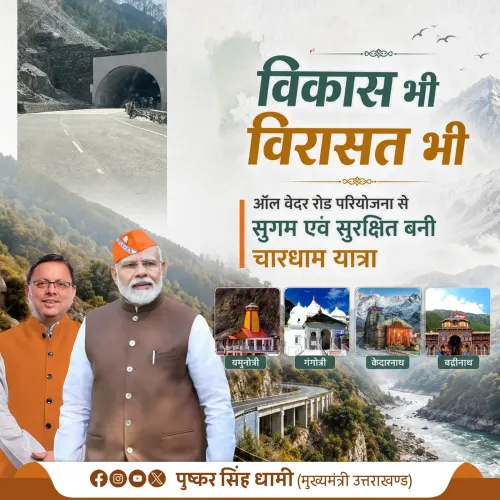
The Char Dham All Weather Road project, approved in principle in 2016 , targets year-round access to Badrinath, Kedarnath, Gangotri , and Yamunotri .
Bharatmala Pariyojana , covering 34,800 km of roads nationwide, has been a key funding vehicle for Himalayan and border connectivity.
Key beneficiaries include pilgrims, tourists, local traders , and border residents in Uttarakhand's remote districts.
Progress on the Delhi-Dehradun Expressway and pending Char Dham widening packages remain closely watched infrastructure milestones.
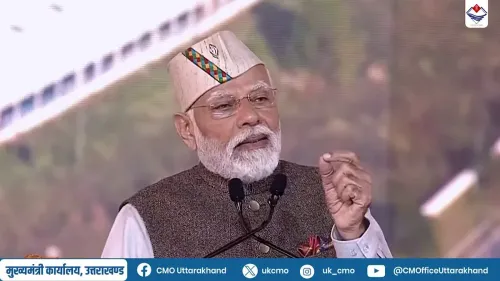
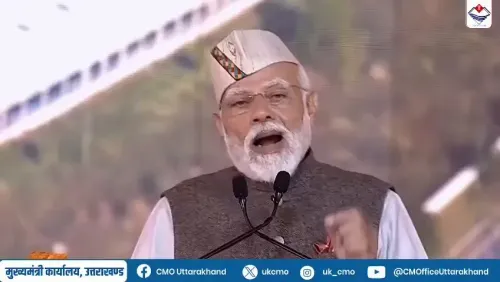
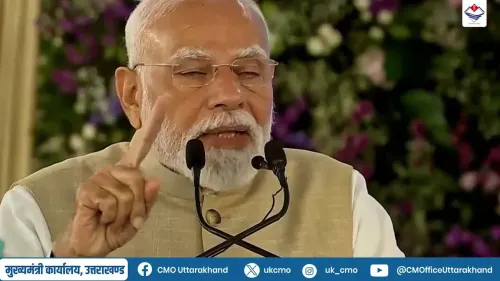
The Chief Minister's Office of Uttarakhand, on Friday, 26 June 2026, quoted Chief Minister Pushkar Singh Dhami attributing the state's unprecedented expansion of road connectivity to the vision of Prime Minister Narendra Modi, citing All Weather Roads, expressways, and allied infrastructure projects as having made travel across Uttarakhand faster, safer, and more accessible than ever before.
Context
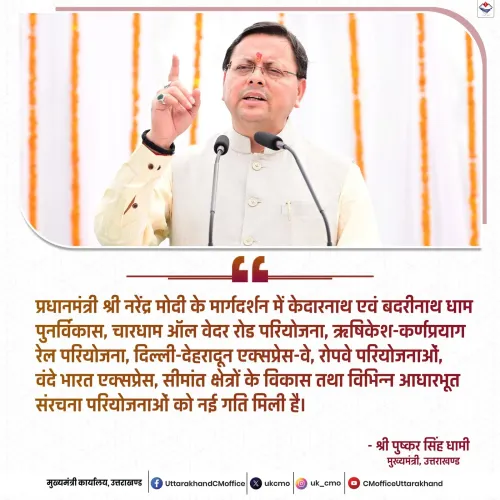
The Chief Minister's statement, shared via the official CMO handle, said: 'Pradhan Mantri Shri Narendra Modi ke doordarshi netritva mein Uttarakhand mein sadak sampark vyavastha ka abhootpoorv vistar hua hai' — 'Under the visionary leadership of Prime Minister Narendra Modi, road connectivity in Uttarakhand has expanded in an unprecedented manner.' The remarks highlighted All Weather Roads, expressways, and other road projects as having made traffic movement 'more convenient, safer, and faster than before.'
The statement comes as the state government continues to position infrastructure modernisation as a central achievement of the current political dispensation at both the state and central levels.
Policy Backdrop
The Char Dham All Weather Road project, which received in-principle approval in 2016, aims to provide year-round road access to the four major pilgrimage shrines of Badrinath, Kedarnath, Gangotri, and Yamunotri. The project addresses a long-standing challenge: Uttarakhand's high-altitude terrain routinely cuts off key routes during winter months and monsoon landslides, isolating pilgrims, residents, and border communities alike.
The broader Bharatmala Pariyojana, approved by the Union Cabinet in 2017 and covering approximately 34,800 km of roads nationwide, has channelled significant investment into border and pilgrimage routes in Himalayan states. Uttarakhand, sharing borders with China and Nepal, has been a priority corridor under this programme for both strategic and economic reasons.
Stakeholders and Impact
The beneficiaries of improved road connectivity in Uttarakhand span a wide cross-section: pilgrims visiting the Char Dham circuit, tourists accessing hill stations, local traders dependent on supply chains, and border residents in remote districts who rely on roads for essential services and evacuation during disasters.
Expressway projects such as the Delhi-Dehradun Expressway are expected to significantly cut travel time between the national capital and the state capital, with downstream benefits for commerce and tourism. Himalayan road upgrades have historically also served dual-use strategic purposes, enabling faster movement of personnel and supplies to forward areas.
What's Next
Key milestones to watch include progress on pending packages of the Char Dham widening project and the commissioning timeline for the Delhi-Dehradun Expressway. Environmental clearances for several Himalayan road stretches remain a critical regulatory variable, given the ecological sensitivity of the region.
Future Union Budget allocations under Bharatmala and state-level plan expenditure will determine the pace at which remaining connectivity gaps — particularly in remote border districts — are addressed. The Chief Minister's public attribution of these gains to PM Modi signals that road infrastructure will remain a prominent political talking point ahead of upcoming electoral cycles in the state.
Point of View
Where state and central leadership credit-sharing reinforces political alignment ahead of elections. The emphasis on All Weather Roads and expressways reflects a deliberate effort to frame infrastructure delivery as a governance achievement, particularly resonant in a state where terrain-driven isolation has historically been a voter grievance. The statement also signals that Uttarakhand's connectivity agenda — spanning pilgrimage, tourism, and border strategy — will continue to attract central budgetary attention. Whether on-ground project timelines match the political narrative remains the key question for citizens and observers alike.
NationPress
26 Jun 2026
Frequently Asked Questions
What is the Char Dham All Weather Road project in Uttarakhand?
The Char Dham All Weather Road project is a central government initiative approved in principle in 2016 to provide year-round road connectivity to the four major pilgrimage sites of Badrinath, Kedarnath, Gangotri, and Yamunotri in Uttarakhand, addressing seasonal road closures caused by snow and landslides.
What did CM Dhami say about road development in Uttarakhand?
CM Pushkar Singh Dhami stated that under PM Narendra Modi's visionary leadership, road connectivity in Uttarakhand has expanded in an unprecedented manner, with All Weather Roads and expressways making travel more convenient, safer, and faster than before.
What is Bharatmala Pariyojana and how does it affect Uttarakhand?
Bharatmala Pariyojana is a Union Cabinet-approved national highway programme covering approximately 34,800 km of roads, with a focus on border and pilgrimage routes. It has channelled significant investment into Uttarakhand's highway network given the state's strategic borders with China and Nepal.
What is the Delhi-Dehradun Expressway?
The Delhi-Dehradun Expressway is a major road project aimed at significantly reducing travel time between the national capital and Uttarakhand's capital Dehradun, with broader benefits for tourism, commerce, and connectivity to the Himalayan state.
Who benefits from improved roads in Uttarakhand?
The primary beneficiaries include pilgrims visiting the Char Dham circuit, tourists, local traders dependent on supply chains, and border residents in remote districts who rely on roads for essential services, medical access, and emergency evacuation.