Bangladesh cyber abuse against women: UN data reveals alarming digital safety gap

Synopsis
Bangladesh has spent a decade celebrating its digital transformation — but a Daily Star report backed by a 2026 UN Women study reveals a darker reality: women are being systematically silenced online through morphed images, fake profiles, and coordinated harassment, with 65% of complaints going nowhere. The gap between the country's digital ambitions and its protective infrastructure has never been more stark.
Key Takeaways
A Daily Star editorial report, citing a April 2026 UN Women study across 119 countries , highlights escalating cyber abuse against women in Bangladesh .
More than 27 per cent of women globally received unsolicited sexual advances or unwanted intimate images online; at least 12 per cent had images shared without consent.
Over 40 per cent of women self-censored on social media to avoid harassment; 19 per cent withdrew from professional public discourse.
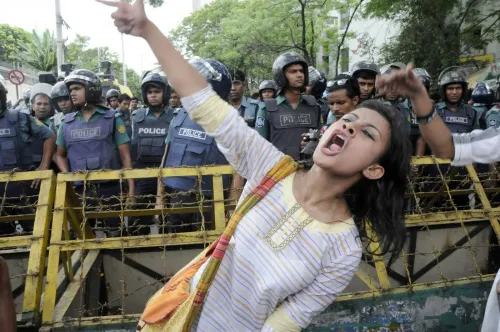
Women visibly active in Bangladesh's July 2024 protests were reportedly targeted by coordinated campaigns using morphed images and sexual rumours.
A 2022-23 ActionAid study found nearly 65 per cent of women who filed online harassment complaints in Bangladesh saw no action taken.
The report calls for platform design reform, stronger media ethics, and digital literacy curricula covering consent and privacy.
Cyber abuse targeting women in Bangladesh is escalating at a pace that the country's digital infrastructure is ill-equipped to handle, according to an editorial report published by The Daily Star, one of Bangladesh's leading English-language newspapers. The report draws on a landmark April 2026 UN Women study spanning 119 countries to argue that digital connectivity — long celebrated as a development milestone — has become a new arena of violence against women.
The Scale of Online Violence
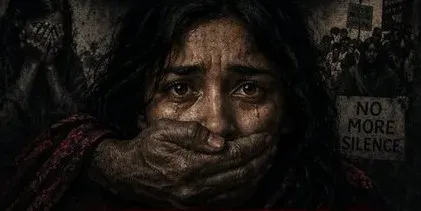
The UN Women study, cited extensively in the report, found that more than 27 per cent of women globally had received unsolicited sexual advances or unwanted intimate images online, while at least 12 per cent had personal images shared without their consent. The chilling downstream effect: over 40 per cent of women reported self-censoring on social media to avoid harassment, and 19 per cent had withdrawn from professional public discourse altogether.
These figures are not abstract for Bangladesh. Women who participated visibly in the July 2024 protests were reportedly subjected to coordinated cyber campaigns — including fake screenshots, morphed images, and sexual rumours — deployed as tools of intimidation to drive them out of public life. 'The pattern aligns with what researchers document worldwide: technology is being consciously weaponised to silence women who dare to be visible,' the report noted.
Where the Legal System Falls Short
Bangladesh does have legal frameworks addressing cybercrime, but institutional responses have been widely criticised as inadequate. According to a 2022-23 study by ActionAid, nearly 65 per cent of women who filed complaints about online harassment saw no action taken. Many survivors, the study found, also described being made to feel responsible for the abuse they experienced — a pattern of institutional re-victimisation that compounds the original harm.
'What makes Bangladesh's position particularly urgent is the gap between its digital ambitions and its protective infrastructure,' the report stated, pointing to a structural disconnect between the country's aspirations and its enforcement reality.
The Structural Gap in Digital Bangladesh
Bangladesh has spent a decade building the scaffolding of a modern digital economy — from mobile banking to e-governance — under the banner of a 'Digital Bangladesh' vision. Yet critics argue that this infrastructure was built without adequately accounting for the safety of half its population. The report describes the internet, for millions of women, as 'another unsafe street.'
Notably, the issue extends beyond individual incidents. The coordinated nature of attacks on women activists during the 2024 protests points to organised misuse of digital tools — a pattern that legal frameworks designed for individual cyber offences are structurally unsuited to address.
What Needs to Change
The report calls for a multi-pronged response that goes well beyond legislation. It advocates for changes in platform design, stronger media ethics that refuse to sensationalise women's trauma, and digital literacy curricula that explicitly cover consent, privacy, and the real-world consequences of online abuse.
'A country cannot celebrate technological progress while half of its population navigates the internet like a minefield,' the report stressed, adding that until women can exist online without the threat of humiliation or violence, 'the promise of a digital future remains precisely that: a promise not yet kept.'
As Bangladesh charts its next phase of digital expansion, the pressure is mounting on policymakers, platform companies, and civil society to ensure that connectivity translates into safety — not just access.
Point of View
It is an expanded threat surface. The 65% complaint-inaction figure from ActionAid is not a footnote — it is an indictment of institutional design. Bangladesh's cybercrime laws were built to prosecute individuals, not dismantle coordinated harassment networks, which is precisely what the 2024 protest targeting exposed. The deeper problem is cultural: as long as survivors are made to feel complicit in their own abuse, legal reform alone will not shift outcomes. What is missing is accountability at the platform level and a media culture that stops treating women's digital trauma as content.
NationPress
26 Jun 2026
Frequently Asked Questions
What does the UN Women 2026 study say about online violence against women?
The April 2026 UN Women study, conducted across 119 countries, found that more than 27 per cent of women had received unsolicited sexual advances or unwanted intimate images online, and at least 12 per cent had personal images shared without their consent. Over 40 per cent of women self-censored on social media to avoid harassment as a result.
How does online harassment affect women in Bangladesh specifically?
Women who participated visibly in Bangladesh's July 2024 protests were reportedly subjected to coordinated cyber campaigns involving fake screenshots, morphed images, and sexual rumours, used to intimidate them and force them out of public life. The Daily Star report describes this as part of a global pattern of technology being weaponised to silence visible women.
Why are legal frameworks in Bangladesh considered insufficient?
According to a 2022-23 ActionAid study, nearly 65 per cent of women who filed complaints about online harassment in Bangladesh saw no action taken. Many survivors also reported being made to feel responsible for the abuse, pointing to a systemic failure of institutional response beyond just the law itself.
What solutions does the report recommend?
The report calls for a multi-pronged approach including reforms in platform design, stronger media ethics that avoid commodifying women's trauma, and digital literacy curricula covering consent, privacy, and the real-world harm of online abuse — arguing that legal measures alone are insufficient without accompanying cultural reform.
What is the broader significance of this report for Bangladesh's digital ambitions?
Bangladesh has invested heavily in digital infrastructure — from mobile banking to e-governance — but the report argues that this progress is undermined as long as women cannot participate online safely. It contends that a country cannot claim technological advancement while half its population navigates the internet under the threat of harassment and violence.