Sitharaman meets MSSRF Principal Scientist in Chennai
Synopsis
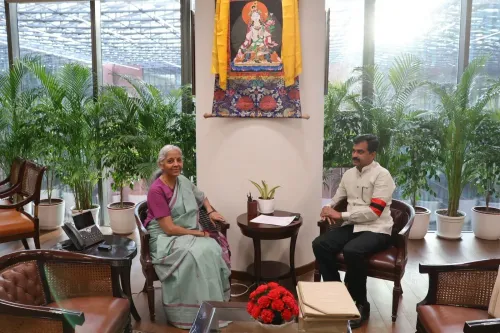
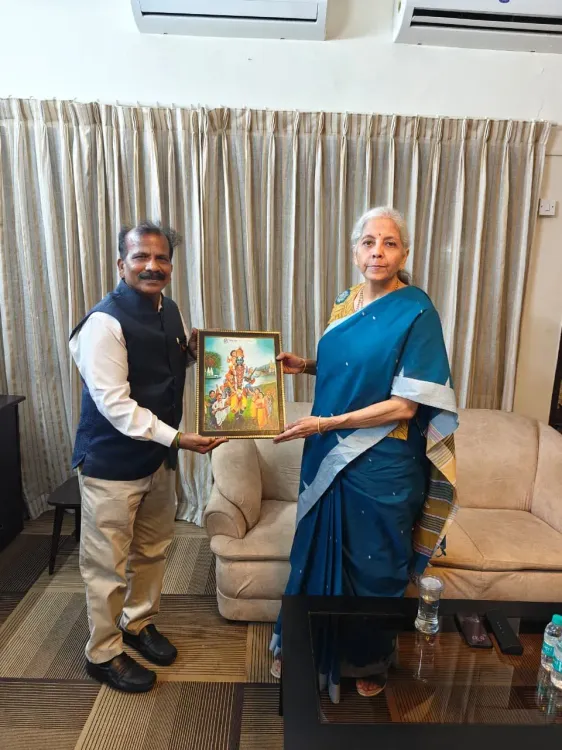
Union Finance Minister Nirmala Sitharaman met Dr N Parsuraman, Principal Scientist at the MS Swaminathan Research Foundation, in Chennai on 26 June 2026. The courtesy call brought central economic policy into contact with one of India's leading sustainable agriculture institutions, though no agenda or outcomes were disclosed.
Key Takeaways
Union Finance Minister Nirmala Sitharaman met Dr N Parsuraman , Principal Scientist at MSSRF , in Chennai on 26 June 2026 .
Swaminathan Research Foundation was established in 1988 and focuses on sustainable agriculture, food security, and rural livelihoods.
No meeting agenda or outcomes were disclosed in the official post.
Finance ministers have a long-standing practice of consulting legacy agricultural research institutions ahead of budget exercises.
Policy watchers will monitor whether MSSRF inputs appear in the next Union Budget or agriculture ministry guidelines.
Union Finance Minister Nirmala Sitharaman received Dr N Parsuraman, Principal Scientist at the M.S. Swaminathan Research Foundation (MSSRF), in Chennai on Friday, 26 June 2026, in a courtesy call that brought together central economic policy and one of India's foremost agricultural research institutions.
Context
The M.S. Swaminathan Research Foundation, headquartered in Chennai, was established in 1988 by the late Prof. M.S. Swaminathan, the agricultural scientist widely credited with steering India's Green Revolution. The foundation has since worked on sustainable agriculture, biodiversity conservation, and rural livelihoods through participatory research models. Dr Parsuraman, as Principal Scientist at MSSRF, works on issues at the intersection of rural development and sustainable farming practices.
The meeting took place in Chennai, where MSSRF maintains its primary campus and where Sitharaman has official engagements as part of her ministerial duties. No agenda or outcomes of the discussion were shared in the post.
Policy Backdrop
Finance ministers have, over successive governments, maintained channels of engagement with domain experts from legacy agricultural research bodies. These interactions are part of a broader practice of drawing on scientific institutions born out of the post-Green Revolution era to inform budget priorities and rural welfare schemes.
The MSSRF's research focus areas — climate-resilient farming, food security, and coastal and tribal community livelihoods — are closely aligned with areas that have featured in recent Union Budget allocations for agriculture and rural development. The foundation has historically submitted technical inputs to government consultations ahead of budget exercises.
Stakeholders and Impact
Agricultural scientists, rural communities, and policymakers working on food security are the primary stakeholders in any dialogue between the Finance Ministry and an institution such as MSSRF. The foundation's work spans several Indian states, with particular focus on Tamil Nadu, Odisha, Kerala, and Puducherry.
For farming communities, especially those dependent on rain-fed agriculture and coastal ecosystems, the outcomes of such high-level consultations can eventually shape the design of centrally sponsored schemes and budget outlays. However, no specific policy outcome has been announced in connection with this meeting.
What's Next
Observers of agricultural policy will watch whether any MSSRF recommendations surface in the next Union Budget speech or in agriculture ministry guidelines on climate-resilient and sustainable farming. The engagement signals continued institutional interest in linking scientific expertise from the Green Revolution's intellectual legacy with contemporary economic decision-making in New Delhi.
Point of View
Whose legacy connects directly to India's food security doctrine. While a single courtesy call rarely translates immediately into policy, such engagements can shape the framing of agriculture allocations and rural welfare priorities in the budget. The timing, ahead of what would be a full Union Budget cycle, makes the interaction worth tracking.
NationPress
26 Jun 2026
Frequently Asked Questions
Who is Dr N Parsuraman of MSSRF?
Dr N Parsuraman is a Principal Scientist at the M.S. Swaminathan Research Foundation in Chennai, working on sustainable agriculture and rural development issues.
What is the MS Swaminathan Research Foundation?
The M.S. Swaminathan Research Foundation is a Chennai-based institution established in 1988 by agricultural scientist Prof. M.S. Swaminathan to advance food security, biodiversity, and rural livelihoods.
Why did Nirmala Sitharaman meet MSSRF scientists?
Finance Minister Nirmala Sitharaman received Dr N Parsuraman of MSSRF in Chennai on 26 June 2026 in a courtesy call. No agenda or specific purpose was stated in the official post.
What does MSSRF work on?
MSSRF conducts participatory research on sustainable agriculture, climate-resilient farming, coastal and tribal community livelihoods, and biodiversity conservation, primarily across southern and eastern Indian states.
Will the MSSRF meeting influence the Union Budget?
No direct link to budget decisions has been announced. However, Finance Ministry consultations with agricultural research institutions have historically informed rural scheme design and budget priorities.