Finance Minister Sitharaman meets ISRO Chief Dr V Narayanan
Synopsis
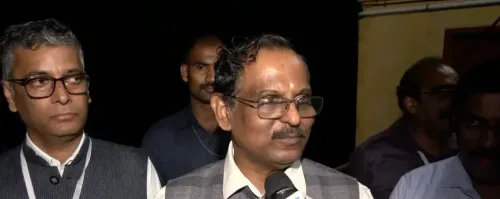
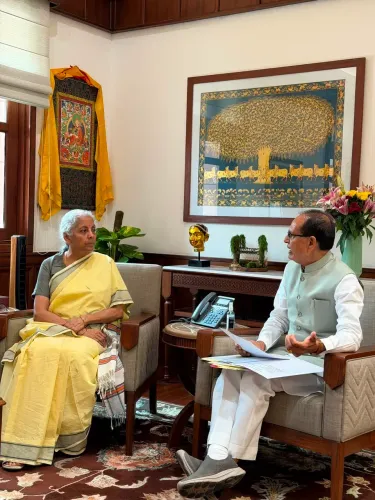
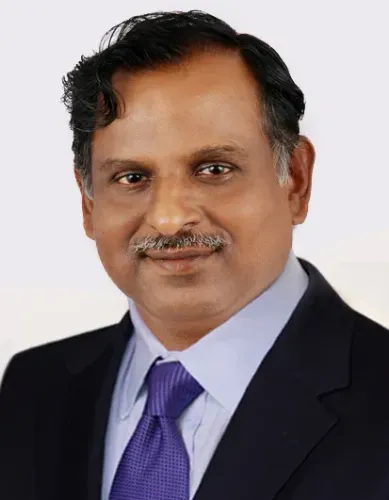
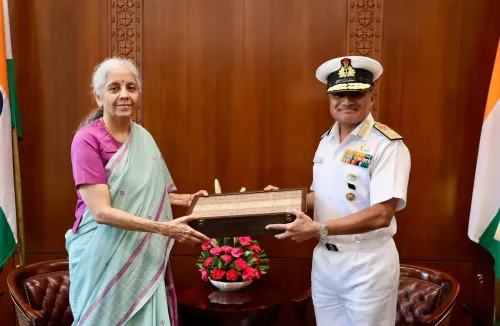
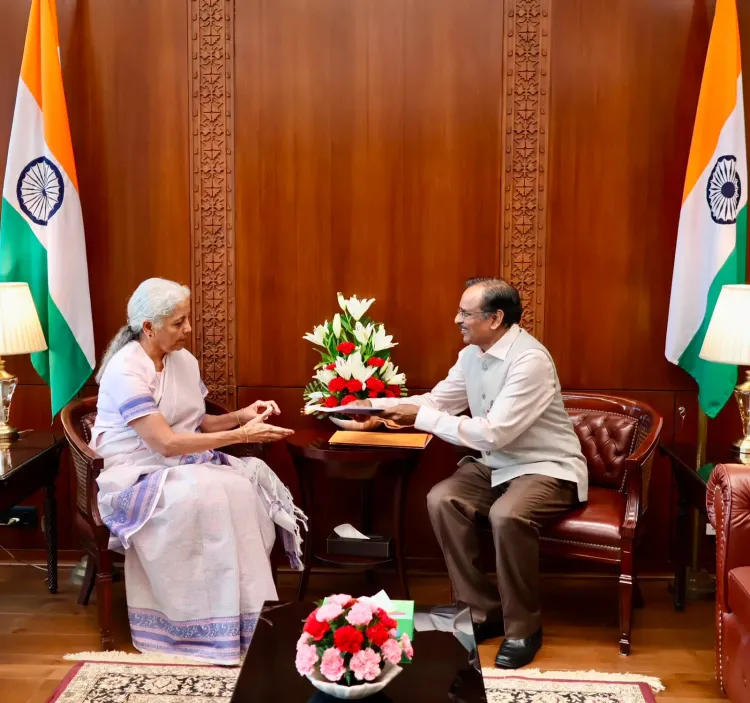
Union Finance Minister Nirmala Sitharaman received ISRO Chairman and Department of Space Secretary Dr V Narayanan in a formal call-on on 8 June 2026, continuing high-level coordination between India's fiscal authority and its apex space agency ahead of key mission milestones and budget cycles.
Key Takeaways
Dr V Narayanan , Chairman of ISRO and Secretary of the Department of Space , called on Finance Minister Nirmala Sitharaman on 8 June 2026 .
The meeting reflects routine but substantive inter-ministerial engagement between the Finance Ministry and India's space establishment.
India's space sector liberalisation since 2020 has created IN-SPACe to regulate private participation alongside ISRO.
Successive Union Budgets from 2021-22 onward have raised allocations for Gaganyaan and reusable launch vehicle development.
The specific agenda of the meeting has not been placed on the public record.
Outcomes will be watched through the next Union Budget cycle and any supplementary demands for grants for the Department of Space .
Union Finance Minister Nirmala Sitharaman received Dr V Narayanan, Secretary of the Department of Space and Chairman of the Indian Space Research Organisation (ISRO), in a formal call-on meeting on Monday, 8 June 2026. The meeting, confirmed through the Finance Minister's official social media account, signals continued high-level engagement between India's fiscal authority and its apex space agency.
Context
The Finance Ministry and the Department of Space maintain a close institutional relationship, given that ISRO's flagship programmes — from satellite launches to human spaceflight — are funded through Union Budget allocations and supplementary demands for grants. Such call-on meetings between the Finance Minister and the ISRO Chairman are a recognised feature of the government's inter-ministerial coordination calendar. While the specific agenda of the 8 June 2026 meeting has not been placed on the public record, the engagement reflects routine but substantive dialogue between the two offices.
Policy Backdrop
India's space sector has undergone significant structural change since June 2020, when the government announced a liberalisation package creating IN-SPACe — the Indian National Space Promotion and Authorisation Centre — to regulate and encourage private participation alongside ISRO. Successive Union Budgets from 2021-22 onward have progressively raised allocations for the Gaganyaan human spaceflight programme and reusable launch vehicle development, reflecting a dual strategy of state-led flagship missions and private-sector growth. The Department of Space sits at the intersection of these priorities, requiring it to balance long-horizon mission timelines with annual budgetary cycles.
Meetings of this nature typically occur ahead of budget preparation exercises or at critical project milestones, allowing ISRO leadership to present funding requirements directly to the Finance Minister. They also address inter-ministerial coordination on dual-use technologies and export-control frameworks that span the remit of multiple ministries.
Stakeholders and Impact
ISRO scientists and engineers working on approved missions such as Gaganyaan and proposed space-station modules have a direct stake in the outcomes of such engagements, as budgetary commitments shape recruitment, infrastructure, and procurement timelines. The rapidly expanding Indian space start-up ecosystem — which has grown under the IN-SPACe framework — also watches these interactions closely, since policy signals from the Finance Ministry influence the broader investment climate for private launch and satellite companies. Academic institutions and defence establishments with interests in dual-use space technology form a secondary stakeholder group whose priorities are often raised in such inter-ministerial dialogues.
What's Next
Attention will now turn to the next Union Budget cycle and any supplementary demands for grants tabled for the Department of Space, which will indicate whether commitments discussed in meetings like this one translate into enhanced or sustained allocations. Progress updates on Gaganyaan — India's first crewed orbital mission — and the government's stated ambition to establish an indigenous space station will serve as benchmarks against which the adequacy of future funding is judged. As India positions itself as a competitive player in the global commercial launch market, the alignment between ISRO's operational ambitions and the Finance Ministry's fiscal envelope will remain a defining variable for the sector's trajectory.
Point of View
Capital-intensive timelines. For a Finance Ministry that has consistently signalled support for India's space ambitions while managing broader fiscal consolidation, such meetings are as much about managing expectations as they are about unlocking funds. The timing, in mid-2026, places the interaction squarely within the pre-budget engagement calendar, suggesting ISRO may be advancing its case for enhanced or protected allocations. More broadly, the meeting underscores that India's ambition to become a major commercial and scientific space power ultimately runs through the Finance Ministry's approval.
NationPress
24 Oct 2026
Frequently Asked Questions
Why did ISRO Chairman Dr V Narayanan meet Finance Minister Nirmala Sitharaman?
Dr V Narayanan called on Finance Minister Nirmala Sitharaman on 8 June 2026 in a formal meeting that reflects routine high-level coordination between the Department of Space and the Finance Ministry. Such meetings typically address budget requirements, mission funding timelines, and inter-ministerial policy alignment.
What is Dr V Narayanan's role?
Dr V Narayanan serves as both the Chairman of ISRO and the Secretary of the Department of Space, making him the senior-most official overseeing India's civil space programme and its policy framework.
What is India's current space budget focused on?
India's space budget in recent years has prioritised the Gaganyaan human spaceflight programme, reusable launch vehicle development, and support for the private space sector under the IN-SPACe regulatory framework established in 2020.
What is IN-SPACe and why does it matter?
IN-SPACe, or the Indian National Space Promotion and Authorisation Centre, was created in June 2020 to regulate and promote private participation in India's space sector alongside ISRO, marking a significant liberalisation of an industry previously dominated entirely by the government.
What should we watch for after this meeting?
The key indicators to watch are the Department of Space's allocations in the next Union Budget, any supplementary demands for grants, and official updates on the Gaganyaan mission timeline, all of which will reflect the outcomes of high-level engagements like this one.