CM Dhami: Dehradun Airport Now Links 11+ Cities via Direct Flights
Synopsis
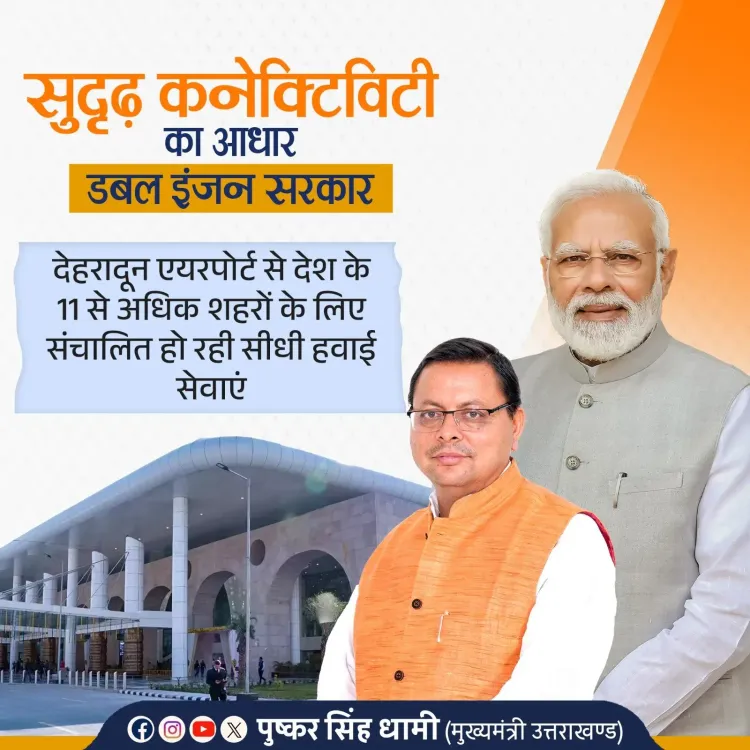
Uttarakhand CM Pushkar Singh Dhami highlights that Dehradun Airport now connects to over 11 major Indian cities via direct flights, crediting PM Modi's leadership and the UDAN regional connectivity scheme for transforming the state's air access and economic prospects.
Key Takeaways
Dehradun Airport now offers direct flights to more than 11 major Indian cities , as highlighted by CM Pushkar Singh Dhami on 29 September 2026 .
The expansion is framed as a product of PM Narendra Modi 's national aviation push, including the UDAN regional connectivity scheme launched in 2016 .
Better air links are expected to drive growth in tourism, trade, and investment in the Himalayan state.
Jolly Grant Airport , Dehradun's main civilian hub, has been a priority airport under successive UDAN bidding rounds since 2017 .
Direct routes reduce dependence on the congested Delhi–Dehradun road and rail corridor, easing travel for residents, pilgrims, and business visitors alike.
Uttarakhand's skies are opening up. Chief Minister Pushkar Singh Dhami announced on Tuesday, 29 September 2026 that Dehradun Airport now operates direct air services to more than 11 major cities across India — a connectivity leap he credited to the aviation expansion drive under Prime Minister Narendra Modi.
Writing in Hindi, CM Dhami said that under Modi's leadership, 'air connectivity in Uttarakhand is being given a new direction and new momentum.' He added that residents of the state are now benefiting from 'smooth, fast and convenient air connectivity' to different parts of the country through the direct routes operating out of Dehradun.
Dehradun's Jolly Grant Airport at the Centre of the Push
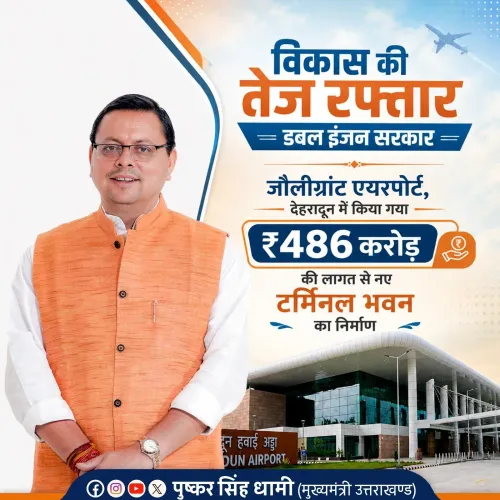
Jolly Grant Airport, Uttarakhand's primary civilian hub on the outskirts of Dehradun, has been a focal point of the central government's regional connectivity strategy since at least 2016, when the UDAN (Ude Desh ka Aam Nagrik) scheme was launched. The programme uses viability gap funding to subsidise flights to airports in underserved regions — hill states like Uttarakhand were among its earliest and most targeted beneficiaries. Subsequent UDAN bidding rounds through 2017 and beyond steadily added routes from Dehradun, expanding the city's reach into the national aviation grid.
Dhami's post frames the current network as the tangible dividend of that decade-long policy investment. Direct connections to more than 11 cities mean travellers no longer need to route through Delhi to reach destinations that were previously only reachable via a layover.
Tourism, Trade, and Investment — the Three-Pillar Argument
The Chief Minister explicitly tied better air access to three economic drivers: tourism, trade, and investment. Uttarakhand's economy leans heavily on pilgrimage and adventure tourism — the Char Dham circuit, Rishikesh, Auli — and air connectivity has long been identified as the single biggest friction point for out-of-state visitors. Reducing transit time directly expands the catchment of potential visitors and shortens the supply chain for businesses operating in the hills.
Dhami's framing echoes the broader national narrative that infrastructure integration — airports, highways, rail — is the multiplier that converts natural and cultural assets into sustained economic activity. For a landlocked Himalayan state with challenging road terrain, air access is not a luxury; it is the arterial lifeline.
What the Route Expansion Means on the Ground
More direct city links reduce dependence on the often congested Delhi–Dehradun highway and rail corridor, particularly during peak pilgrimage seasons. For investors scouting manufacturing or warehousing opportunities in the state's industrial corridors, reliable flight schedules lower the cost of doing business. For the hill communities themselves — many of whom travel to metros for healthcare and higher education — it means faster, more predictable journeys.
The broader watch now is whether future UDAN rounds bring additional routes to Uttarakhand's secondary airstrips, and whether the Dehradun terminal itself gets capacity upgrades to handle the growing passenger load. If the connectivity momentum holds, Uttarakhand's integration into India's commercial mainstream is no longer a distant aspiration — it's already taxiing down the runway.
Point of View
Ahead of any potential state or national electoral cycle, reinforces the party's 'development over populism' pitch. More substantively, the UDAN framework has genuinely altered the regional aviation map since 2016, and Uttarakhand — with its twin pulls of pilgrimage tourism and strategic border geography — was always a natural candidate for accelerated connectivity. The real test of the narrative will come when independent passenger-load data and new route announcements validate whether the momentum is structural or seasonal.
NationPress
29 Sept 2026
Frequently Asked Questions
How many cities does Dehradun Airport connect to directly in 2026?
According to CM Pushkar Singh Dhami's post of 29 September 2026, Dehradun Airport now operates direct flights to more than 11 major cities across India, though the exact list of destinations was not specified in his statement.
What is the UDAN scheme and how does it help Uttarakhand?
UDAN — short for 'Ude Desh ka Aam Nagrik' — is a central government regional connectivity scheme launched in 2016 that subsidises flights to underserved airports via viability gap funding. Uttarakhand's Jolly Grant Airport in Dehradun has been among the beneficiaries, with routes added through successive bidding rounds since 2017.
What is Jolly Grant Airport?
Jolly Grant Airport is Uttarakhand's primary civilian airport, located on the outskirts of Dehradun. It serves as the state's main gateway for domestic air travel and is a key hub for tourists heading to the Char Dham pilgrimage circuit and other destinations.
How does better air connectivity benefit Uttarakhand's economy?
CM Dhami pointed to three direct benefits: growth in tourism, trade, and investment. Easier air access reduces travel time for pilgrims and adventure tourists, lowers logistical costs for businesses, and makes the state more attractive to investors who previously faced long road or rail journeys to reach the hills.
What new airport projects or routes are expected next for Uttarakhand?
The key areas to watch include future UDAN bidding rounds that could add more routes to Dehradun and to Uttarakhand's secondary airstrips, as well as any announced capacity upgrades or terminal expansions at Jolly Grant Airport to handle growing passenger traffic.