Rijiju Spotlights Sundarbans Women Restoring Mangroves
Synopsis
Union Minister Kiren Rijiju praised Sundarbans women restoring mangrove forests with their own hands, calling it a model of environmental protection and economic self-reliance. The effort aligns with the Centre's MISHTI scheme, which links coastal mangrove expansion with community livelihoods in cyclone-prone regions.
Key Takeaways
Union Parliamentary Affairs Minister Kiren Rijiju posted on 29 September 2026 highlighting women in the Sundarbans planting and nurturing mangrove forests.
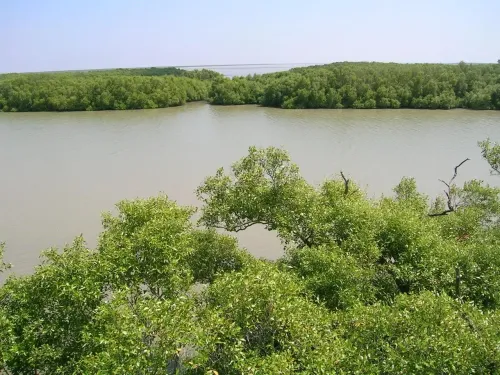
The Sundarbans is the world's largest mangrove forest, a UNESCO World Heritage Site spanning West Bengal and Bangladesh .
Mangrove forests serve as a critical cyclone buffer for millions of coastal residents in eastern India.
The Union Budget 2023-24 launched the MISHTI scheme to expand mangrove cover along India's coastline and generate community livelihoods.
Rijiju framed the women's work as a 'new picture of women's confidence and leadership,' connecting environmental stewardship with economic empowerment.
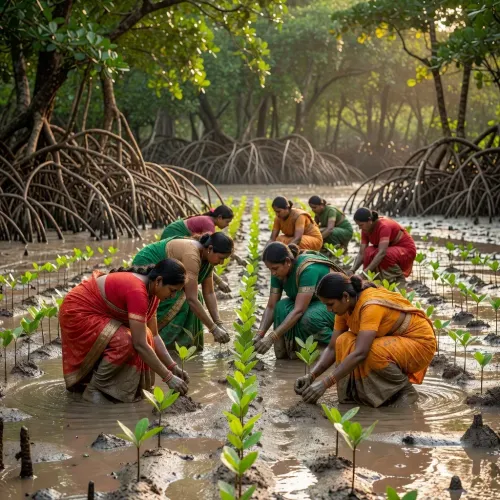
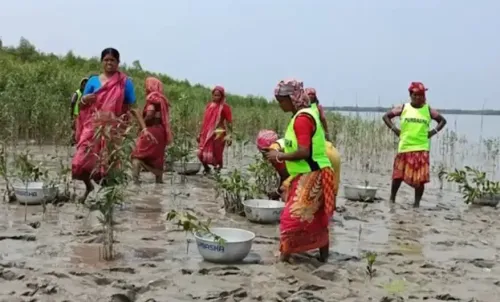
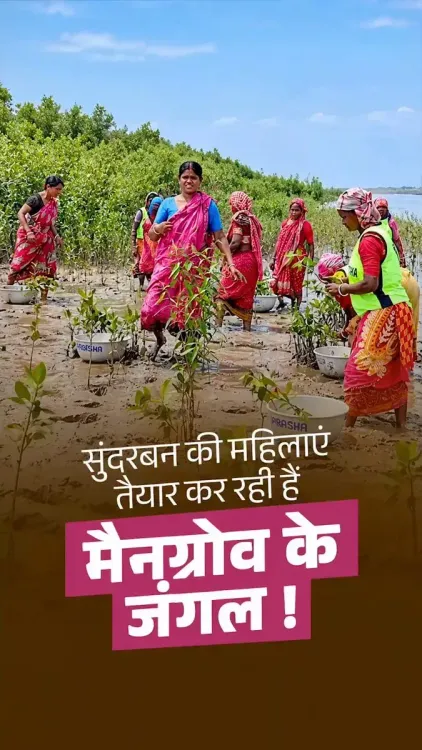
In the vast, storm-battered delta where the Ganges meets the Bay of Bengal, women are quietly doing something extraordinary — planting the forests that protect them. Union Parliamentary Affairs Minister Kiren Rijiju on Tuesday, 29 September 2026, drew national attention to women in the Sundarbans who are nurturing mangrove forests with their own hands, framing their work as a living example of nature conservation fused with economic self-reliance.
Rijiju's post, written in Hindi, celebrated what he called 'the daughters of Sundarbans shaping the mangroves' — सुंदरबन की बेटियाँ सँवार रहीं मैंग्रोव — praising their courage, resolve, and self-sufficiency. 'These steps toward environmental protection and economic empowerment,' he wrote, 'are a new picture of women's confidence and leadership.'
Why the Sundarbans Mangroves Matter This Much
The Sundarbans is the world's largest mangrove forest, straddling West Bengal and Bangladesh across the Ganges-Brahmaputra delta. A UNESCO World Heritage Site, it is home to the Bengal tiger and hundreds of species — but its ecological value goes beyond biodiversity. Its dense mangrove belt is the first line of defence for millions of coastal residents against cyclones that regularly barrel in from the Bay of Bengal. Deforestation and rising sea levels have steadily eroded that buffer, making community-led restoration not just environmentally significant but existential for the people who live there.
Women in coastal communities have historically been among the most climate-vulnerable, yet they are increasingly recognised as the most effective stewards of local ecosystems. Mangrove plantation work — propagating saplings, planting in tidal zones, monitoring growth — fits naturally into the rhythms of these communities and can generate supplementary income through eco-tourism, honey collection, and fisheries linked to healthy mangrove ecosystems.
The MISHTI Scheme: Policy Muscle Behind the Movement
This grassroots momentum has national policy backing. The Union Budget 2023-24 introduced the MISHTI scheme — Mangrove Initiative for Shoreline Habitats and Tangible Incomes — specifically to expand mangrove cover along India's coastline, linking ecological security with community livelihoods. The scheme targets states with significant coastal exposure, and West Bengal's Sundarbans region sits squarely in its crosshairs. Progress on plantation targets under MISHTI, and the depth of women's self-help group involvement in its implementation, will be the metrics to watch as the initiative matures.
Rijiju's post, accompanied by a video, fits a broader pattern of central government messaging that positions women not merely as beneficiaries of environmental schemes but as active agents of ecological restoration — a framing that carries both political and policy weight as India builds its climate commitments ahead of international reviews.
In a delta that has survived cyclone after cyclone, the women planting these forests are not waiting for rescue. They are building it, one sapling at a time.
Point of View
Empowerment-centred face. Highlighting the Sundarbans specifically is strategically significant: West Bengal is both ecologically critical and politically contested terrain for the BJP. Messaging that ties environmental achievement to women's agency there serves dual purposes — advancing a genuine policy goal while building grassroots visibility in a state the party is keen to consolidate. The broader arc points toward India increasingly presenting community-led, gender-forward conservation as its climate-action signature ahead of global reviews.
NationPress
29 Sept 2026
Frequently Asked Questions
What are women in the Sundarbans doing for mangrove restoration?
Women in the Sundarbans are planting and nurturing mangrove saplings in tidal zones, contributing to coastal forest restoration while also generating supplementary livelihoods through activities linked to healthy mangrove ecosystems.
What is the MISHTI scheme and how does it relate to the Sundarbans?
The MISHTI scheme — Mangrove Initiative for Shoreline Habitats and Tangible Incomes — was announced in the Union Budget 2023-24 to expand mangrove cover along India's coastline and create community livelihoods. The Sundarbans in West Bengal is one of the key target regions under this initiative.
Why are mangrove forests important in the Sundarbans?
Mangrove forests in the Sundarbans act as a natural shield against cyclones for millions of coastal residents, support rich biodiversity including the Bengal tiger, and sustain fisheries and other livelihoods for local communities.
What did Kiren Rijiju say about Sundarbans women?
Rijiju praised Sundarbans women for planting mangrove forests with their own hands, calling their work a model of courage, resolve, and self-reliance, and describing it as a 'new picture of women's confidence and leadership' that combines environmental protection with economic empowerment.
Is the Sundarbans a UNESCO site?
Yes, the Sundarbans is a UNESCO World Heritage Site. It is the world's largest mangrove forest, spanning the Ganges-Brahmaputra delta across West Bengal in India and Bangladesh.