CM Dhami Dissolves Madrasa Board, Forms Minority Education Body
Synopsis
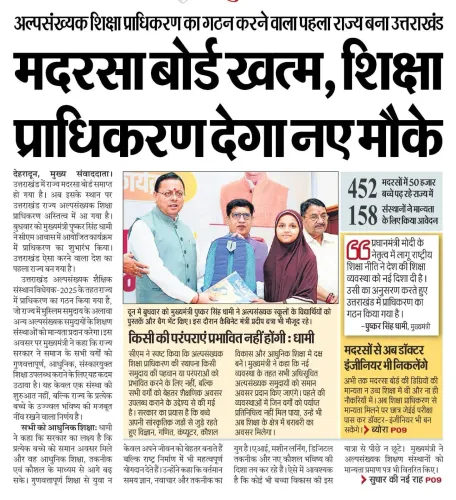
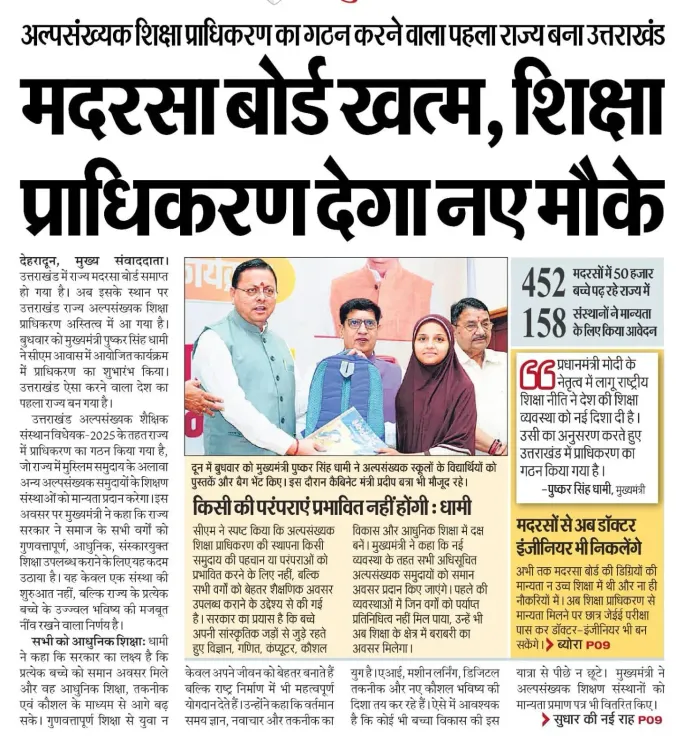
Uttarakhand CM Pushkar Singh Dhami announced on 2 July 2026 that the state has dissolved its Madrasa Board and formed the Uttarakhand State Minority Education Authority, calling it a step toward equal education — and the state's second landmark reform after the Uniform Civil Code.
Key Takeaways
Uttarakhand has dissolved its state Madrasa Board, replacing it with the Uttarakhand State Minority Education Authority .
CM Pushkar Singh Dhami framed the move as a sequel to the state's Uniform Civil Code , enacted in February 2024 .
Uttarakhand is described by the government as the first state in India to abolish its Madrasa Board in this manner.
The stated goal is 'equal opportunity, equal education' for all students regardless of community.
Operational details — curriculum, funding, and staff arrangements — for the new authority have not yet been publicly specified.
The reform is being watched as a potential model by other BJP-governed states debating similar minority education restructuring.
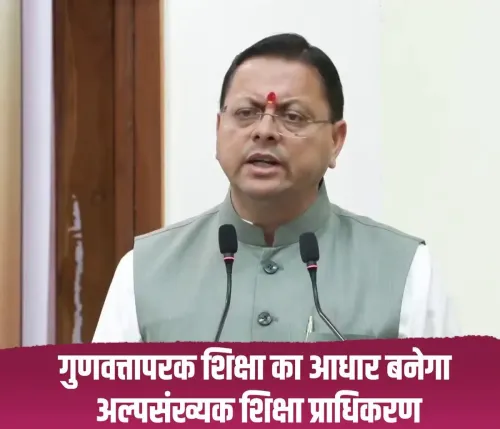
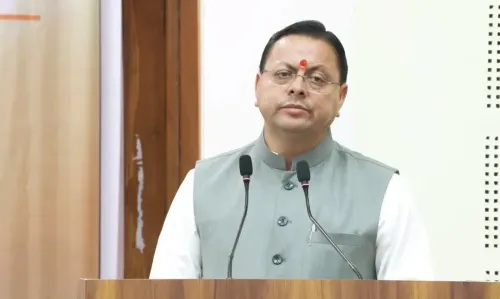
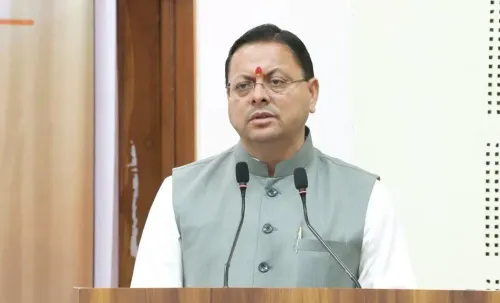
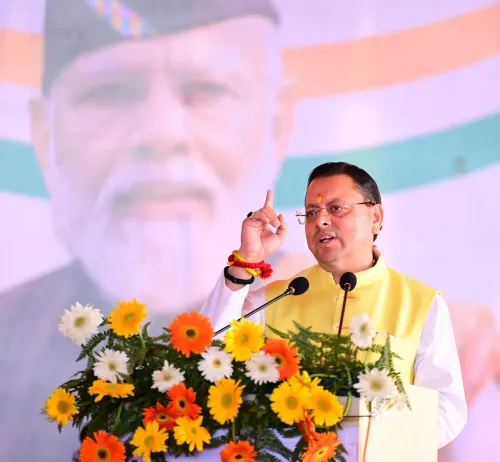
Uttarakhand Chief Minister Pushkar Singh Dhami announced on Thursday, 2 July 2026, that the state has dissolved its Madrasa Board and constituted a new Uttarakhand State Minority Education Authority, positioning the move as a step toward equal educational opportunity for all citizens of the state.
In his post on X, Dhami wrote: 'Saman avsar, saman shiksha — yahi viksit Uttarakhand ki disha hai' ('Equal opportunity, equal education — this is the direction of a developed Uttarakhand'). He described his government as 'always committed to taking bold and far-sighted decisions in the interest of the state.'
Context
Uttarakhand became the first Indian state to pass and implement a Uniform Civil Code (UCC), enacting the legislation in February 2024. The dissolution of the Madrasa Board and formation of the new authority is being presented by the government as a continuation of that reform sequence, extending the principle of uniform standards from personal law into the domain of minority education.
The Chief Minister framed the two reforms together, noting that after implementing the UCC, Uttarakhand became 'the first state in the country' to abolish the Madrasa Board and establish the new minority education body in its place.
Policy Backdrop
Separate madrasa boards have historically regulated Islamic religious schools across several Indian states, overseeing curriculum, examinations, and teacher certification independently of mainstream education bodies. Proponents of such boards argue they preserve religious and cultural identity for minority communities; critics contend they create a parallel, under-resourced track that limits students' access to mainstream opportunities.
The Uttarakhand State Minority Education Authority is intended to bring minority educational institutions under a unified regulatory framework, though the specific curriculum mandates, funding structures, and transitional arrangements for existing madrasa students and staff have not yet been detailed in official communications.
Stakeholders and Impact
The most directly affected parties are minority students currently enrolled in madrasas across Uttarakhand, as well as administrators and teachers employed by those institutions. Supporters of the reform argue that integration under a common authority will improve educational outcomes and expand access to formal qualifications recognised by mainstream universities and employers.
Madrasa administrators and minority community organisations have not yet issued formal responses as of the time of the announcement. Legal and civil society challenges to such restructuring have been raised in other states where similar proposals have been debated, and observers will watch for any judicial or legislative responses in Uttarakhand.
What's Next
The operational rollout of the Uttarakhand State Minority Education Authority will be closely watched, including decisions on curriculum standards, staff absorption, and funding allocations for institutions transitioning from the dissolved Madrasa Board. Parallel policy discussions in states such as Uttar Pradesh and Gujarat mean that Uttarakhand's implementation experience is likely to influence the national debate on minority education reform. Any legal challenges or responses from the National Commission for Minority Educational Institutions will also shape how this reform unfolds in practice.
Point of View
Unified Minority Education Authority as the successor body rather than simply abolishing the old one, the Dhami government is attempting to pre-empt the charge of targeting minority institutions — positioning the reform as integration rather than erasure. The move sets a template that other BJP-governed states are likely to study carefully, and it raises the political stakes for the national debate on whether separate minority education boards are a constitutional right or an administrative anomaly. How minority communities, courts, and the central government respond will determine whether this becomes a replicable policy or a contested legal battleground.
NationPress
2 Jul 2026
Frequently Asked Questions
Why did Uttarakhand dissolve its Madrasa Board?
The Uttarakhand government dissolved the Madrasa Board to bring minority educational institutions under a single, unified regulatory framework — the new Uttarakhand State Minority Education Authority — with the stated aim of ensuring equal educational opportunity for all students in the state.
What is the Uttarakhand State Minority Education Authority?
It is a newly constituted body that replaces the dissolved Madrasa Board and is intended to oversee minority education in Uttarakhand under common regulatory standards rather than a separate religious-community-specific board.
Is Uttarakhand the first state to abolish its Madrasa Board?
According to CM Pushkar Singh Dhami's announcement on 2 July 2026, Uttarakhand is the first state in India to abolish its Madrasa Board and replace it with a unified minority education authority.
How does this relate to Uttarakhand's Uniform Civil Code?
CM Dhami explicitly linked the two reforms, presenting the Madrasa Board dissolution as a continuation of the same reform philosophy that led Uttarakhand to become the first state to enact a Uniform Civil Code in February 2024.
What happens to students and teachers currently in Uttarakhand madrasas?
The government has not yet publicly detailed the transitional arrangements for students, teachers, and administrators of existing madrasa institutions; the operational rollout of the new Minority Education Authority is expected to address these specifics.