CM Dhami doubles hailstorm relief for Uttarakhand farmers

Synopsis
Uttarakhand CM Pushkar Singh Dhami has announced a three-part hailstorm relief package: doubling standard SDRF crop compensation, deferring electricity bills for October-December, and seeking a three-month KCC loan moratorium from the Union Finance Ministry.
Key Takeaways
Double compensation: Farmers will receive an additional amount equal to the standard SDRF payout for losses to agriculture, horticulture, and sugarcane crops.
Electricity bill deferral: Power bill payments for October, November, and December 2026 have been deferred for all hailstorm-affected farmers.
KCC moratorium request: The Uttarakhand government will write to the Union Ministry of Finance seeking a three-month freeze on Kisan Credit Card loan repayments.
Federal protocol: RBI norms already permit KCC restructuring during widespread natural calamities, giving the state's request a clear procedural basis.
CM Dhami's directive: Officials have been ordered to begin processing relief immediately to prevent crop-loss distress from disrupting the next agricultural cycle.
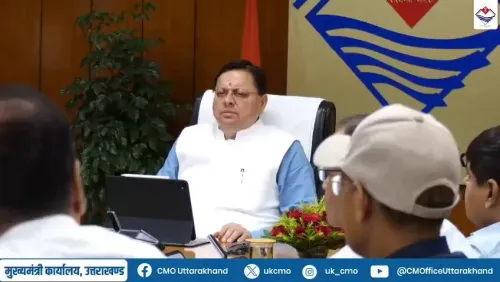
A hailstorm has stripped crops off the fields, and Uttarakhand Chief Minister Pushkar Singh Dhami is not waiting for the damage to compound. On Wednesday, 14 October 2026, the Chief Minister's Office of Uttarakhand announced a multi-pronged relief package for farmers hit by hailstorms across the state — doubling the standard disaster payout, deferring electricity bills for three months, and writing to the Centre to freeze Kisan Credit Card loan repayments.
Double the standard payout for crop losses
The centrepiece of the package is a direct financial top-up. Under State Disaster Response Fund norms — the baseline compensation framework set periodically by the National Disaster Management Authority — farmers already qualify for a fixed rate of compensation per hectare for losses to agriculture, horticulture, and sugarcane crops. CM Dhami has now directed that an equal additional amount be credited on top of those standard norms, effectively doubling the relief for each affected farmer.
This 'double the SDRF' approach is a well-worn lever in Indian states. Hill regions like Uttarakhand are especially vulnerable to freak hailstorms that can wipe out an entire season's harvest of apples, stone fruits, and winter vegetables in hours. Standard SDRF rates, critics have long argued, do not reflect actual market losses in a high-cost mountain economy. The additional ex-gratia tops up the gap without requiring a formal revision of national norms.
Three months of electricity bill relief
Beyond crop compensation, the government has deferred electricity bill payments for the months of October, November, and December for all affected farmers. The intent is straightforward: a farmer who has just lost his standing crop should not face a power cut in the weeks he needs irrigation and cold-storage the most. The deferral removes an immediate cash pressure while recovery efforts are still under way.
KCC loan freeze — the letter to Delhi
The most consequential step may be the one that requires federal approval. The state government will write to the Union Ministry of Finance requesting a three-month moratorium on Kisan Credit Card (KCC) loan repayments for affected farmers. KCC, the 1998 Central scheme that provides short-term revolving credit to farmers, already contains provisions under Reserve Bank of India circulars for repayment restructuring during widespread natural calamities — so the request follows an established federal protocol used after floods, droughts, and hail events across multiple states.
The practical importance is significant. A farmer whose KCC repayment falls due weeks after a hailstorm, with no harvest to sell, faces the risk of the account being classified as a non-performing asset, cutting off future credit exactly when it is needed most. A three-month window gives breathing room to recover, replant, or pivot to the next seasonal cycle without a credit scar.
Dhami's commitment and what happens next
CM Dhami stated that the state government is 'committed to protecting farmers' interests and helping them overcome hardships caused by natural disasters,' and that 'every possible step will be taken to keep farmers' livelihoods and agricultural activities secure.'
The ball now moves to New Delhi. The Centre's response to the KCC deferral request — and the speed with which the additional relief amounts reach farmers' accounts — will determine whether the package delivers on its promise before the next sowing window opens.
Point of View
And the top-up signals responsiveness without touching national fiscal frameworks. The KCC moratorium request is the more revealing move: it tests Centre-state coordination on agricultural credit, a channel that becomes politically visible when Delhi's reply is delayed. For CM Dhami, who faces a constituency heavily dependent on horticulture, the speed and completeness of actual disbursement will matter far more than the announcement itself.
NationPress
14 Oct 2026
Frequently Asked Questions
What relief has the Uttarakhand government announced for hailstorm-affected farmers?
The Uttarakhand government has announced three measures: doubling the standard SDRF crop compensation, deferring electricity bills for October, November, and December 2026, and writing to the Union Finance Ministry to seek a three-month moratorium on Kisan Credit Card loan repayments.
What is the Kisan Credit Card (KCC) scheme and why is a moratorium being sought?
The Kisan Credit Card is a Central government scheme launched in 1998 that provides short-term revolving credit to farmers. A moratorium is being sought so that farmers who lost crops to hailstorms are not forced to repay loans immediately, protecting them from credit defaults while they recover.
Who announced the hailstorm relief package in Uttarakhand?
Chief Minister Pushkar Singh Dhami announced the package and directed relevant officials to take immediate action.
Which crops are covered under the Uttarakhand hailstorm relief?
The relief covers losses to agriculture, horticulture, and sugarcane crops as mentioned in CM Dhami's directive.
Does the Centre have to approve the KCC loan deferral?
Yes. The Uttarakhand state government will send a formal request letter to the Union Ministry of Finance seeking the three-month KCC repayment deferral, following an established federal protocol that RBI norms already support during natural calamities.