CM Dhami: Modern Education Key to Equal Growth for All
Synopsis
Chief Minister Pushkar Singh Dhami of Uttarakhand has stated that modern education, equal opportunity, and a transparent system are the keys to uniform progress for every section of society, reaffirming the state government's focus on youth empowerment through education reform.
Key Takeaways
CM Pushkar Singh Dhami declared that the youth are the greatest strength of any society, and education is the greatest strength of the youth.
He linked modern education , equal opportunity , and a transparent governance system as jointly necessary for every section of society to advance equally.
The statement aligns with the National Education Policy 2020 , which promotes equitable and technology-enabled schooling across India.
Uttarakhand's hill and rural populations face distinct barriers to uniform educational access, making the Chief Minister's emphasis particularly significant for marginalised communities.
The Dhami government's focus on transparency in education mirrors digital governance initiatives in BJP -ruled states since 2014 .
Future education budget allocations and NEP 2020 rollout updates in Uttarakhand will be closely watched as a measure of follow-through on this stated commitment.
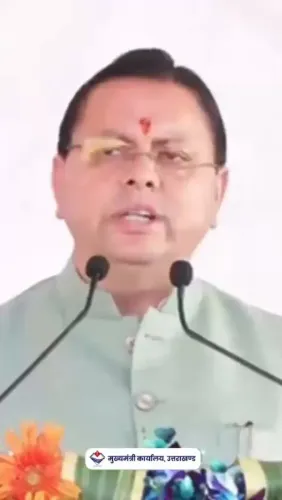
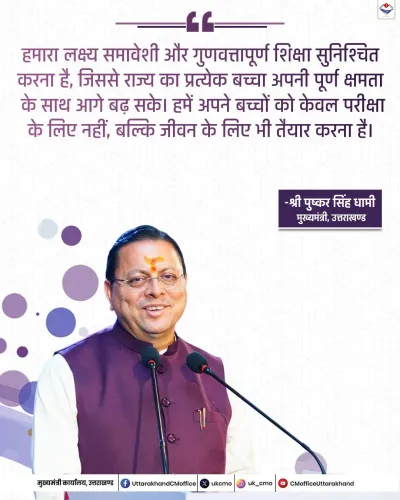
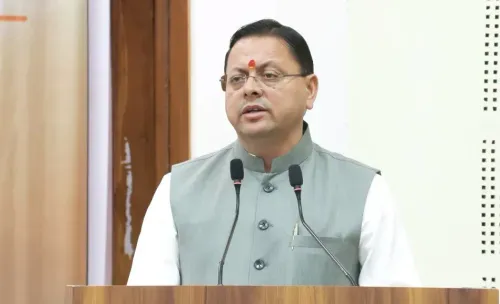
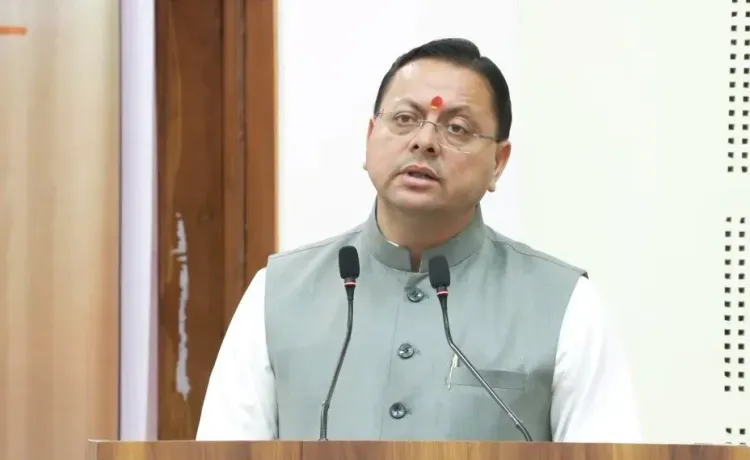
The Chief Minister's Office of Uttarakhand, on Wednesday, 1 July 2026, shared a statement by Chief Minister Pushkar Singh Dhami emphasising that modern education, equal opportunity, and transparent governance are the foundational pillars for the advancement of every section of society.
Context
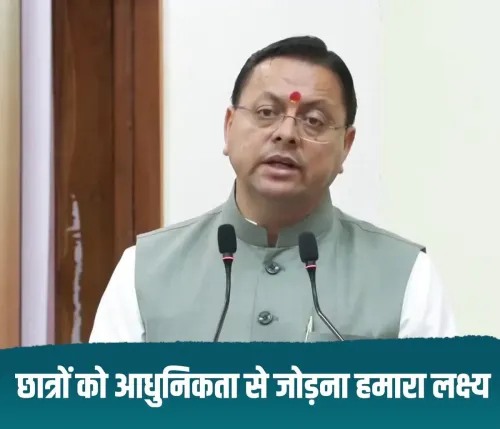
The post quoted Chief Minister Dhami in Hindi: 'किसी भी समाज की सबसे बड़ी शक्ति युवा पीढ़ी होती है और युवा पीढ़ी की सबसे बड़ी ताकत शिक्षा होती है.' Translated, this reads: 'The greatest strength of any society is its youth, and the greatest strength of the youth is education.' The Chief Minister added that if modern education is available, equal opportunities are provided, and a transparent system is in place, every section of society will progress equally.
The statement was shared by the official Chief Minister's Office of Uttarakhand account on 1 July 2026, underscoring the state government's continued public emphasis on youth empowerment through education reform.
Policy Backdrop
The remarks align closely with the National Education Policy (NEP) 2020, the central government's landmark framework that replaced the 1986 education policy. NEP 2020 promotes multidisciplinary, technology-enabled, and equitable schooling, with a stated goal of reducing disparities across socioeconomic groups.
Uttarakhand, a hill state with significant rural and remote populations, faces distinct challenges in delivering uniform educational access. The state government has repeatedly highlighted youth education and administrative transparency as priorities, and CM Dhami's statement reinforces that messaging at the public level.
The emphasis on a 'transparent system' (paaradharshi vyavastha) also resonates with broader digital governance initiatives rolled out across BJP-ruled states since 2014, including digitisation of admissions, scholarships, and grievance redressal in the education sector.
Stakeholders and Impact
The statement directly addresses students, youth, and marginalised communities across Uttarakhand. For a state where tribal, hill-dwelling, and economically weaker populations have historically faced barriers to quality schooling, the call for equal opportunity carries pointed relevance.
Education advocates and civil society groups have long argued that transparency in teacher postings, examination processes, and scholarship disbursement is as critical as curriculum modernisation. CM Dhami's framing — linking modern education, equal opportunity, and transparent administration as a single continuum — reflects this on-the-ground reality.
The youth demographic is particularly significant: Uttarakhand has a relatively young population, and improving educational outcomes is seen as central to retaining skilled youth in the state rather than losing them to out-migration.
What's Next
Observers will watch for concrete follow-through in Uttarakhand's upcoming education budget allocations and any state-level announcements on NEP 2020 implementation, including rollout of new curricula, digital infrastructure in schools, and transparency portals for academic administration.
The statement sets a clear rhetorical benchmark: the Dhami government has publicly tied equitable social progress to the quality and fairness of its education system, a standard against which future policy decisions will inevitably be measured.
Point of View
The Chief Minister is responding to long-standing criticism that administrative opacity in teacher recruitment and scholarship disbursement has undermined educational outcomes in the state. The messaging mirrors a broader pattern in BJP-governed states of tying the demographic dividend narrative to education quality, echoing central-level rhetoric since the NEP 2020 launch. Whether the statement translates into measurable budget commitments or institutional reforms will determine its political durability.
NationPress
30 Sept 2026
Frequently Asked Questions
What did CM Pushkar Singh Dhami say about education in Uttarakhand?
CM Dhami stated that the youth are the greatest strength of any society and education is the greatest strength of the youth, adding that modern education, equal opportunity, and a transparent system are essential for every section of society to progress equally.
How does Uttarakhand plan to implement the National Education Policy 2020?
While CM Dhami's statement aligns with NEP 2020 goals of modern and equitable schooling, specific state-level implementation details — including new curricula rollouts and digital infrastructure plans — are expected to be outlined in upcoming education budget allocations.
Why is education reform important for Uttarakhand's youth?
Uttarakhand has a young population concentrated in hill and rural areas where access to quality education has historically been uneven. Improving educational outcomes is seen as critical to retaining skilled youth in the state and reducing out-migration.
What does 'transparent education system' mean in the context of Uttarakhand?
A transparent education system in this context refers to fair and open processes in teacher postings, student admissions, examinations, and scholarship disbursement — areas where opacity has previously drawn criticism from education advocates.
Who is Pushkar Singh Dhami?
Pushkar Singh Dhami is the Chief Minister of Uttarakhand, serving since 2021 and representing the Bharatiya Janata Party. He has consistently emphasised state development, youth empowerment, and education access in official communications.