CM Dhami flags in four NIM mountaineering wins
Synopsis
Uttarakhand CM Pushkar Singh Dhami flagged in four NIM-led mountaineering expeditions on 24 September 2026, celebrating summits of Mount Aconcagua in Argentina and three Nun-Kun massif peaks — Nun, Kun and Delta-41 — in Ladakh.
Key Takeaways
Four expeditions conducted by Nehru Institute of Mountaineering (NIM), Uttarkashi were flagged in by CM Pushkar Singh Dhami on 24 September 2026 .
A joint NIM–JIM&WS, Pahalgam team successfully summited Mount Aconcagua (6,961 m) in Argentina — the highest peak in the Americas.
Three Himalayan summits completed: Mount Nun (7,135 m) , Mount Kun (7,077 m) , and Mount Delta-41 (5,908 m) — all in the Nun-Kun massif, Ladakh .
NIM was established in 1965 in Uttarkashi to institutionalise high-altitude mountaineering training in India.
Dhami credited the teams' courage, discipline, technical expertise and team spirit for raising Uttarakhand's honour.
The expeditions form part of Uttarakhand's broader strategy to position the state as India's adventure-tourism capital.
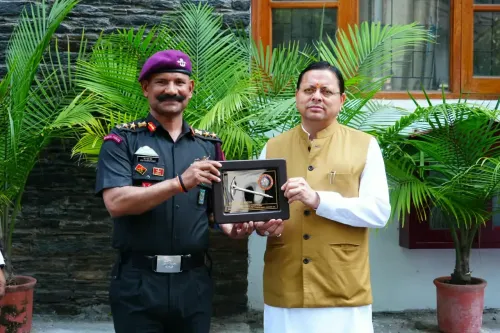
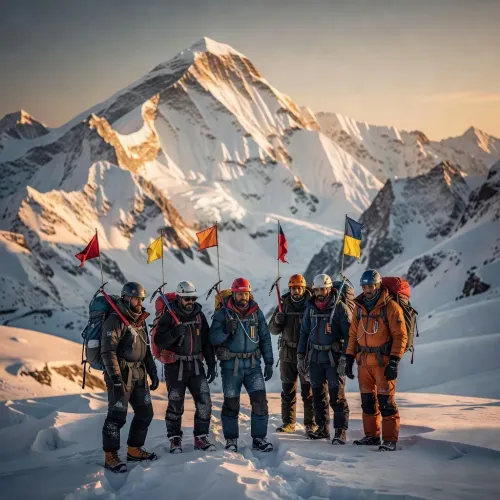
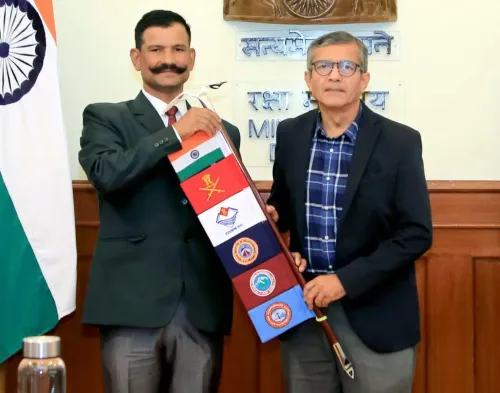
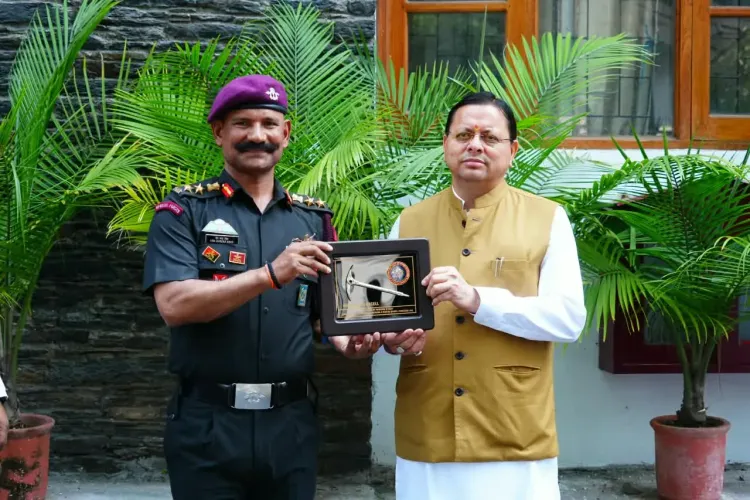
Four summits. Four victories. Uttarakhand Chief Minister Pushkar Singh Dhami welcomed home the teams behind four successful mountaineering expeditions conducted by the Nehru Institute of Mountaineering (NIM), Uttarkashi, flagging them in at his camp office on Thursday, 24 September 2026 — a moment that planted Uttarakhand's colours on peaks spanning the Himalayas to the Andes.
The four summits: from Ladakh's Nun-Kun to Argentina's Aconcagua
The headline achievement is the joint expedition by NIM and the Jawahar Institute of Mountaineering and Winter Sports (JIM&WS), Pahalgam — the two premier government mountaineering institutes on either side of the Pir Panjal — that placed climbers atop Mount Aconcagua (6,961 m) in Argentina, the highest peak in the Americas and one of the Seven Summits. Scaling Aconcagua demands acclimatisation to extreme altitude, sub-zero wind-chill and multi-week endurance — a technical and physical test that goes well beyond domestic Himalayan climbs.
The three remaining summits all sit within the rugged Nun-Kun massif of Ladakh: Mount Kun (7,077 m), Mount Nun (7,135 m) — the highest peak in the Zanskar range — and Mount Delta-41 (5,908 m). Together, the four expeditions represent a sweep of altitude, geography and technical difficulty rarely achieved in a single season.
Dhami praised the climbers in his post, writing: 'Kathin paristhitiyon mein aapke sahas, anushasan, takniki dakshata aur team bhavna ne Uttarakhand ka maan badhaya hai' — 'In difficult conditions, your courage, discipline, technical expertise and team spirit have raised the honour of Uttarakhand.' He added that the achievements would inspire the country's youth toward adventure activities.
NIM at 61: why Uttarkashi remains India's mountaineering capital
Founded in 1965, the Nehru Institute of Mountaineering in Uttarkashi was established to institutionalise high-altitude training after India's early Himalayan expeditions revealed the need for structured technical education. Over six decades it has trained thousands of climbers — military personnel, civilians and women — producing alumni who have gone on to summit Mount Everest and peaks across the greater Himalayan arc.
Its counterpart, JIM&WS in Pahalgam, covers the Jammu and Kashmir end of the spectrum, running courses that blend mountaineering with winter sports. Joint expeditions between the two institutes — such as the Aconcagua climb — signal a coordinated national push on adventure sports that transcends state boundaries.
Adventure tourism: Uttarakhand's calculated bet
For Uttarakhand, expedition victories are not just sporting moments — they feed a deliberate strategy. The state has consistently positioned itself as India's adventure-tourism capital, and high-profile summit successes generate the kind of aspirational imagery that draws trekkers, climbers and expedition groups to its trails and training centres. The broader pattern: state governments in Uttarakhand and Jammu & Kashmir are investing in mountaineering infrastructure as a dual-purpose tool — building technically skilled youth while driving tourism revenue into remote hill economies.
With four summits flagged in a single ceremony, the message from Dhami's camp office is sharp: Uttarakhand's mountains are not just scenic backdrops — they are proving grounds.
Point of View
Dhami aligns the state government's brand with aspiration and youth empowerment, not merely bureaucratic administration. The NIM–JIM&WS joint Aconcagua expedition is also quietly significant: it signals that India's mountaineering institutes are looking beyond domestic peaks to build globally competitive climbers, a step up in ambition from routine Himalayan training cycles. Watch whether enhanced adventure infrastructure spending follows in Uttarakhand's next budget.
NationPress
24 Sept 2026
Frequently Asked Questions
What is the Nehru Institute of Mountaineering (NIM) in Uttarkashi?
The Nehru Institute of Mountaineering (NIM) in Uttarkashi, Uttarakhand, is India's premier government mountaineering training institute, established in 1965. It trains civilian and military climbers in high-altitude techniques and conducts expeditions to peaks across India and abroad.
What expeditions did NIM complete in September 2026?
NIM teams completed four successful expeditions: a joint NIM–JIM&WS ascent of Mount Aconcagua (6,961 m) in Argentina, and ascents of Mount Kun (7,077 m), Mount Delta-41 (5,908 m), and Mount Nun (7,135 m) in the Nun-Kun massif, Ladakh. CM Pushkar Singh Dhami flagged in all four teams on 24 September 2026.
Where is Mount Aconcagua and why is it significant for Indian mountaineers?
Mount Aconcagua (6,961 m) is located in Argentina and is the highest peak in the Americas and one of the famous Seven Summits. Its ascent by a joint NIM–JIM&WS team marks a significant international achievement for Indian government mountaineering institutes.
What is the Nun-Kun massif?
The Nun-Kun massif is a Himalayan range in Ladakh featuring some of the region's highest peaks. Mount Nun (7,135 m) is the highest summit in the Zanskar range, while Mount Kun (7,077 m) and Mount Delta-41 (5,908 m) are neighbouring peaks on the same massif.
What is JIM&WS Pahalgam?
The Jawahar Institute of Mountaineering and Winter Sports (JIM&WS), located in Pahalgam, Jammu and Kashmir, is a government mountaineering institute that runs training courses and joint expeditions with NIM. It collaborated with NIM on the successful Mount Aconcagua climb.