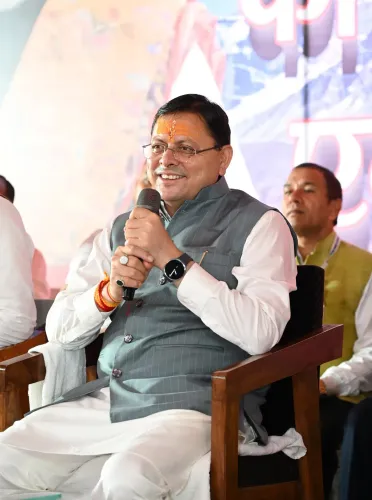
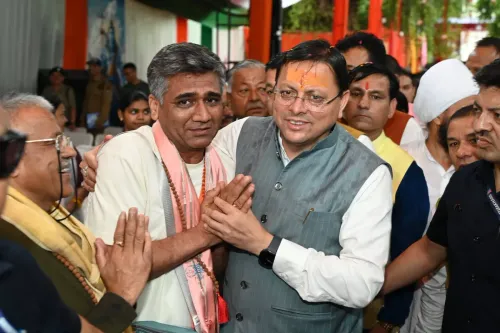
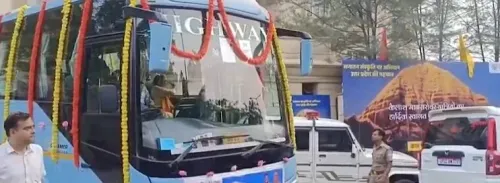
CM Dhami flags off first Kailash Mansarovar batch from Tanakpur
Synopsis
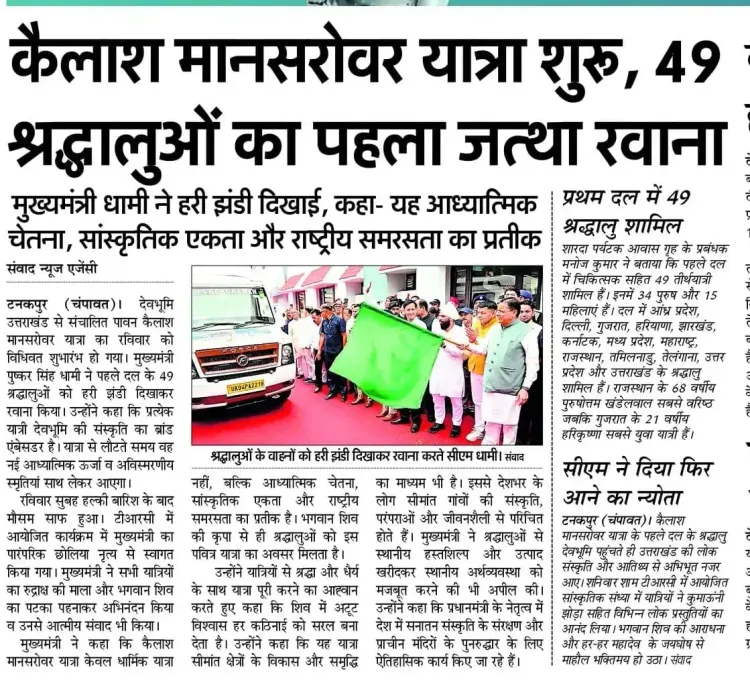
Chief Minister Pushkar Singh Dhami flagged off the first batch of Kailash Mansarovar Yatra pilgrims from Tanakpur on 7 July 2026, opening Uttarakhand's pilgrimage season for one of Hinduism's most sacred high-altitude journeys to Tibet.
Key Takeaways
Chief Minister Pushkar Singh Dhami personally flagged off the first Kailash Mansarovar Yatra batch of 2026 from Tanakpur .
Tanakpur in Champawat district serves as a key departure point for pilgrims on the Uttarakhand route to Tibet.
The Kailash Mansarovar Yatra has been conducted annually under Government of India auspices since 1981 , coordinated by the Ministry of External Affairs .
The yatra requires annual diplomatic clearance from China and is subject to health and security conditions.
Uttarakhand manages local logistics and ceremonial formalities, reinforcing its role as a gateway for Himalayan pilgrimages.
Subsequent batch schedules and the overall 2026 pilgrim quota are expected to be announced in the coming weeks.
The Chief Minister's Office of Uttarakhand announced on Monday, 7 July 2026 that Chief Minister Pushkar Singh Dhami flagged off the first batch of pilgrims for the Kailash Mansarovar Yatra from Tanakpur, marking the formal commencement of this year's pilgrimage season from Uttarakhand.
The post stated: 'Tanakpur se Kailash Mansarovar Yatra ke pratham dal ko Mukhyamantri Shri Pushkar Singh Dhami ne hari jhandi dikhakar kiya ravana' — 'Chief Minister Shri Pushkar Singh Dhami flagged off the first batch of the Kailash Mansarovar Yatra from Tanakpur.'
Context
The flag-off ceremony at Tanakpur, a town in Champawat district, signals the start of another annual cycle of one of Hinduism's most revered pilgrimages. Tanakpur serves as a key transit and departure hub for pilgrims heading toward the Indo-Tibet border, supplementing the primary Lipulekh route through Pithoragarh district. The Government of Uttarakhand manages local logistics, security arrangements, and ceremonial formalities for each departing batch.Policy Backdrop
The Kailash Mansarovar Yatra has been conducted under the auspices of the Government of India since 1981, coordinated centrally by the Ministry of External Affairs, which handles diplomatic clearances with China and manages pilgrim quotas. Uttarakhand routes gained greater prominence after the 1962 border conflict restricted older trans-Himalayan paths. The yatra remains subject to annual diplomatic approvals and can be paused on health or security grounds, making each season's flag-off a diplomatically significant moment as much as a religious one. India has consistently positioned organised access to Himalayan sacred sites as an element of cultural diplomacy. State governments, particularly Uttarakhand, function as operational gateways, investing in road connectivity and pilgrim facilities in border districts such as Champawat and Pithoragarh.Stakeholders and Impact
For religious pilgrims, the flag-off represents the culmination of months of application, medical screening, and preparation for a physically demanding high-altitude journey to Mount Kailash and Lake Mansarovar in Tibet. Local tourism operators, transport providers, and hospitality businesses in Champawat and Pithoragarh districts benefit directly from the passage of yatra batches through the region. The ceremony also carries symbolic weight for the state government, reinforcing Uttarakhand's identity as a pilgrimage gateway and demonstrating active state-level facilitation of a centrally administered yatra.What's Next
Attention will now turn to the schedules and composition of subsequent batches, the overall pilgrim quota sanctioned for the 2026 season, and any state-central coordination on infrastructure upgrades along the Tanakpur corridor. The smooth conduct of the first batch will set the operational tone for the remainder of the season. Any diplomatic or weather-related developments along the Tibet border could influence the pace and scale of subsequent departures.Point of View
Cultural diplomacy with China, and Himalayan infrastructure development, making each season's opening a multi-layered signal. Dhami's personal presence at the ceremony underscores the state government's effort to remain visibly associated with a pilgrimage that commands deep reverence across India. The smooth resumption of the 2026 yatra also reflects a stable diplomatic window with Beijing, a variable that has historically disrupted the pilgrimage.
NationPress
6 Jul 2026
Frequently Asked Questions
What is the Kailash Mansarovar Yatra?
The Kailash Mansarovar Yatra is an annual organised pilgrimage to Mount Kailash and Lake Mansarovar in Tibet, considered among the most sacred destinations in Hinduism, Buddhism, and Jainism. It has been conducted under Government of India auspices since 1981, coordinated by the Ministry of External Affairs.
Where does the Tanakpur route for Kailash Mansarovar Yatra begin?
The Tanakpur route begins in Tanakpur town in Champawat district, Uttarakhand. It serves as a transit and departure hub for pilgrims heading toward the Indo-Tibet border, supplementing the primary Lipulekh route through Pithoragarh district.
Who flagged off the first Kailash Mansarovar Yatra batch in 2026?
Chief Minister Pushkar Singh Dhami of Uttarakhand flagged off the first batch of the 2026 Kailash Mansarovar Yatra from Tanakpur on 7 July 2026.
Does the Kailash Mansarovar Yatra require permission from China?
Yes. The yatra requires annual diplomatic clearance from China, as the destination — Mount Kailash and Lake Mansarovar — lies in Tibet. The Ministry of External Affairs coordinates these clearances each year, and the pilgrimage can be suspended due to diplomatic, health, or security developments.
What is Uttarakhand's role in the Kailash Mansarovar Yatra?
Uttarakhand manages local logistics, security arrangements, and ceremonial flag-off formalities for yatra batches departing from its territory. The state government also oversees infrastructure development in border districts such as Champawat and Pithoragarh that lie along the pilgrimage routes.