CM Dhami Greets Uttarakhand on Harela, Urges Mass Tree Planting
Synopsis
Chief Minister Pushkar Singh Dhami greeted Uttarakhand residents on Harela 2026, calling for large-scale tree planting, invoking PM Modi's Ek Ped Maa Ke Naam campaign, and urging the Forest Department and social organisations to lead conservation efforts across the state.
Key Takeaways
CM Pushkar Singh Dhami issued a Harela greeting message on 15 July 2026 , the eve of the festival.
He described Harela as a festival of gratitude to nature, folk culture, and environmental conservation.
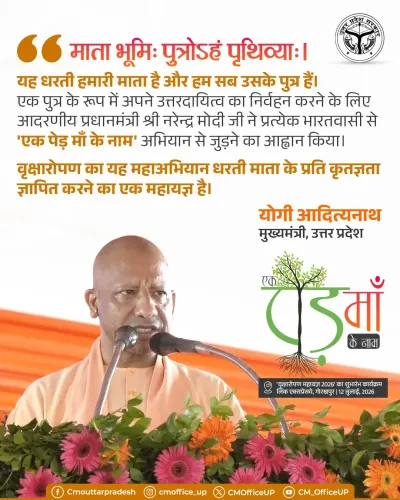
Dhami credited PM Modi's 'Ek Ped Maa Ke Naam' campaign (launched 2024 ) with raising public awareness on afforestation.
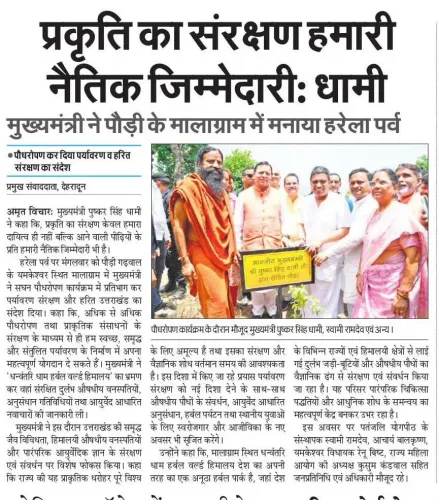
The Van Evam Udyan Vibhag (Forest and Garden Department) has prepared an action plan for large-scale plantation drives in urban and rural areas on Harela.
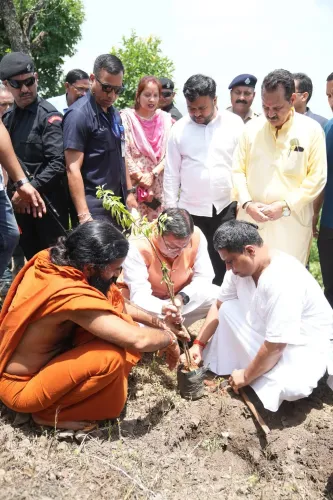
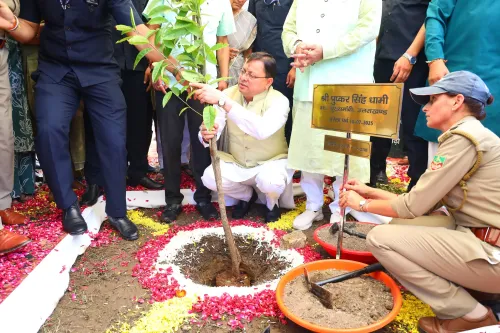
The CM called on all residents, social organisations, and institutions to actively participate in tree planting as both a social and cultural responsibility.
Revival of water sources, rivers, and streams was highlighted as a continuing conservation priority for Uttarakhand.
The Chief Minister's Office of Uttarakhand announced on Wednesday, 15 July 2026 that Chief Minister Pushkar Singh Dhami has extended greetings to the people of the state on the occasion of Harela, the traditional Kumaoni festival marking the onset of monsoon, and called on citizens to plant trees in large numbers as an act of environmental responsibility.
Context
In a message issued on the eve of Harela, CM Dhami described the festival as one that 'expresses gratitude to nature and carries the message of folk culture and environmental conservation, inspiring us to remain connected to our traditions' (yah parv prakriti ke prati kritagyata pradarshit karne tatha lok sanskriti evam paryavaran sanrakshan ka sandesh deta hai). He emphasised that folk festivals are also markers of the state's cultural heritage.
Dhami noted that Devbhoomi Uttarakhand holds a distinct identity rooted in spirituality and a rich cultural legacy, and that its natural beauty and biodiversity attract people from across the country and beyond. He argued that this very richness makes the state's responsibility toward environmental protection all the greater.
Policy Backdrop
The Chief Minister specifically cited Prime Minister Narendra Modi's 'Ek Ped Maa Ke Naam' (One Tree in Mother's Name) campaign, launched in 2024, as having successfully spread public awareness about tree plantation across society. The national campaign encouraged citizens to plant trees in honour of their mothers, linking personal sentiment with ecological duty.
Dhami announced that the state's Van Evam Udyan Vibhag (Forest and Garden Department) has prepared an effective action plan to conduct large-scale tree plantation drives across both urban and rural areas of Uttarakhand on the occasion of Harela. He stressed that tree planting has now become 'a matter connected to public sentiment alongside social responsibility.'
Stakeholders and Impact
The Chief Minister's appeal was directed at all residents of Uttarakhand, urging them to contribute to environmental conservation by planting as many trees as possible. He also made a specific call to social organisations and institutions to extend their active cooperation in this effort, describing public participation as crucial to its success.
Dhami added that the initiative would help motivate future generations to stay connected to their traditions and fulfil their responsibilities toward nature conservation — framing tree planting not merely as a policy exercise but as a cultural and intergenerational obligation. The revival and conservation of water sources, rivers, and streams (gad-gaderon) was also highlighted as an ongoing priority for the state.
What's Next
The Forest and Garden Department's plantation drive, timed to coincide with Harela on 16 July 2026, will serve as the immediate test of this mobilisation effort. The scale of participation by social organisations and community groups, and the long-term survival rate of saplings planted, will determine the measurable impact of this year's drive.
Uttarakhand's approach of embedding environmental drives within living cultural festivals like Harela reflects a broader national pattern of using community occasions to advance afforestation goals in ecologically sensitive Himalayan zones — a model that policymakers are watching closely for replication across other hill states.
Point of View
Anchoring PM Modi's 'Ek Ped Maa Ke Naam' campaign to a deeply rooted Kumaoni tradition to maximise grassroots resonance. By framing tree planting as both a folk duty and a modern ecological imperative, the CM sidesteps the perception of top-down policy mandates. The explicit mention of water source revival signals that Uttarakhand is increasingly positioning environmental conservation as a climate-resilience issue, not merely a symbolic one. Whether the Forest Department's plantation drive translates into verifiable, long-term ecological gains will be the real measure of this messaging.
NationPress
15 Jul 2026
Frequently Asked Questions
What is Harela festival and why is it celebrated in Uttarakhand?
Harela is a traditional Kumaoni festival celebrated annually in July to mark the onset of the monsoon season. It is a time to express gratitude to nature, plant trees, and reaffirm the connection between people and the environment — making it one of Uttarakhand's most significant folk celebrations.
What did CM Dhami say on Harela 2026?
CM Pushkar Singh Dhami greeted Uttarakhand residents on the eve of Harela 2026 and urged them to plant as many trees as possible. He also called on social organisations to participate actively and highlighted the state Forest Department's plantation drive planned for the occasion.
What is the Ek Ped Maa Ke Naam campaign mentioned by CM Dhami?
'Ek Ped Maa Ke Naam' (One Tree in Mother's Name) is a national tree plantation campaign launched by Prime Minister Narendra Modi in 2024. It encourages citizens to plant a tree in honour of their mothers, linking personal sentiment with environmental responsibility.
What is the Uttarakhand Forest Department doing on Harela 2026?
The Van Evam Udyan Vibhag (Forest and Garden Department) of Uttarakhand has prepared an action plan to conduct large-scale tree plantation drives across urban and rural areas of the state on the occasion of Harela 2026.
When is Harela celebrated in 2026?
Harela 2026 falls on 16 July 2026 . CM Dhami's greeting message was issued on the eve of the festival, 15 July 2026 .