CR Paatil Meets Aviation Minister to Boost Surat Air Links
Synopsis
Union Jal Shakti Minister C. R. Paatil led a Surat delegation to meet Civil Aviation Minister Kinjarapu Ram Mohan Naidu on 15 July 2026, demanding immediate restoration of Surat–Delhi and Surat–Bengaluru flights, a new Surat–Mumbai direct service, and new links to Pune, Indore, Patna, Varanasi, Kolkata, and Chennai. IndiGo, Air India, and Akasa Air were present.
Key Takeaways
Paatil led a Surat delegation to meet Civil Aviation Minister Kinjarapu Ram Mohan Naidu on 15 July 2026 in New Delhi.
The delegation demanded immediate restoration of flights on the Surat–Delhi and Surat–Bengaluru routes where services have been suspended or reduced.
Early launch of a direct Surat–Mumbai air service and daily flights to Kolkata and Chennai were also sought on priority.
New connectivity to Pune, Indore, Patna, and Varanasi was raised as an expansion priority.
Representatives of IndiGo, Air India, and Akasa Air attended alongside senior Ministry of Civil Aviation officials.
The meeting ended with a ministry commitment to coordinate with airlines and take steps to improve Surat's air links on a priority basis.
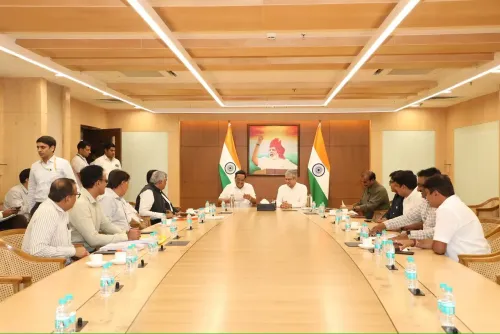
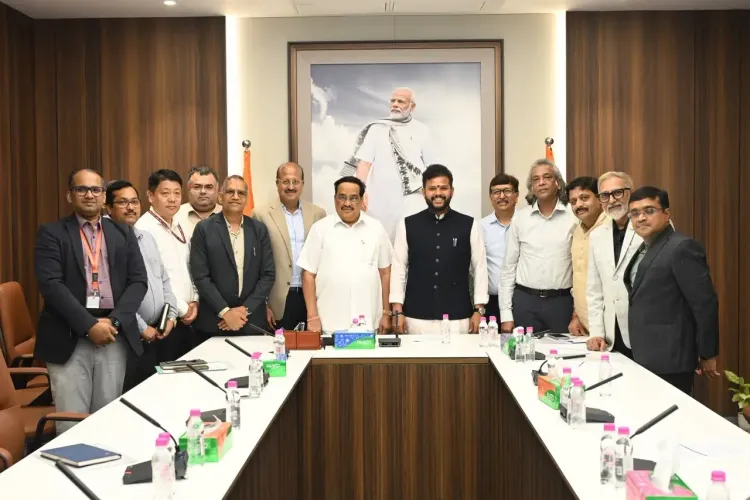
Union Jal Shakti Minister C. R. Paatil met Union Civil Aviation Minister Kinjarapu Ram Mohan Naidu in New Delhi on Wednesday, 15 July 2026, leading a Surat delegation that pressed for immediate restoration and expansion of air services connecting the Gujarat city to major metros and tier-2 destinations across India.
Context
Paatil shared details of the meeting on X, writing that the delegation placed demands before the Civil Aviation Ministry for the 'havaai sevaon ke vistaar evam vartamaan sevaon ki aavrutti badhane' (expansion of air services and increase in frequency of existing services) from Surat to various cities. Senior officials of the Ministry of Civil Aviation and representatives of IndiGo, Air India, and Akasa Air were also present at the meeting, giving the discussions an operational character beyond a routine ministerial visit.
The delegation's demands were specific: immediate restoration of suspended flights and reduced frequencies on the Surat–Bengaluru and Surat–Delhi routes, early launch of a direct Surat–Mumbai service, priority exploration of links to Pune, Indore, Patna, and Varanasi, and prompt restoration of daily flights on the Surat–Kolkata and Surat–Chennai routes.
Policy Backdrop
The meeting sits within a longer arc of national aviation policy. The UDAN (Ude Desh ka Aam Naagrik) scheme, launched in 2016, was designed to subsidise air connectivity to underserved airports and bring affordable flying to smaller cities. The National Civil Aviation Policy of 2016 complemented this by setting targets for operational airports and passenger growth.
India has since steadily upgraded airports and expanded domestic route networks, with particular emphasis on tier-2 industrial centres. Surat's demands mirror a recurring pattern seen across second-tier cities — restored metro connections lost to route rationalisation by airlines, and new links to emerging business hubs — that the government has been addressing through coordinated airline engagement.
Stakeholders and Impact
Surat is one of India's foremost industrial and commercial centres, home to a dominant share of the country's diamond polishing trade and a major textile manufacturing base. Business travellers, diamond merchants, textile exporters, and a fast-growing urban population all depend on reliable air links to metros such as Delhi, Mumbai, and Bengaluru for commerce and logistics.
The presence of representatives from IndiGo — India's largest domestic carrier by passengers — alongside Air India under Tata Group ownership and the newer low-cost entrant Akasa Air signals that the ministry is engaging the full spectrum of domestic operators on Surat's connectivity gaps. Restored and new routes would directly benefit trade, tourism, and everyday passenger mobility across the city's catchment area.
Paatil noted in his post that connecting a major industrial and commercial centre like Surat to more cities will give 'new momentum to trade, industry, tourism and civic conveniences' — a framing that positions the demand as an economic imperative rather than a political ask.
What's Next
The meeting concluded with an agreement that the Ministry of Civil Aviation will, in coordination with the concerned airlines and other stakeholders, take necessary steps on a priority basis to improve Surat's air connectivity. Formal announcements on route restorations — particularly the Surat–Delhi, Surat–Bengaluru, and Surat–Mumbai corridors — and possible inclusion of new Surat routes in future UDAN allocations will be the concrete outcomes to watch. Paatil credited Prime Minister Narendra Modi's 'visionary leadership' for the broader national expansion of aviation infrastructure, situating Surat's push within the government's wider Viksit Bharat development agenda.
Point of View
A model the government has increasingly preferred over prescriptive route mandates. Surat's demands are emblematic of a broader tension in Indian aviation: route rationalisation by profit-driven airlines often reverses connectivity gains made under UDAN subsidies, forcing political intervention to restore services. The outcome of this meeting will serve as a test case for how effectively the ministry can translate political commitment into durable airline schedules for industrial hubs.
NationPress
15 Jul 2026
Frequently Asked Questions
Which flights from Surat have been suspended or reduced?
The Surat delegation specifically flagged suspended or reduced flights on the Surat–Bengaluru and Surat–Delhi routes, as well as disrupted daily services on the Surat–Kolkata and Surat–Chennai corridors, and demanded their immediate restoration.
What new air routes is Surat seeking?
Surat is seeking a new direct service to Mumbai and priority exploration of connections to Pune, Indore, Patna, and Varanasi , in addition to restoring existing routes.
Who attended the aviation meeting for Surat on 15 July 2026?
The meeting included C. R. Paatil and a Surat delegation, Civil Aviation Minister Kinjarapu Ram Mohan Naidu , senior Ministry of Civil Aviation officials, and representatives of IndiGo, Air India, and Akasa Air .
What is the UDAN scheme and how does it relate to Surat?
The UDAN (Ude Desh ka Aam Naagrik) scheme, launched in 2016 , subsidises air connectivity to underserved airports across India. Surat's push for restored and new routes could be addressed through future UDAN allocations coordinated by the Civil Aviation Ministry.
What was the outcome of CR Paatil's meeting with the Civil Aviation Minister?
The meeting concluded with an agreement that the Ministry of Civil Aviation will coordinate with IndiGo, Air India, Akasa Air, and other stakeholders to take priority steps to improve Surat's air connectivity, though specific route announcements are awaited.