CM Dhami hails ₹11,000-crore CIE manufacturing scheme
Synopsis
Uttarakhand CM Pushkar Singh Dhami on 25 November 2026 welcomed a ₹11,000-crore Union Cabinet scheme to promote a CIE manufacturing ecosystem. He said it would boost indigenous production, create jobs, cut imports and advance Viksit Bharat @ 2047.
Key Takeaways
Uttarakhand CM Pushkar Singh Dhami on 25 November 2026 welcomed a ₹11,000 crore CIE manufacturing ecosystem scheme he attributed to the Union Cabinet.
He said the plan was taken under Prime Minister Narendra Modi 's leadership and would strengthen Atmanirbhar Bharat .
Dhami listed payoffs: indigenous manufacturing, new jobs, lower import dependence and a stronger global manufacturing identity.
He tied the outlay to the Viksit Bharat @ 2047 developed-India goal.
The post follows a policy line from Make in India (2014) , Atmanirbhar Bharat ( 2020 ) and PLI schemes across 14 sectors.
Uttarakhand Chief Minister Pushkar Singh Dhami on Wednesday, 25 November 2026, hailed a ₹11,000 crore Union Cabinet plan to grow a construction and infrastructure equipment manufacturing ecosystem, calling it fresh muscle for Atmanirbhar Bharat. In a post on X he said the decision, taken under Prime Minister Narendra Modi's leadership, would seed jobs, cut import dependence and help India claim a stronger global manufacturing identity by Viksit Bharat @ 2047.
Dhami wrote that Cabinet approval of the scheme to promote the Construction and Infrastructure Equipment, or CIE, manufacturing ecosystem is an important decision that gives new strength to the resolve of self-reliant India. He said indigenous manufacturing would get a boost, new employment opportunities would be created, import dependence would fall, and India would establish a strong identity in the global manufacturing sector.
What Dhami said the ₹11,000-crore CIE plan will do
The Uttarakhand chief minister, a BJP leader, quoted a financial outlay of ₹11,000 crore and framed the measure as industrial nation-building. He argued the initiative would strengthen the country's industrial capabilities and play an important role in meeting the Viksit Bharat @ 2047 goal — the national vision of a developed India by the centenary of Independence.
His post did not list beneficiary criteria, tender calendars or product categories. Those details sit with the Centre. What he emphasised was the direction: more factories at home, less reliance on imported machines.
Capital goods after Make in India and Atmanirbhar Bharat
The pitch sits in a longer policy chain. Make in India was launched in September 2014 to lift manufacturing's share of GDP. The Atmanirbhar Bharat Abhiyan, announced in May 2020 with a ₹20 lakh crore economic package, sharpened the focus on domestic supply chains. Production Linked Incentive schemes followed from 2020 across 14 sectors, including capital goods.
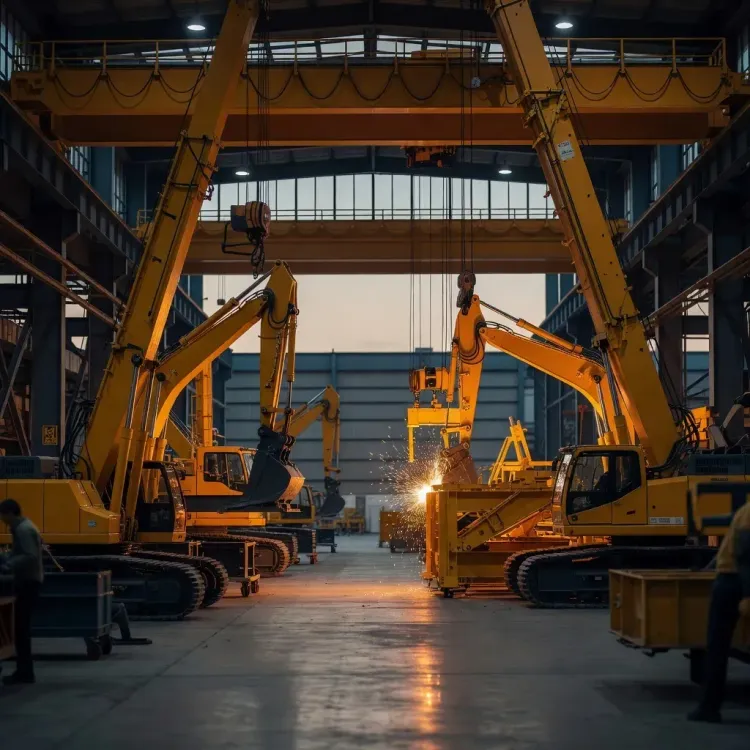
Construction and infrastructure equipment is a capital-goods choke point. Roads, railways, housing and power projects all run on heavy kit. Domestic manufacturers, the construction industry and MSME ancillary units are the stakeholders the language of the post points toward: plants that can make, service and eventually export that equipment.
Jobs, imports and the 2047 industrial clock
Dhami listed three near-term payoffs: indigenous manufacturing, new jobs, and lower import dependence. He then zoomed out — a stronger Indian stamp in global manufacturing, and a contribution to Viksit Bharat @ 2047. That pairing is the grammar of the current industrial push: self-reliance as both factory policy and a development deadline.
Watch the rollout. Tenders, first manufacturing units and any extra allocations in later Union Budgets or NITI Aayog reviews will decide whether the CIE outlay becomes assembly lines. The test now is conversion: whether ₹11,000 crore turns into machines built in India.
Point of View
A gap New Delhi has tried to close since Make in India and the 2020 Atmanirbhar package. By tying a ₹11,000 crore CIE outlay to Viksit Bharat @ 2047, he recasts a sectoral scheme as a long-horizon nation-building story. The political signal is alignment; the policy test is whether plants, not press notes, follow.
NationPress
25 Nov 2026
Frequently Asked Questions
What scheme did Pushkar Singh Dhami welcome on 25 November 2026?
He welcomed a Union Cabinet scheme, as stated in his post, to promote a construction and infrastructure equipment (CIE) manufacturing ecosystem with a financial outlay of ₹11,000 crore. He said it would strengthen Atmanirbhar Bharat and help India cut import dependence.
What did Dhami say the CIE scheme would achieve?
He said it would promote indigenous manufacturing, create new employment opportunities, reduce import dependence and help India establish a strong identity in global manufacturing. He also linked it to the Viksit Bharat @ 2047 goal.
Who is Pushkar Singh Dhami?
Pushkar Singh Dhami is the Chief Minister of Uttarakhand and a BJP leader. He posted on X in support of the CIE manufacturing ecosystem scheme attributed to the Union Cabinet.
What is Atmanirbhar Bharat?
Atmanirbhar Bharat is the self-reliant India programme championed since 2020 to promote indigenous production, reduce imports and strengthen industrial ecosystems. It followed a ₹20 lakh crore package announced in May 2020.
What is Viksit Bharat @ 2047?
It is the national vision to transform India into a developed economy by 2047, the centenary of Independence, through sustained industrial and infrastructure growth.