CM Dhami hails Vande Mataram opening Lok Sabha monsoon session
Synopsis
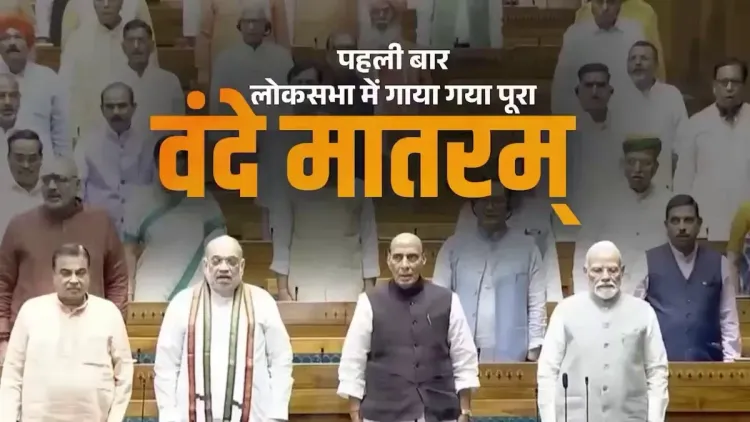
Uttarakhand CM Pushkar Singh Dhami hailed the collective singing of Vande Mataram at the opening of Lok Sabha on the monsoon session's final day, calling it a historic moment for Indian democracy and crediting PM Modi with deepening respect for national symbols.
Key Takeaways
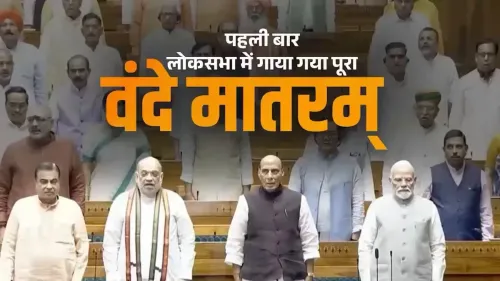
Lok Sabha opened its monsoon session's final day with a collective singing of Vande Mataram on 13 August 2026 .
CM Pushkar Singh Dhami described the moment as 'historic and glorious for India's democratic tradition.' He credited PM Narendra Modi 's leadership with strengthening public faith in national symbols and cultural heritage.
Vande Mataram has been India's national song since its adoption by the Constituent Assembly in 1950 .
The move reflects a broader BJP pattern of integrating traditional cultural markers into official state functions.
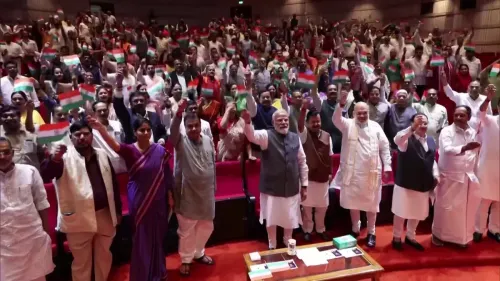
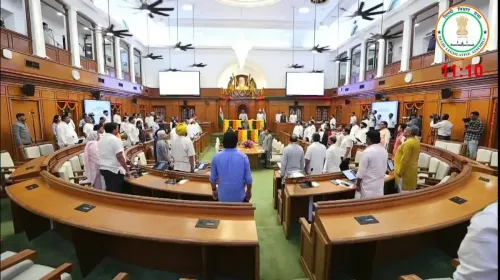
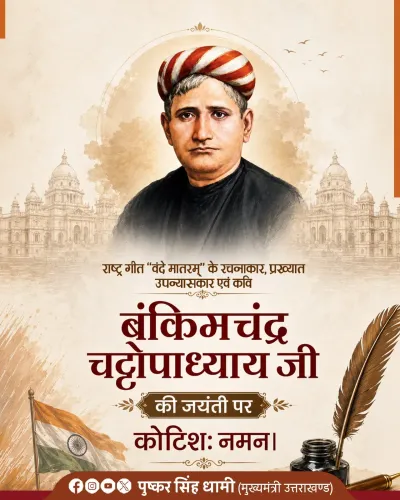
A national song echoing through the lower house of Parliament — on the final day of the monsoon session, Lok Sabha proceedings opened with a collective singing of Vande Mataram, drawing a warm public response from Uttarakhand Chief Minister Pushkar Singh Dhami on Thursday, 13 August 2026.
Dhami called the moment 'historic and glorious for India's democratic tradition and national consciousness,' saying the song's resonance in the House deepens 'our unbreakable devotion to Mother India, national identity, and the spirit of nationhood.' He credited Prime Minister Narendra Modi's leadership with continuously strengthening public faith in national symbols and India's cultural heritage.
Vande Mataram's place in Parliament
Vande Mataram has carried constitutional weight since 1950, when the Constituent Assembly adopted it as India's national song — distinct from, but equally revered alongside, the national anthem. Its use in formal state and parliamentary settings has periodically surfaced as both a cultural affirmation and a political signal. Having it open a session of the Lok Sabha places it squarely within the chamber's ceremonial register.
BJP's broader push for cultural markers in official spaces
The gesture fits a recognisable pattern under successive BJP-led administrations: integrating traditional cultural references — national song, national anthem, classical symbols — into the routine of state functions. Whether collective singing of Vande Mataram becomes a fixed feature on opening or closing days of future sessions is the practical question that follows from moments like this one.
For Dhami, a vocal advocate of cultural nationalism within his party, the post is also a reaffirmation of the ideological thread running from New Delhi's Parliament House to the Dehradun secretariat — that pride in national symbols is governance, not just ceremony.
Point of View
Amplifying such gestures on social media extends the reach of that narrative well beyond the House floor. The recurring integration of Vande Mataram and similar markers into state functions signals that cultural nationalism is not peripheral to governance messaging but central to it. Whether opposition parties contest or accept such rituals will shape the political temperature of future sessions.
NationPress
13 Aug 2026
Frequently Asked Questions
What happened on the final day of Lok Sabha's monsoon session 2026?
Proceedings on the final day of the Lok Sabha monsoon session opened with a collective singing of Vande Mataram, which Uttarakhand CM Pushkar Singh Dhami praised as a historic moment for Indian democratic tradition.
What did CM Dhami say about Vande Mataram in Parliament?
CM Dhami called the collective singing of Vande Mataram in Lok Sabha 'historic and glorious,' saying it deepens devotion to Mother India and national identity, and credited PM Modi's leadership for strengthening respect for national symbols.
Is Vande Mataram India's national anthem or national song?
Vande Mataram is India's national song, not the national anthem. The Constituent Assembly adopted it in 1950. The national anthem is Jana Gana Mana.
Why is BJP emphasising national symbols in Parliament?
Successive BJP-led administrations have made integrating cultural markers — national song, national anthem, classical symbols — into state and parliamentary functions a consistent practice, framing it as an affirmation of national pride and cultural heritage.
Will Vande Mataram be sung at the start of every Parliament session?
It is not yet established as a fixed practice. Whether collective singing of Vande Mataram becomes a recurring feature on opening or closing days of future sessions remains to be seen based on how Parliament schedules its proceedings going forward.