CM Dhami Welcomes 47-Day International Cycle Yatra Team
Synopsis
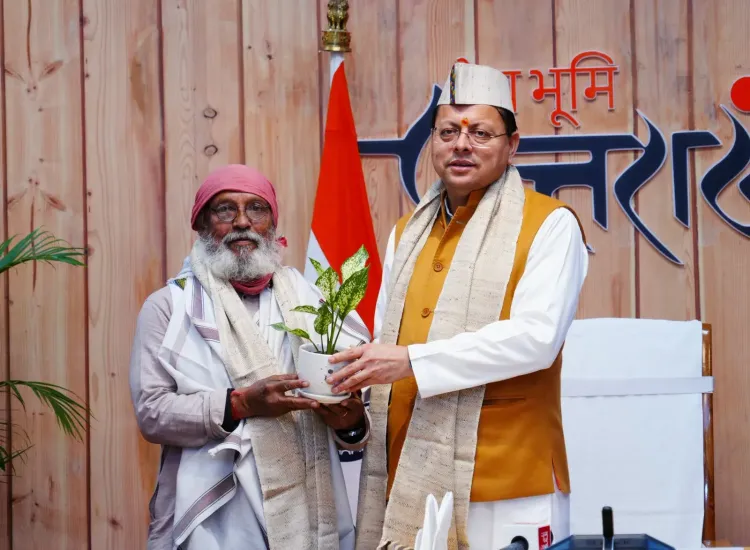
Uttarakhand CM Pushkar Singh Dhami welcomed cyclists who completed a 47-day, 3,000-km conservation yatra from Janakpur Dham, Nepal, led by Padma Bhushan Dr. Anil Prakash Joshi, and released the poster for the World Disaster Management Conference 2026 in Dehradun.
Key Takeaways
The 47-day International Prakriti Path Cycle Yatra 2026 covered over 3,000 km across 25-plus districts and 150-plus villages .
The yatra started at Janakpur Dham, Nepal , making it a cross-border conservation initiative.
It was led by Padma Bhushan Dr.
Anil Prakash Joshi , founder of Himalayan eco-organisation HESCO .
CM Dhami stated that development and environment are complementary, not conflicting, goals.
The poster for the World Disaster Management Conference 2026 ( 28–30 November , Dehradun) was released at the ceremony.
Uttarakhand has flagged protection of the Himalayas, rivers, forests and biodiversity as top state priorities.
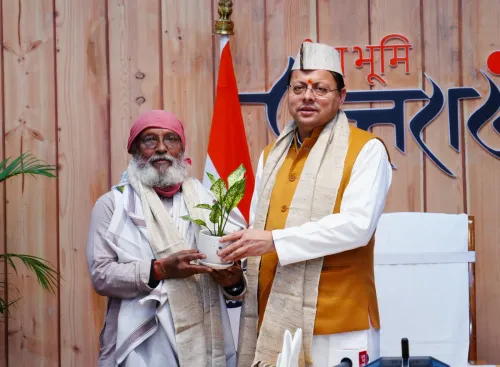
Three thousand kilometres, 25-plus districts, 150-plus villages — and a message about water, forests and land that crossed an international border and climbed through the Himalayas on two wheels. Uttarakhand Chief Minister Pushkar Singh Dhami on Tuesday, 17 November 2026 welcomed the cyclists at his official residence in Dehradun as the 47-day International Prakriti Path Cycle Yatra 2026 reached its conclusion.
From Janakpur to Dehradun: the route of the yatra
The yatra began at Janakpur Dham, Nepal — a sacred site on the Indian subcontinent's cultural map — and wound its way through the mountains and valleys of Uttarakhand, carrying a conservation message deep into communities that live alongside the ecosystems they depend on. Led by Padma Bhushan awardee Dr. Anil Prakash Joshi, founder of the Himalayan environmental organisation HESCO, the campaign covered territory spanning more than 150 villages across over 25 districts, making it one of the more expansive cross-border environmental awareness rides in recent Himalayan memory.
Dr. Joshi, whose HESCO has run Himalayan eco-development campaigns since 1979, has long argued that conservation and community livelihood cannot be separated. The yatra carried precisely that argument — on bicycles, through mountain roads — to audiences far from policy corridors.
Development and environment: Dhami's framing
At the closing ceremony, CM Dhami articulated a position his government has consistently held: that development and environment are not adversaries. 'Vikas aur paryavaran ek-doosre ke virodhi nahin' — 'Development and environment are not opposed to each other' — he said, calling the balance between them 'the need of the hour.' He identified the protection of Uttarakhand's Himalayan ecosystems, rivers, forests and biodiversity as among his government's highest priorities.
That framing matters in a state where rapid infrastructure expansion — roads, hydropower, tourism — routinely brushes against fragile mountain ecology. The Kedarnath floods of 2013 remain a reference point for why disaster resilience and conservation cannot be treated as afterthoughts to growth.
World Disaster Management Conference 2026 poster unveiled
The ceremony carried a forward-looking announcement: CM Dhami released the official poster for the World Disaster Management Conference 2026, scheduled from 28 to 30 November 2026 in Dehradun. The timing — a conservation yatra concluding days before an international disaster management summit — was no coincidence. Himalayan states have increasingly woven environmental awareness campaigns into the institutional architecture of disaster resilience, treating community-level conservation messaging as a first line of defence against floods, landslides and ecological degradation.
With Dehradun set to host delegates from across the world in less than a fortnight, the yatra's conclusion doubles as a warm-up act for the larger global conversation about mountain ecosystems and the communities that call them home.
Point of View
CM Dhami is signalling that Uttarakhand intends to position itself as a credible host of global environmental discourse — not merely a backdrop for it. The cross-border origin at Janakpur Dham adds a subtle diplomatic dimension, reinforcing India-Nepal people-to-people ties on shared ecological concerns. The 'development and environment are complementary' framing is a deliberate rebuttal to critics who argue that infrastructure push in the Himalayas has come at conservation's expense. With Dehradun hosting an international summit in days, the optics of grassroots conservation feeding into institutional disaster governance is carefully choreographed.
NationPress
17 Nov 2026
Frequently Asked Questions
What is the International Prakriti Path Cycle Yatra 2026?
It is a 47-day cycling expedition that covered over 3,000 km from Janakpur Dham in Nepal through more than 25 districts and 150 villages in India, spreading awareness about water, forest and land conservation.
Who led the Prakriti Path Cycle Yatra 2026?
The yatra was led by Padma Bhushan awardee Dr. Anil Prakash Joshi, a prominent Himalayan environmentalist and the founder of HESCO, an eco-development organisation active since 1979.
What is the World Disaster Management Conference 2026?
It is an international conference scheduled from 28 to 30 November 2026 in Dehradun, Uttarakhand. Its poster was released by CM Pushkar Singh Dhami at the yatra's closing ceremony.
Where did the Prakriti Path Cycle Yatra begin?
The yatra began at Janakpur Dham in Nepal, making it a cross-border initiative linking Himalayan communities across India and Nepal on shared environmental concerns.
What is CM Dhami's stance on development versus environment?
CM Dhami stated that development and environment are not opposed to each other, emphasising that striking a balance between the two is the need of the hour, particularly for Uttarakhand's Himalayan ecosystems.