CM Dhami meets author active in Indo-German cultural ties
Synopsis
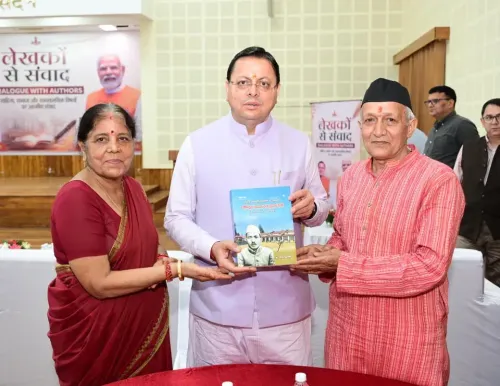
Uttarakhand Chief Minister Pushkar Singh Dhami received author Dr. Yojana Sah Jain at his camp office on 13 July 2026. She presented three literary works and was praised for strengthening Indo-German cultural dialogue. Dhami said literature powerfully expresses society, culture, and human values.
Key Takeaways
CM Pushkar Singh Dhami held a courtesy meeting with litterateur Dr.
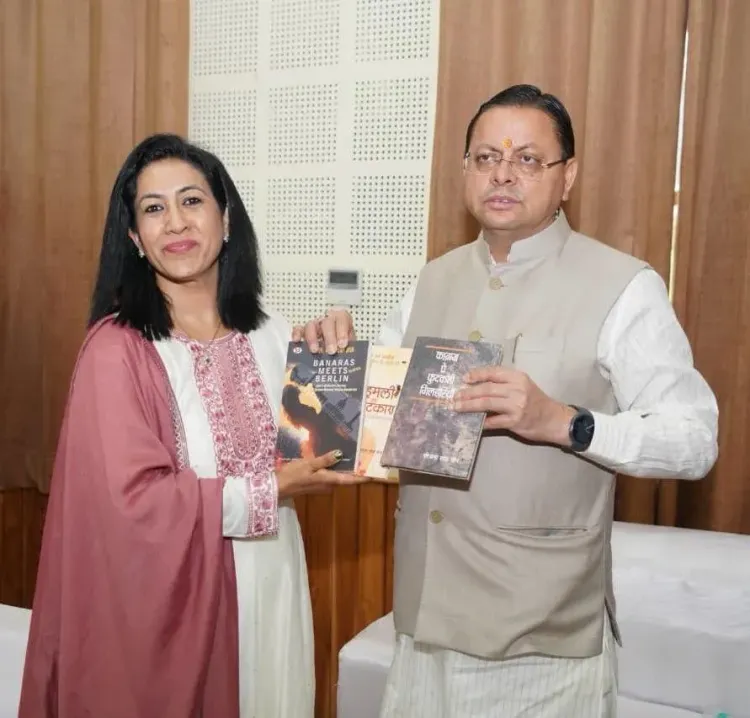
Yojana Sah Jain at the Chief Minister's Camp Office on 13 July 2026 .
Jain gifted three works: short-story collection 'Imli ka Chatkara' , novel 'Banaras Meets Berlin' , and poetry collection 'Kagaz pe Phudakti Gilahariyan' .
CM Dhami praised Dr.
Jain's role in fostering Indo-German cultural and intellectual dialogue .
Dhami stated that literature is 'an effective medium for giving powerful expression to society, culture, and human values.' The meeting reflects Uttarakhand 's engagement with writers active in India-Germany bilateral cultural spaces as part of broader soft-power outreach.
The Chief Minister's Office of Uttarakhand announced on 13 July 2026 that Chief Minister Pushkar Singh Dhami received a courtesy call at the Chief Minister's Camp Office from Dr. Yojana Sah Jain, a litterateur and active contributor to Indo-German cultural relations.
Context
During the meeting, Dr. Jain presented CM Dhami with three of her literary works: 'Imli ka Chatkara' (a short-story collection), 'Banaras Meets Berlin' (a novel), and 'Kagaz pe Phudakti Gilahariyan' (a poetry collection). The titles reflect a deliberate bridging of Indian folk sensibility with a European literary audience, particularly the novel whose very name places Banaras and Berlin in dialogue.
CM Dhami congratulated Dr. Jain on her literary achievements and observed that 'literature is an effective medium for giving powerful expression to society, culture, and human values.' He also appreciated her contribution to encouraging cultural and intellectual dialogue between India and Germany.
Policy Backdrop
India and Germany established diplomatic relations in 1951, and the bilateral relationship has since encompassed sustained academic, literary, and philosophical exchange. Germany remains one of India's most significant technology and education partners in Europe, and cultural programming has historically supported that broader relationship.
State governments across India have increasingly engaged writers and artists active in bilateral cultural spaces as part of sub-national outreach that complements national-level cultural agreements. Such courtesy meetings serve to signal a state's openness to international intellectual exchange without committing to specific policy deliverables.
Stakeholders and Impact
The meeting is of direct relevance to India's literary community, cultural diplomacy practitioners, and institutions involved in Indo-German exchange programmes. Writers who straddle both cultural spaces often become informal ambassadors, carrying regional Indian narratives — in this case rooted in Uttarakhand's folk life and the sacred city of Banaras — to European readers.
CM Dhami expressed confidence that Dr. Jain's works would 'effectively present Indian culture, folk life, and sensibilities on the global stage' and help further strengthen cultural ties between the two countries. For Uttarakhand, a Himalayan state with a strong pilgrimage and heritage identity, such associations also carry soft-power value in projecting the state's cultural depth internationally.
What's Next
The meeting could foreshadow participation by Dr. Jain or similar authors in state-supported literary events or India-Germany cultural festivals in the coming months. Uttarakhand's government has maintained a focus on heritage promotion under CM Dhami, and engagements of this nature often precede broader cultural programming announcements.
As India deepens its soft-power outreach through literature and the arts, state-level endorsements of writers active in bilateral spaces are likely to become a more visible feature of sub-national cultural diplomacy.
Point of View
Where a state government lends institutional visibility to a writer working at the intersection of Indian and European literary culture. For CM Dhami, the optics reinforce Uttarakhand's positioning as a state that values both heritage and global intellectual engagement. More broadly, the encounter fits a pattern in which Indian state governments use such courtesy meetings to signal alignment with New Delhi's soft-power priorities without committing budget or policy resources. The real test will be whether this endorsement translates into structured programming — literary festivals, translation grants, or cultural exchange slots — that gives Dr. Jain's Indo-German bridge-building work institutional traction.
NationPress
12 Oct 2026
Frequently Asked Questions
Who is Dr. Yojana Sah Jain?
Dr. Yojana Sah Jain is an Indian author and active contributor to Indo-German cultural relations. She has written a short-story collection 'Imli ka Chatkara', a novel 'Banaras Meets Berlin', and a poetry collection 'Kagaz pe Phudakti Gilahariyan', works that bridge Indian folk sensibility with a European literary context.
Why did Dr. Yojana Sah Jain meet Uttarakhand CM Pushkar Singh Dhami?
Dr. Jain paid a courtesy call on CM Dhami at the Chief Minister's Camp Office on 13 July 2026 and presented him with three of her literary works. The meeting was an occasion to recognise her contributions to Indo-German cultural and intellectual dialogue.
What books did Dr. Yojana Sah Jain gift to CM Dhami?
She gifted three works: 'Imli ka Chatkara' (a short-story collection), 'Banaras Meets Berlin' (a novel), and 'Kagaz pe Phudakti Gilahariyan' (a poetry collection).
What did CM Dhami say about literature at the meeting?
CM Dhami said that 'literature is an effective medium for giving powerful expression to society, culture, and human values.' He also expressed confidence that Dr. Jain's works would present Indian culture and folk life on the global stage and strengthen Indo-German cultural ties.
What is the significance of Indo-German cultural relations for India?
India and Germany established diplomatic relations in 1951, and bilateral ties have included sustained academic, literary, and philosophical exchanges. Germany is a major technology and education partner for India, and cultural programming — including literary exchanges — supports that broader relationship.