CM Dhami Meets PM Modi, Gifts Uttarakhand Crafts
Synopsis
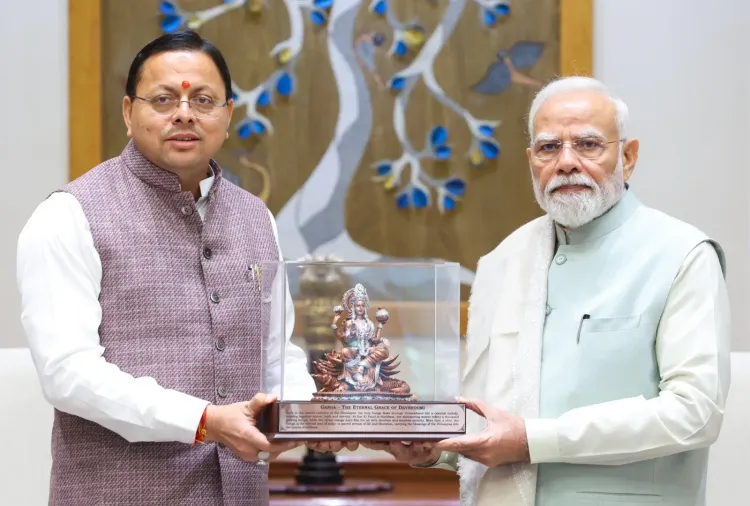
Uttarakhand CM Pushkar Singh Dhami met PM Narendra Modi in New Delhi on 20 November 2026, presenting a selection of state handicrafts, Badri ghee, Harsil rajma, and a Maa Ganga replica signalling early preparations for Haridwar Kumbh 2027.
Key Takeaways
CM Pushkar Singh Dhami met PM Narendra Modi in New Delhi on 20 November 2026 .
Gifts included a Malari traditional handwoven coat-patti , Dorkha woollen fabric , pure Uttarakhand honey , and Badri ghee .
Harsil rajma and red rice from the upper Bhagirathi valley were also presented, spotlighting high-altitude local agriculture.
A replica of Maa Ganga was gifted to highlight the scale of the upcoming Haridwar Kumbh 2027 .
The meeting aligns with the national Atmanirbhar Bharat push to promote regional products and artisan economies.
Centre-state coordination for Kumbh 2027 infrastructure and logistics is expected to follow.
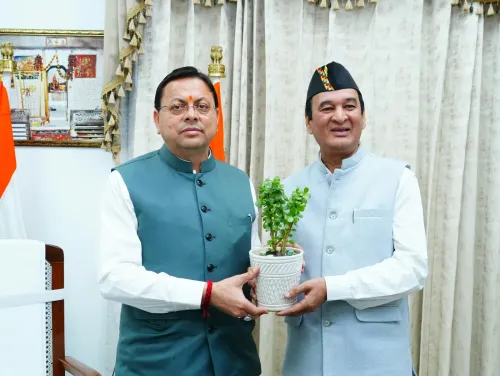
A basket of Himalayan heritage landed in New Delhi on Friday, 20 November 2026 — when Uttarakhand Chief Minister Pushkar Singh Dhami met Prime Minister Narendra Modi and presented a curated collection of the state's most prized local products, capping the meeting with a replica of Maa Ganga that evoked the grandeur of the upcoming Haridwar Kumbh 2027.
What CM Dhami carried from the hills to Delhi
The gift ensemble read like a catalogue of Uttarakhand's living traditions. Dhami presented Modi with a Malari traditional handwoven coat-patti — the distinctive handcrafted textile unique to the high-altitude village of Malari — alongside Dorkha woollen fabric, pure Uttarakhand honey, Badri ghee, and two prized produce items: Harsil rajma and red rice. The centrepiece was a specially crafted replica of Maa Ganga showcasing the scale and spiritual significance of Haridwar Kumbh 2027.
Dhami described the meeting on X, writing that he received 'bahumulya margadarshan' (invaluable guidance) from the Prime Minister. He framed Modi as the 'architect of a powerful, capable and self-reliant India' who has thwarted every conspiracy of the country's enemies through sheer resolve while fulfilling the aspirations of youth, women and senior citizens.
Kumbh 2027 and what the replica signals
Haridwar, one of Hinduism's holiest cities on the banks of the Ganga, periodically hosts the Kumbh Mela — among the largest human gatherings on earth. The gifting of a Ganga replica is a pointed signal that Uttarakhand is already in preparation mode for Kumbh 2027, and that CM Dhami sought the Centre's attention — and potentially its resources — for the event's infrastructure and logistics well in advance.
Centre-state coordination for a Kumbh typically involves discussions around crowd management, riverfront infrastructure, rail and road access, and central funding allocations. By placing a Kumbh artefact in the Prime Minister's hands, Dhami put the conversation on the table in a way that a briefing note cannot quite replicate.
Local products as soft diplomacy inside the federal system
Chief ministers routinely carry state products to Delhi meetings — but the selection here is deliberate rather than decorative. Badri ghee, sourced from the indigenous Badri cow breed of Uttarakhand, has long been sought for a Geographical Indication tag. Harsil rajma and red rice from the upper Bhagirathi valley are considered among the most flavourful in the country and represent exactly the kind of local agricultural economy that the national Atmanirbhar Bharat initiative — launched in 2020 — was designed to spotlight and scale.
The Malari coat-patti and Dorkha woollens, meanwhile, represent high-altitude artisan communities whose livelihoods depend on market access beyond the state's borders. A Prime Minister's attention — and a photograph — can do more for brand visibility than months of marketing spend.
What the meeting means for Uttarakhand's near-term agenda
Beyond the symbolism, the Delhi visit is a routine but essential gear in India's federal machinery. States use such bilateral moments to press for pending central approvals, flag infrastructure gaps, and align on upcoming events that require national-level coordination. With Kumbh 2027 now firmly on the horizon, the expectation will be to watch for any formal announcements of central grants or ministerial visits to Haridwar in the months ahead.
Uttarakhand's artisans, honey producers, and highland farmers may not have been in the room — but their products were. And in federal India, that counts.
Point of View
Anchoring the Centre's attention on Uttarakhand's Kumbh 2027 ambitions before budget and infrastructure allocation cycles firm up. The selection of GI-eligible products like Badri ghee and Harsil rajma also reflects a wider BJP-era pattern of aligning state outreach with the Atmanirbhar Bharat narrative, giving local produce a national stage at minimal cost. For a hill state with a relatively small economic footprint, proximity to the Prime Minister — and the optics of that proximity — translates directly into visibility for artisan and farming communities. The Kumbh replica, in particular, is a signal to watch: it suggests Haridwar 2027 is already being elevated as a prestige event requiring early central buy-in.
NationPress
20 Nov 2026
Frequently Asked Questions
Why did CM Dhami meet PM Modi in New Delhi on 20 November 2026?
CM Pushkar Singh Dhami met PM Narendra Modi in New Delhi on 20 November 2026 to seek guidance on state affairs and to present Uttarakhand's local crafts and agricultural products, as well as to highlight preparations for Haridwar Kumbh 2027.
What gifts did CM Dhami give PM Modi?
Dhami gifted Modi a Malari traditional handwoven coat-patti, Dorkha woollen fabric, pure Uttarakhand honey, Badri ghee, Harsil rajma, red rice, and a replica of Maa Ganga representing Haridwar Kumbh 2027.
What is Haridwar Kumbh 2027?
Haridwar Kumbh 2027 is an upcoming edition of the Kumbh Mela to be held in Haridwar, Uttarakhand — one of Hinduism's holiest sites on the Ganga — which is among the largest religious gatherings in the world.
What is Malari coat-patti from Uttarakhand?
Malari coat-patti is a traditional handcrafted woollen textile unique to the high-altitude village of Malari in Uttarakhand, made by local artisan communities and known for its distinctive weave and cultural significance.
How does CM Dhami's Delhi visit connect to Atmanirbhar Bharat?
The gifting of local Uttarakhand products such as Badri ghee, Harsil rajma, honey, and handwoven textiles aligns with the Atmanirbhar Bharat initiative launched in 2020, which promotes domestically produced and regionally distinctive goods at the national level.