CM Sai Orders Crop Survey After Cyclone Hits Chhattisgarh Farmers

Synopsis
Chief Minister Vishnu Deo Sai has ordered all district collectors in Chhattisgarh to survey cyclone-damaged crops. Affected farmers will receive state relief under RBC 6-4 provisions and insurance claims under the Pradhan Mantri Fasal Bima Yojana.
Key Takeaways
CM Vishnu Deo Sai directed all district collectors to conduct crop damage surveys following a cyclone in Chhattisgarh.
Financial aid will be provided under RBC 6-4 state revenue provisions for affected farmers.
Eligible farmers will also receive insurance claim payouts under Pradhan Mantri Fasal Bima Yojana (PMFBY) , launched nationwide in 2016 .
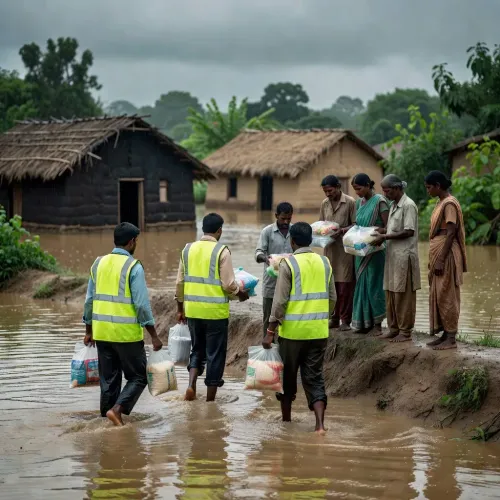
The government's stated position: every cyclone-affected farmer will receive all possible assistance.
Survey completion by district collectors is the key gating step before any disbursement can begin.
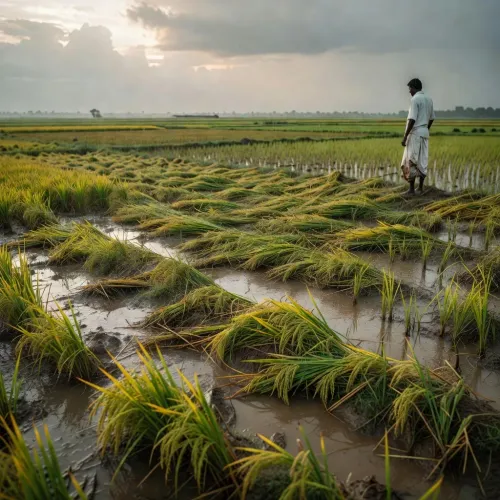
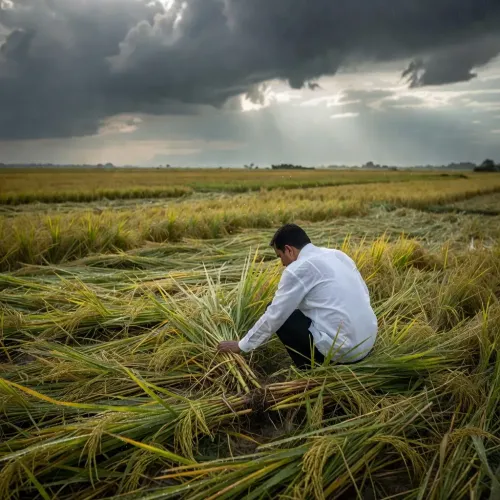
When a cyclone tears through farmland, every hour without a government response costs a family its harvest — and its livelihood. Responding swiftly, the Chief Minister's Office of Chhattisgarh announced on Friday, 20 November 2026 that Chief Minister Vishnu Deo Sai has directed all district collectors to immediately conduct crop damage surveys across affected areas of the state.
Survey first, then relief — how the response will unfold
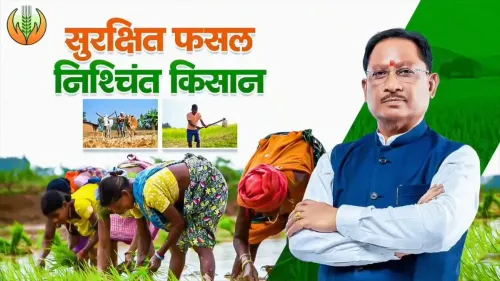
The government's statement is unambiguous: 'संकट की घड़ी में हर प्रभावित किसान के साथ खड़ी सुशासन सरकार' ('The good-governance government stands with every affected farmer in this hour of crisis'). The process follows a clear sequence — surveyors document field-level losses, that data then unlocks two distinct channels of financial support.
The first channel is direct state relief under RBC 6-4 provisions, which govern revenue-based compensation for natural calamity losses. The second is the trigger of insurance claims under the Pradhan Mantri Fasal Bima Yojana (PMFBY), the nationwide crop insurance scheme launched in 2016 that covers eligible farmers against precisely these kinds of weather-induced crop failures. No farmer who is eligible, the government says, will be left out.
Chhattisgarh's agrarian stakes — why this matters at scale
Chhattisgarh is a deeply agrarian state in central India where agriculture sustains a significant share of the population. A cyclone event that damages standing crops — particularly ahead of or during a harvest window — can translate into widespread rural distress almost overnight. The scale of the survey now being ordered across all districts signals that the damage footprint is not confined to a single zone.
CM Vishnu Deo Sai, who has led the BJP-led state government since December 2023, has positioned farmer welfare as a core plank of his administration. Activating the district collector machinery for a coordinated, state-wide survey — rather than a localised patch response — reflects both the severity of the event and the political weight the government places on rural credibility.
What farmers are waiting to hear next
The critical open question is timing. Survey completion and claims processing under PMFBY are historically the two longest legs of the relief journey in Indian states. District collectors now carry the pressure of not just accuracy, but speed. For farmers staring at damaged fields, the survey is not paperwork — it is the first step toward rebuilding.
The government has promised to make financial assistance and insurance claim amounts available to all eligible farmers once assessments are complete. The watch now is on how fast those assessments move from field to file to payment.
Point of View
The optics of a rapid, well-documented survey response are as important as the relief itself. The move also reinforces the Centre-state complementarity design of PMFBY, which was built precisely to prevent state relief budgets from absorbing the full burden of large-scale calamities. The real test of this response will be whether district machinery can compress survey-to-payment timelines in a state where rural infrastructure often slows last-mile delivery.
NationPress
20 Nov 2026
Frequently Asked Questions
What relief has the Chhattisgarh government announced for cyclone-affected farmers?
Chief Minister Vishnu Deo Sai has ordered all district collectors to survey crop damage. Based on survey findings, farmers will receive financial assistance under RBC 6-4 state provisions and insurance claim amounts under the Pradhan Mantri Fasal Bima Yojana.
What is RBC 6-4 and how does it help farmers in Chhattisgarh?
RBC 6-4 refers to provisions under state revenue rules that govern financial compensation for farmers who suffer crop losses due to natural calamities such as floods, cyclones, or droughts.
How does Pradhan Mantri Fasal Bima Yojana work for cyclone-damaged crops?
PMFBY, launched in 2016, provides crop insurance coverage to enrolled farmers. When a notified natural calamity damages crops, eligible farmers can file claims and receive a payout based on assessed losses — in this case, triggered by the district-level surveys now under way.
Who will conduct the crop damage survey in Chhattisgarh?
CM Sai has directed all district collectors across Chhattisgarh to carry out the surveys. District collectors are the senior administrative officers responsible for revenue and disaster-relief operations at the district level.
When will cyclone-affected farmers in Chhattisgarh receive compensation?
The government has not announced a specific timeline. Disbursement under both RBC 6-4 and PMFBY will follow once district-level crop damage surveys are completed and verified.