Odisha CMO shifts pregnant women to health centres ahead of Cyclone Akban
Synopsis
Ahead of Cyclone Akban, Odisha's Chief Minister's Office announced the pre-emptive transfer of pregnant women from vulnerable coastal zones to nearby Community Health Centres, prioritising maternal and child safety as the state activates its established disaster-response framework.
Key Takeaways
Pregnant women in high-risk coastal areas of Odisha are being shifted to Community Health Centres as a precautionary measure ahead of Cyclone Akban .
The move is designed to guarantee timely medical care and safe delivery even if the storm disrupts roads and communications.
Odisha's maternal-safety protocols trace back to lessons from the 1999 super cyclone , which killed more than 10,000 people .
Cyclone Fani (2019) established Odisha's mass pre-emptive evacuation model as a global benchmark, with the maternal component a fixed feature since then.
The state is treating the safety of mothers and children as its 'highest priority' within the broader public-safety response to the approaching cyclone.
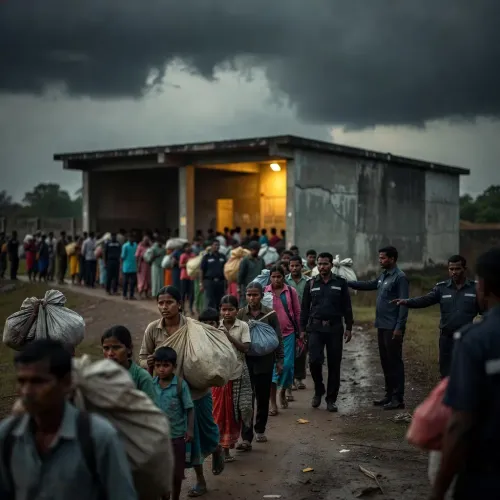
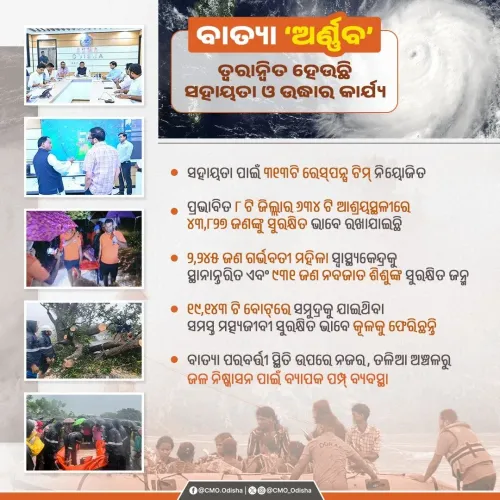
Before the storm arrives, the most vulnerable cannot wait. With Cyclone Akban bearing down on Odisha's coastline, the Chief Minister's Office of Odisha announced on Friday, 20 November 2026, that pregnant women from high-risk coastal zones are being evacuated pre-emptively to nearby Community Health Centres (CHCs) — a targeted move designed to ensure safe deliveries even as the storm closes in.
The CMO's post, shared in both Odia and English, states clearly: 'ବାତ୍ୟା ମୁକାବିଲାରେ ଜନସୁରକ୍ଷା ସହ ମା' ଓ ଶିଶୁଙ୍କ ସୁରକ୍ଷାକୁ ଲୋକଙ୍କ ସରକାର ସର୍ବୋଚ୍ଚ ପ୍ରାଥମିକତା ଦେଉଛନ୍ତି' — 'In cyclone preparedness, the people's government is giving the highest priority to public safety, especially the safety of mothers and children.' The transfers are framed explicitly as a precautionary measure, not a reactive one.
Why pregnant women are the first to be moved
Obstetric emergencies do not pause for natural disasters. A cyclone that knocks out roads, power lines, and communications can turn a routine delivery into a fatal crisis within hours. By pre-positioning pregnant women inside CHCs before landfall, the state ensures medical staff and equipment are within reach regardless of what the storm destroys around them. It is a lesson written in hard experience: Odisha's 1999 super cyclone killed more than 10,000 people, and the maternal toll of that disaster shaped every protocol that followed.
Cyclone Fani in 2019 became a global case study in mass pre-emptive evacuation, with Odisha moving roughly 1.2 million people in under 48 hours. The maternal-safety component — shifting expectant mothers to functional health facilities before high winds arrive — has been a consistent feature of that framework ever since.
Odisha's layered disaster architecture at work
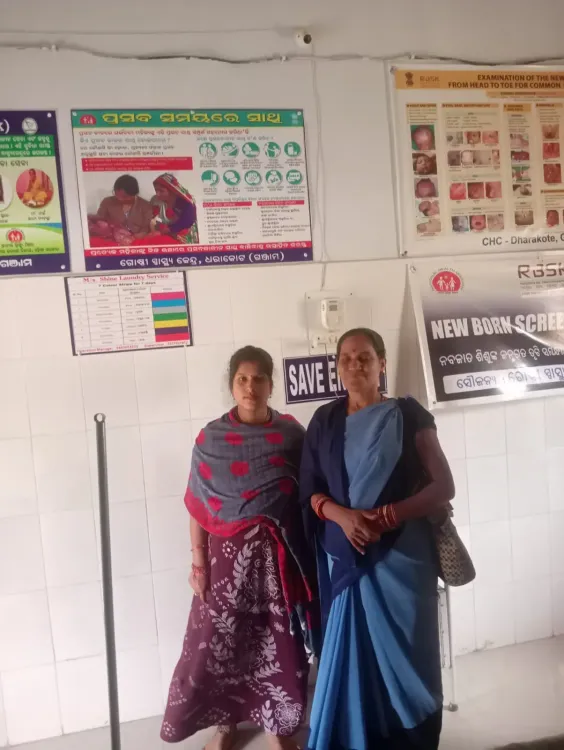
Community Health Centres sit at the intersection of Odisha's public health network and its disaster response grid. These government facilities in rural and coastal blocks are equipped for emergency obstetric care, making them the logical safe harbour for women who cannot be transported to district hospitals once a storm is active. The choice of CHCs over cyclone shelters reflects a deliberate policy judgment: maternal care needs clinical infrastructure, not just a sturdy roof.
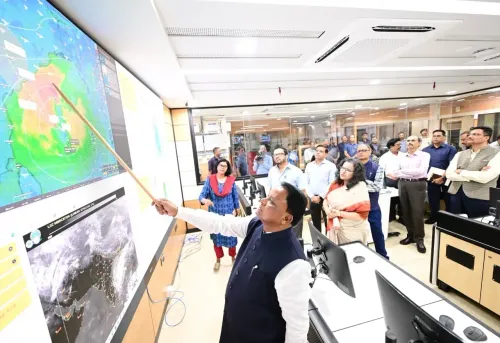
The state's broader evacuation machinery — early warning dissemination, shelter activation, NDRF deployment — runs in parallel. The specific callout for pregnant women in this official communication signals that vulnerability-mapped targeting, not just mass movement, is now standard operating procedure in Odisha's cyclone playbook.
All eyes are now on Cyclone Akban's track and intensity as it approaches. How much of Odisha's coast falls within the warning zone, and whether further evacuation orders follow, will determine the full scale of the response — but for the women already inside those health centres, the state has already made its most consequential call.
Point of View
Vulnerability-mapped disaster doctrine that sets the state apart from most Indian coastal administrations. By embedding maternal safety explicitly within the cyclone-response framework, successive governments in Bhubaneswar have transformed a 1999-era trauma into institutional muscle memory. The question the Akban response will ultimately answer is whether that muscle memory holds under real-time pressure — and whether the CHC network, already stretched in normal times, can absorb the additional load. If it does, Odisha's model will once again become the template other Bay of Bengal states are urged to replicate.
NationPress
20 Nov 2026
Frequently Asked Questions
What is Cyclone Akban and where is it headed?
Cyclone Akban is an approaching cyclonic storm being monitored by Odisha authorities as of 20 November 2026 . The storm is expected to affect vulnerable coastal areas of Odisha, though the exact track and landfall point were still being assessed when the state activated precautionary measures.
Why are pregnant women being moved to Community Health Centres before the cyclone?
Pregnant women are being transferred pre-emptively to Community Health Centres (CHCs) so they have immediate access to trained medical staff and emergency obstetric facilities during the storm, when roads and communications may be cut off and timely transport to a hospital would be impossible.
What are Community Health Centres in Odisha?
Community Health Centres are government-run primary healthcare facilities located in rural and semi-urban blocks of Odisha. They are equipped for emergency obstetric care, making them suitable safe points for expectant mothers during natural disasters.
How has Odisha handled cyclone preparedness for vulnerable groups in the past?
After the devastating 1999 Odisha super cyclone , the state built systematic early-warning, evacuation, and shelter protocols. By Cyclone Fani in 2019 , Odisha was evacuating over a million people pre-emptively — including specific provisions for pregnant women and other vulnerable groups — earning international recognition for its disaster management model.
Who announced the evacuation of pregnant women ahead of Cyclone Akban?
The Chief Minister's Office of Odisha made the announcement on its official account on 20 November 2026 , stating that the safety of mothers and children is the government's 'highest priority' in cyclone preparedness.