CM Sai orders crop survey, RBC 6-4 aid for Cyclone Arnab victims
Synopsis
Chhattisgarh Chief Minister Vishnu Deo Sai has directed officials to conduct an immediate crop survey and release compensation to farmers affected by Cyclone Arnab under the RBC 6-4 revenue provision, signalling the state's standard but swift disaster-response mechanism for agrarian distress.
Key Takeaways
CM Vishnu Deo Sai has ordered an immediate crop survey for farmers affected by Cyclone Arnab in Chhattisgarh.
Compensation will be disbursed under Revenue Book Circular (RBC) 6-4 , the state's primary ex-gratia mechanism for crop losses from natural calamities.
The directive was issued on 31 October 2026 and announced via the official Chief Minister's Office X account.
Chhattisgarh's kharif (paddy) cultivation is periodically hit by residual impacts of Bay of Bengal cyclonic systems, making such relief orders a recurring administrative necessity.
Completion of the crop survey and actual disbursement of funds to affected cultivators remains the critical next step.
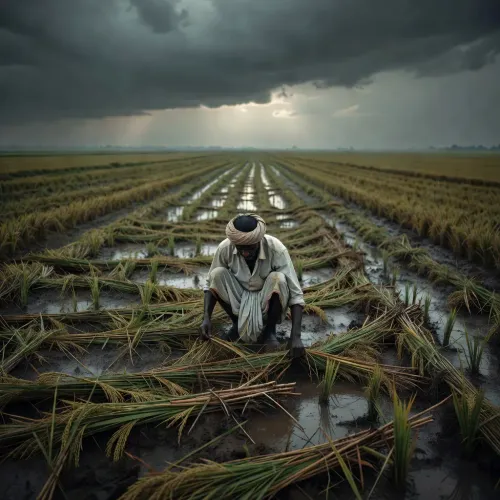
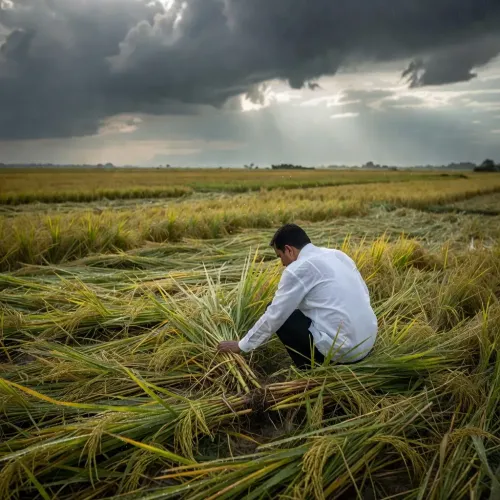
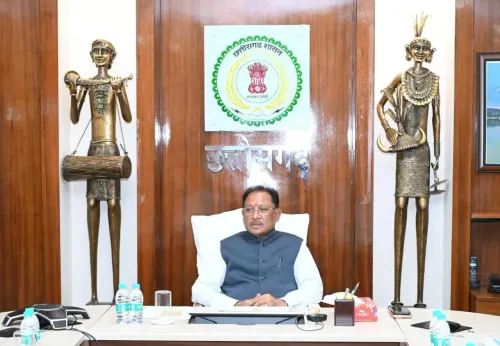
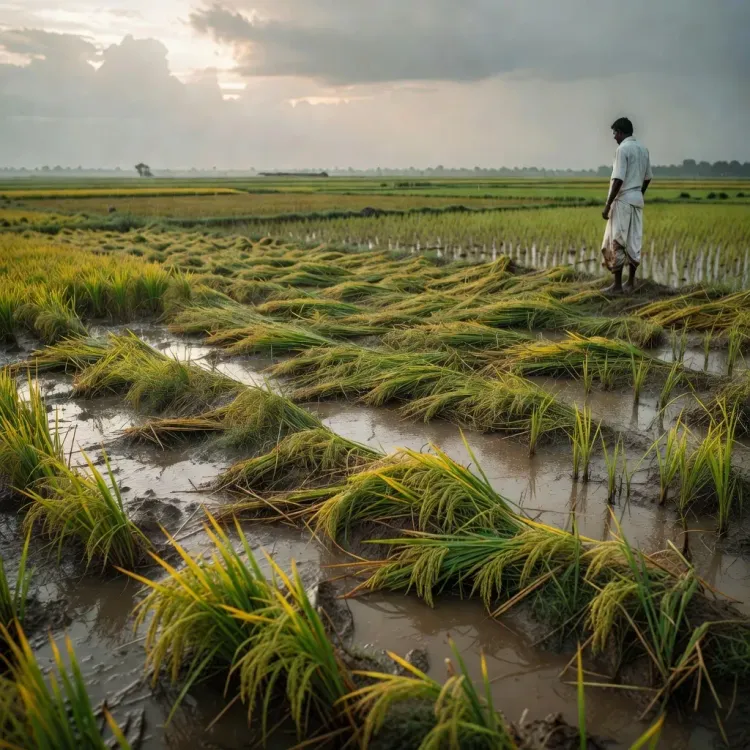
When Cyclone Arnab swept through Chhattisgarh, it did not spare the fields. Chief Minister Vishnu Deo Sai has directed officials to launch an immediate crop survey and fast-track financial assistance to affected farmers under the Revenue Book Circular (RBC) 6-4 provision, the Chief Minister's Office of Chhattisgarh announced on Saturday, 31 October 2026.
Posting on X, the CMO stated: 'संकट में किसानों के साथ, हर कदम पर सुशासन सरकार' — 'With farmers in crisis, the good-governance government stands at every step' — framing the response as a marker of its 'Sushasan Sarkar' (good-governance government) identity.What RBC 6-4 means for a farmer in distress
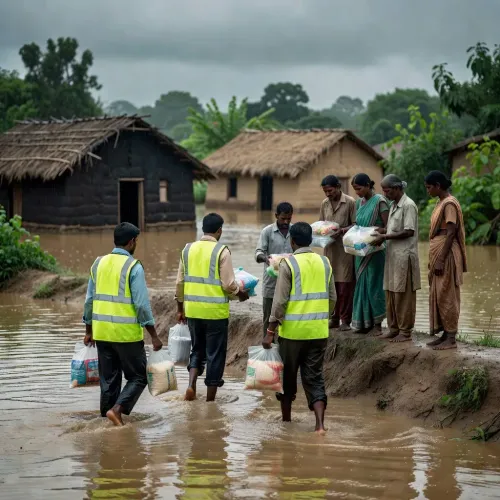
RBC 6-4 is a long-standing Revenue Book Circular provision that empowers Chhattisgarh's district administration to authorise ex-gratia payments for crop losses caused by natural calamities — without waiting for a drawn-out legislative process. It is the state's first-response financial lever: once a crop survey confirms damage, compensation can be released directly to the affected cultivator. The speed of that survey, ordered by CM Sai, is now the critical variable for how quickly money reaches the farm.
Chhattisgarh is a landlocked state in central India, yet it is not insulated from cyclonic weather. Residual moisture and rain bands from Bay of Bengal systems routinely push inland during the kharif season, battering standing paddy — the backbone of the state's agrarian economy. Cyclone Arnab appears to be one such system whose tail end struck crop-growing districts with enough force to trigger an administrative response at the highest level.
Sai government's farmer-welfare pitch since 2023
Since the Bharatiya Janata Party's return to power in Chhattisgarh in December 2023, CM Vishnu Deo Sai has consistently positioned farmer welfare as the centrepiece of his administration's identity. Saturday's directive reinforces that branding with a concrete action: an order on record, a specific legal mechanism named, and a public commitment to speed. Whether the survey teams reach every affected village quickly enough will be the real test.
The next milestone to watch is the completion of the mandated crop survey and the subsequent disbursement of assistance amounts under RBC 6-4 to Cyclone Arnab-hit farmers across affected districts. Until that money lands, the directive remains a promise.
Point of View
CM Sai converts a weather event into a visible governance moment. For a BJP government that won Chhattisgarh in 2023 partly on a rural-welfare platform, speed of disbursal — not just the order — will determine whether the 'Sushasan Sarkar' label sticks. Inland states receiving cyclonic spillover are an underreported vulnerability in India's disaster-response architecture, and Chhattisgarh's use of revenue-code mechanisms rather than waiting for centrally-declared disaster status reflects how state administrations increasingly front-run the federal relief pipeline.
NationPress
31 Oct 2026
Frequently Asked Questions
What is RBC 6-4 and how does it help farmers in Chhattisgarh?
RBC 6-4 is a Revenue Book Circular provision that allows Chhattisgarh's district administration to authorise ex-gratia cash payments directly to farmers who have suffered crop losses due to natural calamities, without a prolonged legislative process.
Which farmers are eligible for Cyclone Arnab relief in Chhattisgarh?
Farmers in districts affected by Cyclone Arnab are eligible, subject to confirmation through the crop survey ordered by Chief Minister Vishnu Deo Sai on 31 October 2026.
How does Chhattisgarh, an inland state, get affected by cyclones?
Although landlocked, Chhattisgarh periodically receives residual rainfall and wind from Bay of Bengal cyclonic systems, which can damage standing kharif crops — particularly paddy — in the state's farming districts.
What is the next step after CM Sai's crop-survey order?
Field teams must complete the crop-damage survey across affected districts; once damage is quantified, assistance amounts under RBC 6-4 are released directly to eligible farmers.
Who is Vishnu Deo Sai and when did he become Chief Minister of Chhattisgarh?
Vishnu Deo Sai is the Chief Minister of Chhattisgarh, sworn in December 2023 after the Bharatiya Janata Party's victory in the state assembly elections.