CM Bhupendra Patel Sits With Tribal Families in Dahod Village
Synopsis
Gujarat Chief Minister Bhupendrabhai Patel sat with Adivasi families in Chandavada village, Dahod, for a grassroots khatal baithak on 20 November 2026, discussing local traditions, lifestyles, and basic amenities. A differently-abled Sakhi Mandal member gifted him a handmade bamboo toran.
Key Takeaways
CM Bhupendra Patel visited Bhabhora Faliya, Chandavada village in Dahod district on 20 November 2026 .
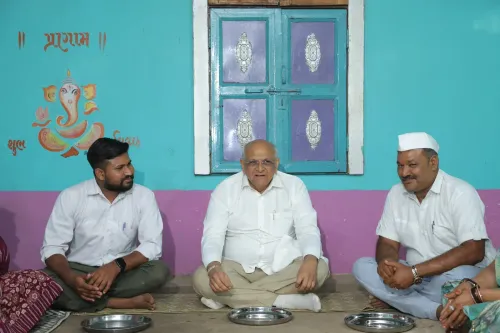
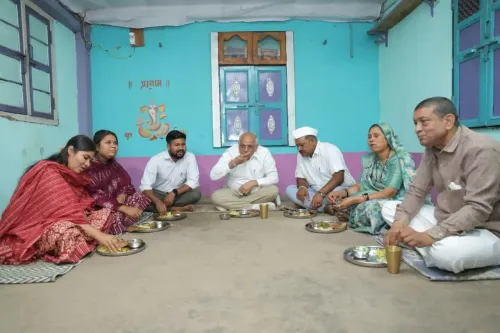
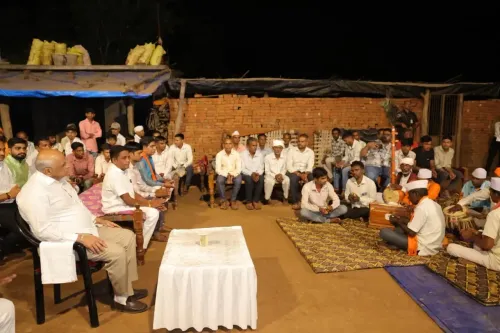
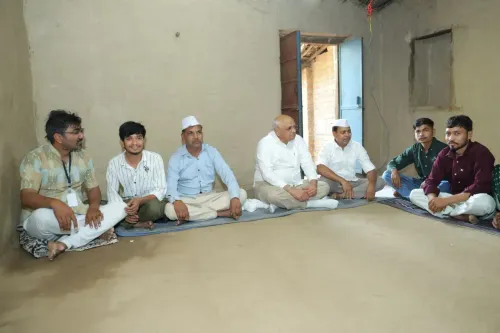
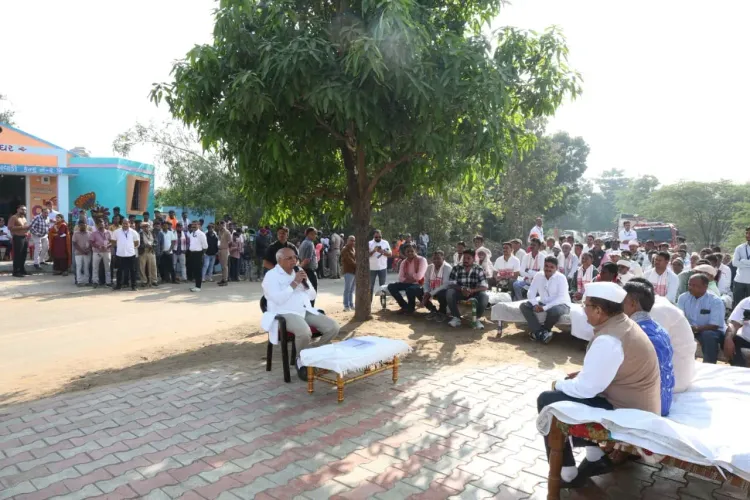
He held an informal khatal baithak — a traditional ground-level sit-down — with local tribal families and children.
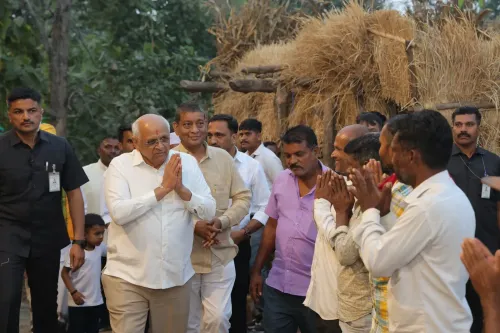
Villagers welcomed him with tribal folk dance , a culturally significant reception.
A differently-abled woman from the local Sakhi Mandal presented a handmade bamboo toran to the Chief Minister.
The dialogue covered lifestyle, local traditions, and basic amenities available in the village.
Dahod is one of Gujarat's major Adivasi districts and a recurring focus for state-level tribal outreach.
A bamboo toran (decorative threshold garland) handcrafted by a differently-abled woman from a local Sakhi Mandal — that was the welcome waiting for Gujarat Chief Minister Bhupendrabhai Patel when he arrived at Bhabhora Faliya in Chandavada village, Dahod district, on Friday, 20 November 2026. He had come not for a stage or a podium, but for a khatal baithak — a traditional ground-level community sit-down — with the tribal families who live there.
Charpoys, children, and a direct conversation
The Chief Minister's Office confirmed that CM Patel sat with residents on cots (khatal) in an informal circle, drawing out their views on lifestyle, local traditions, and the state of basic amenities in Chandavada. Children were part of the dialogue too — a deliberate signal that the visit was meant to be a two-way exchange, not a prepared briefing.
Villagers welcomed him with tribal folk dance, and the bamboo toran gifted by the differently-abled woman from the Sakhi Mandal women's self-help group became the defining image of the engagement — grassroots craft meeting the state's highest office.
Why Dahod, and why this format
Dahod is one of Gujarat's easternmost districts and carries one of the state's largest concentrations of Adivasi communities. Gujarat governments have periodically used village-level outreach in Dahod and similar tribal belts to close the perception gap between Gandhinagar and remote hamlets.
The khatal baithak format strips away the formality of official meetings — no dais, no microphones, no written memoranda. The intent is to surface needs that may not reach formal grievance channels: gaps in water supply, roads, healthcare, or schools that residents hesitate to flag through bureaucratic routes.
Sakhi Mandal's bamboo gesture
The spotlight moment belonged to the differently-abled member of the local Sakhi Mandal who fashioned the bamboo toran herself. Sakhi Mandals are women's self-help groups promoted across Gujarat under state and central livelihood programmes; their presence in a tribal village in Dahod signals that the network has reached even remote Adivasi hamlets. The handmade gift was both a cultural gesture and a quiet demonstration of the group's craft-based livelihood.
Point of View
The Dahod visit fits a pattern of positioning himself as an accessible, ground-level leader distinct from a purely administrative image. The Sakhi Mandal presence and the differently-abled woman's bamboo toran give the event a layered subtext: women's economic inclusion and disability visibility in tribal outreach. Whether the dialogue translates into announced infrastructure upgrades for Chandavada will be the test of substance behind the symbolism.
NationPress
20 Nov 2026
Frequently Asked Questions
What is a khatal baithak?
A khatal baithak is an informal community meeting held on cots or at ground level, traditionally used in rural Gujarat for open dialogue between officials and villagers without formal hierarchy.
Why did CM Bhupendra Patel visit Dahod?
CM Patel visited Chandavada village in Dahod district to engage directly with Adivasi tribal families, understand their lifestyle, local traditions, and assess the availability of basic amenities in the village.
What is a Sakhi Mandal in Gujarat?
Sakhi Mandals are women's self-help groups promoted across Gujarat under state and central livelihood programmes, helping rural and tribal women build crafts-based and economic skills.
What happened at Bhabhora Faliya Chandavada?
CM Bhupendra Patel sat with tribal families in an informal khatal baithak at Bhabhora Faliya in Chandavada village, Dahod, on 20 November 2026. Villagers welcomed him with folk dance, and a differently-abled Sakhi Mandal member gifted him a bamboo toran.
Which district is Chandavada village in?
Chandavada village is in Dahod district, in eastern Gujarat, an area with a large Adivasi tribal population.