CM Dhami Meets Tharu Tribe in Khatima, Honours Everest Climbers
Synopsis
Uttarakhand CM Pushkar Singh Dhami attended a Tharu tribal dialogue in Khatima, honoured BSF jawan Mohan Singh Rana and ITBP jawan Tila Sen for scaling Everest, and reaffirmed the BJP's 'double engine' commitment to tribal cultural preservation.
Key Takeaways
CM Pushkar Singh Dhami held a tribal dialogue with the Tharu community in Khatima on 1 August 2026 .
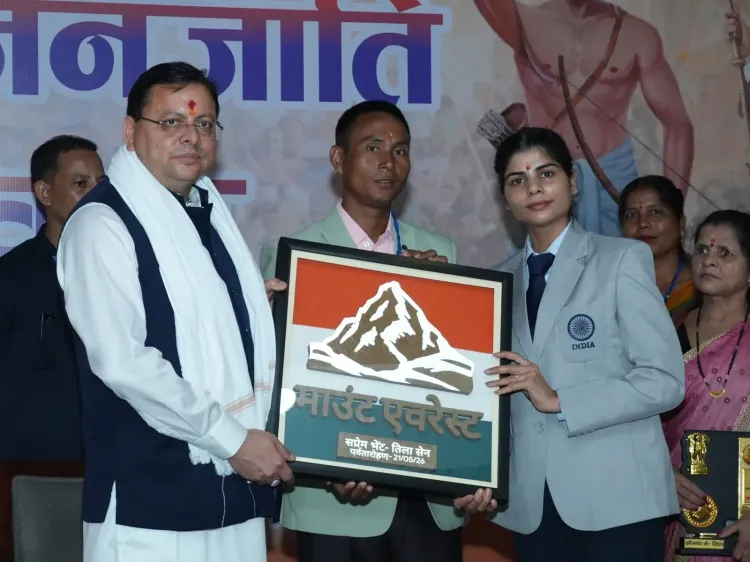
BSF jawan Mohan Singh Rana and ITBP jawan Tila Sen were felicitated for successfully summiting Mount Everest .
Dhami invoked the 'double engine government' frame, linking state action to PM Narendra Modi's leadership.
The event focused on preserving Tharu culture, traditions, and securing national-level recognition for the community.
Policy backing includes the Vanbandhu Kalyan Yojana (2014) and the Ministry of Tribal Affairs , established in 1999 .
Khatima sits in the Terai belt , home to a significant Tharu population spanning Uttarakhand and Uttar Pradesh.
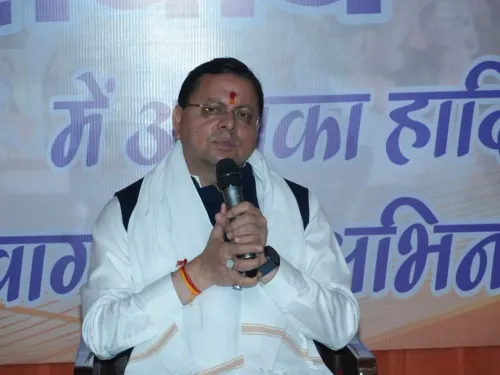
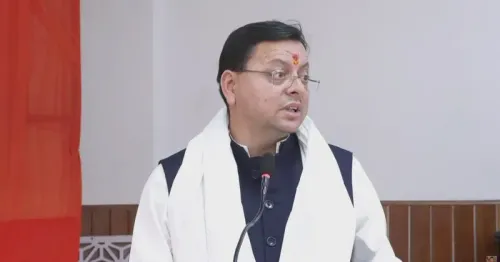
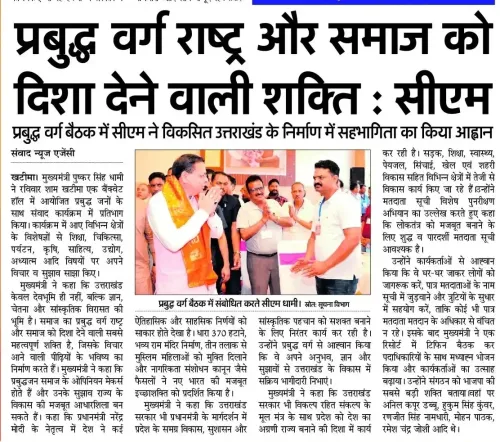
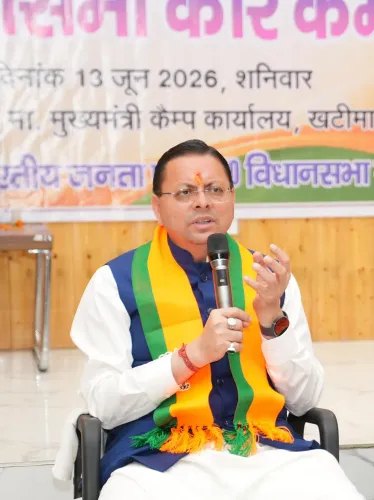
In the Terai heartland of Khatima, Uttarakhand Chief Minister Pushkar Singh Dhami sat down with members of the Tharu indigenous community on 1 August 2026, listening to their concerns and suggestions at a dedicated tribal dialogue programme — then turned the spotlight on two soldiers who had conquered the world's highest peak.
Everest summiteers felicitated on home ground
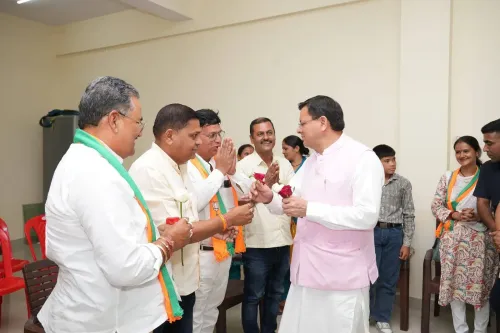
The event's most striking moment came when CM Dhami honoured BSF jawan Mohan Singh Rana and ITBP jawan Tila Sen, both of whom had successfully scaled Mount Everest. Felicitating them in front of their own community was a deliberate choice — placing paramilitary valour and tribal pride on the same stage. The Border Security Force and the Indo-Tibetan Border Police have long fielded mountaineering teams from Himalayan districts, and recognising their climbers at a local tribal event stitched together two threads of Uttarakhand identity: border service and highland heritage.
The 'double engine' pitch to Tharu country
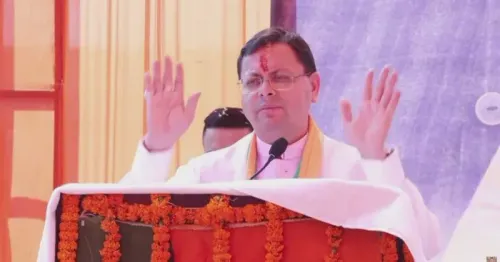
Dhami used the occasion to articulate the BJP's signature 'double engine government' frame, stating that under the kushala netritva (able leadership) of Prime Minister Narendra Modi, the state and central governments are working in concert to preserve the Tharu community's glory, culture, and traditions while securing national-level recognition for them. The Tharu people, concentrated in the Terai belt spanning Uttarakhand and Uttar Pradesh, maintain a distinct language, agrarian calendar, and ritual life that tribal welfare policy has increasingly sought to document and protect.
That policy lineage runs through the Vanbandhu Kalyan Yojana, launched in 2014, which targets living-standard improvements and cultural preservation for Scheduled Tribes in states including Uttarakhand. The Ministry of Tribal Affairs, established in 1999, provides the institutional spine for such outreach. Khatima — a border-adjacent town with a significant Tharu population — is precisely the kind of constituency these programmes are designed to reach.
Tribal outreach as political grammar in Uttarakhand
The Khatima dialogue fits a recurring pattern in BJP-governed Uttarakhand: tribal cultural events that blend grassroots listening with visible state recognition, framed explicitly through the Modi-Dhami partnership narrative. By honouring Everest-climbing jawans at the same gathering, the event layered national achievement onto local identity — a combination that travels well beyond the venue on social media. Watch for follow-through in the form of state-level tribal cultural centres or Uttarakhand's participation in national tribal festivals organised under the Ministry of Tribal Affairs.
For the Tharu community, the question is whether dialogue translates into durable policy — land rights, cultural documentation, and economic inclusion in a district that sits at the ecological and administrative edge of the state.
Point of View
Who represents Khatima as his own assembly constituency, the programme doubles as grassroots consolidation ahead of any electoral cycle. The 'double engine' framing keeps Modi central to state-level optics, reinforcing vertical party loyalty while giving tribal voters a visible policy narrative. Whether the Tharu community sees sustained policy delivery — on land, language, and economic access — will ultimately determine whether these dialogues become a governance legacy or a recurring campaign ritual.
NationPress
1 Aug 2026
Frequently Asked Questions
Who are the Tharu tribe and where do they live in India?
The Tharu are an indigenous ethnic group living primarily in the Terai belt of Uttarakhand and Uttar Pradesh , known for a distinct language, agrarian traditions, and rich cultural practices.
Why did CM Dhami visit Khatima for the tribal programme?
Khatima is CM Dhami's own assembly constituency and has a significant Tharu population, making it a natural venue for tribal outreach and dialogue events.
Who are Mohan Singh Rana and Tila Sen?
Mohan Singh Rana is a BSF jawan and Tila Sen is an ITBP jawan, both honoured by CM Dhami for successfully summiting Mount Everest .
What is the Vanbandhu Kalyan Yojana?
The Vanbandhu Kalyan Yojana was launched in 2014 to improve the living standards and preserve the cultural heritage of Scheduled Tribes across states including Uttarakhand.
What does 'double engine government' mean in the context of tribal welfare?
The 'double engine government' phrase refers to the BJP's argument that having the same party in power at both the state and central levels allows faster, coordinated delivery of welfare and cultural preservation schemes for communities like the Tharu.