CM Dhami Orders Illegal Loudspeaker Removal Drive Across Uttarakhand
Synopsis
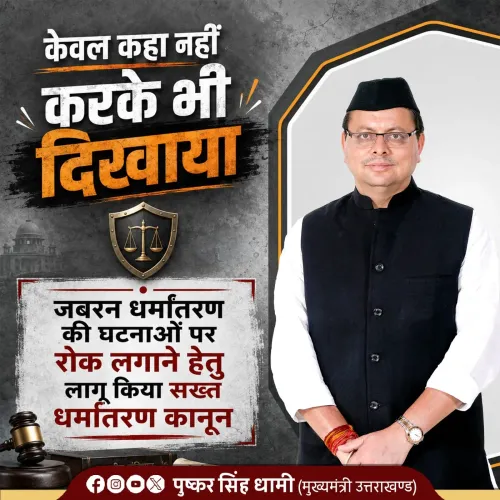
Uttarakhand Chief Minister Pushkar Singh Dhami has launched a state-wide campaign to remove loudspeakers installed in violation of rules, citing Supreme Court directives on noise-pollution control. The drive invokes the Noise Pollution (Regulation and Control) Rules, 2000, and affects religious institutions, event organisers, and urban residents across the state.
Key Takeaways
CM Pushkar Singh Dhami announced on 20 July 2026 that a state-wide loudspeaker-removal drive is under way in Uttarakhand .
The campaign is framed as direct compliance with Supreme Court of India directives on noise-pollution control.
Legal authority for the drive rests on the Noise Pollution (Regulation and Control) Rules, 2000 , which prescribe decibel limits and time restrictions for public loudspeaker use.
Key stakeholders affected include religious institutions , event organisers , and urban residents across the state.
The state government has not yet publicly detailed the scale of removals or specific localities targeted.
Compliance affidavits before the Supreme Court and potential fresh directions on festival-season exemptions are the key developments to watch.
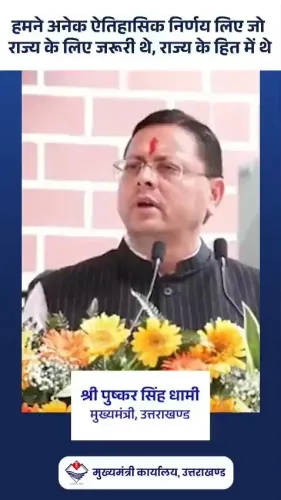
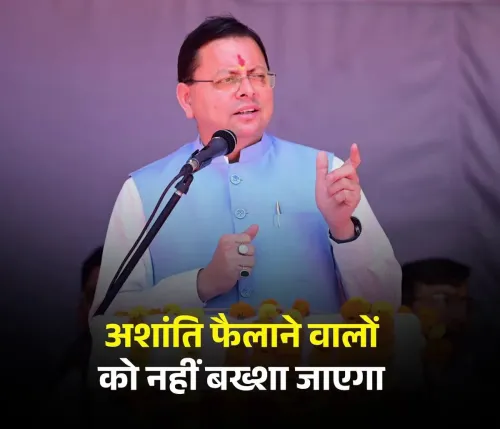
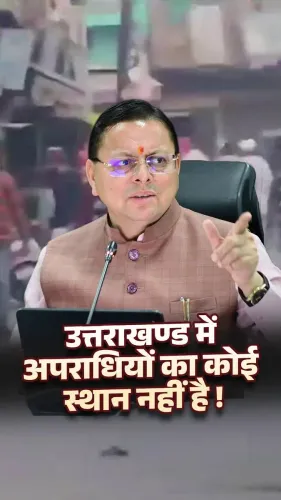
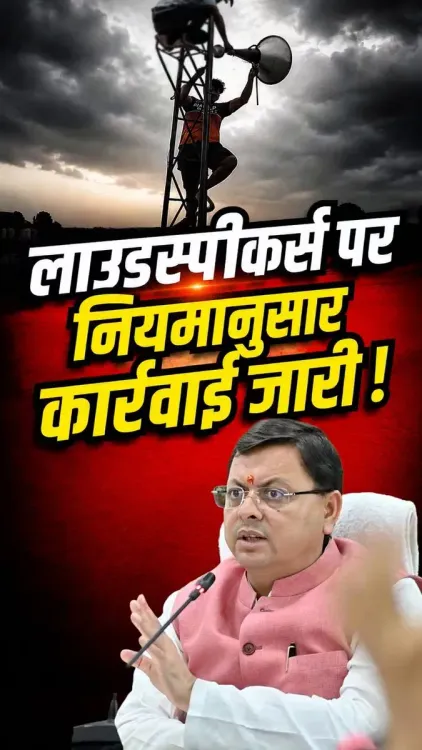
Uttarakhand Chief Minister Pushkar Singh Dhami announced on Monday, 20 July 2026, that a state-wide campaign is under way to remove loudspeakers installed in violation of rules, in compliance with directives issued by the Supreme Court of India on noise-pollution control.
Posting on X, CM Dhami wrote: 'Mananiya Supreme Court ke dhwani pradushan niyantran sambandhi nirdeshon ka palan karte hue pradeshbhar mein niyamon ke viparit lage loudspeakeron ko hatane ka abhiyan jaari hai' — ('In compliance with the Hon'ble Supreme Court's directions on noise-pollution control, a campaign to remove loudspeakers installed in violation of rules is ongoing across the state.')
Context
The drive is framed explicitly as enforcement of Supreme Court directives on ambient noise standards. India's apex court has issued repeated orders over the decades requiring state governments to regulate loudspeaker use in public and religious spaces, treating excessive noise as a threat to public health under Article 21 of the Constitution.
The legal backbone for such enforcement is the Noise Pollution (Regulation and Control) Rules, 2000, notified by the Ministry of Environment, which prescribe decibel limits and time restrictions for loudspeakers in residential, commercial, and silence zones.
Policy Backdrop
The Noise Pollution (Regulation and Control) Rules were first notified in 2000 and subsequently amended following Supreme Court observations in the late 1990s. They require prior permission from district authorities before loudspeakers can be used in public spaces and prohibit their use during designated night-time hours.
Uttarakhand, a Himalayan state that hosts several major pilgrimage circuits, has periodically conducted anti-encroachment and pollution-control drives in hill towns and religious centres. Loudspeaker regulation in such settings carries particular sensitivity given the dense mix of residential areas and religious sites.
Stakeholders and Impact
The campaign directly affects urban residents, religious institutions, and event organisers across Uttarakhand who operate loudspeakers without the requisite permissions or beyond permissible decibel levels. For residents, especially in densely populated hill towns, enforcement translates to measurable relief from noise exposure.
Religious bodies and event organisers who have relied on high-volume public-address systems will need to obtain formal permissions and comply with the decibel and timing restrictions prescribed under the 2000 Rules. The state administration has not, as yet, publicly detailed the scale of removals or the specific localities targeted.
What's Next
Observers will watch for compliance affidavits that the Uttarakhand government may be required to file before the Supreme Court, as well as any fresh apex-court directions on exemptions during major festival seasons. The BJP-led state government's public communication of the drive signals an intent to demonstrate administrative responsiveness to both judicial mandates and citizen complaints about noise.
Similar enforcement campaigns have been reported from other states citing the same apex-court framework, suggesting that Uttarakhand's drive may set a precedent for renewed state-level action on ambient noise standards ahead of the festival calendar.
Point of View
The government insulates itself from accusations of targeting specific communities while signalling administrative resolve. The move fits a broader national pattern in which noise-pollution law has become a recurring instrument of governance theatre — real enforcement with outsized symbolic value. Whether the campaign results in durable compliance or fades after the news cycle will depend on whether Uttarakhand files verifiable affidavits before the apex court.
NationPress
21 Jul 2026
Frequently Asked Questions
Why is Uttarakhand removing loudspeakers in 2026?
Uttarakhand is conducting the drive in compliance with Supreme Court of India directives on noise-pollution control, which require states to remove loudspeakers installed without permission or in violation of decibel limits under the Noise Pollution (Regulation and Control) Rules, 2000.
What law governs loudspeaker use in India?
The primary law is the Noise Pollution (Regulation and Control) Rules, 2000, notified by the Ministry of Environment. These rules prescribe ambient noise standards, require prior district-authority permission for loudspeakers, and ban their use during specified night-time hours.
Which loudspeakers are being removed in Uttarakhand?
The campaign targets loudspeakers installed 'in violation of rules' — meaning those operated without requisite permissions or exceeding permissible decibel levels — across the state. Specific localities and the scale of removals have not been officially detailed.
Has the Supreme Court ordered states to remove loudspeakers?
Yes. India's Supreme Court has issued repeated directives over the decades treating excessive noise as a public-health concern under Article 21 of the Constitution, directing state governments to enforce ambient noise standards and regulate loudspeaker use in public and religious spaces.
Which other states have conducted loudspeaker removal campaigns?
Several Indian states, particularly those governed by the BJP, have conducted similar enforcement drives citing the same Supreme Court framework on ambient noise standards. Uttarakhand's 2026 campaign is part of this broader national pattern of state-level noise-pollution enforcement.