CM Dhami: Over 3.5 lakh Uttarakhand women now Lakhpati Didis
Synopsis
Uttarakhand CM Pushkar Singh Dhami said more than 3.5 lakh women have become Lakhpati Didis and over 5 lakh women are finding new work through self-help groups. The figures sit inside DAY-NRLM, whose Lakhpati Didi strand targets Rs 1 lakh annual incomes.
Key Takeaways
CM Pushkar Singh Dhami said on 26 November 2026 that more than 3.5 lakh Uttarakhand women have become Lakhpati Didis.
He said more than 5 lakh women linked to self-help groups are getting new employment opportunities.
Lakhpati Didi marks SHG members earning at least Rs 1 lakh a year under DAY-NRLM .
DAY-NRLM was launched in 2011 ; the Lakhpati Didi strand was scaled nationally from 2023 with a two-crore target.
The figures are those stated by the chief minister in the post.
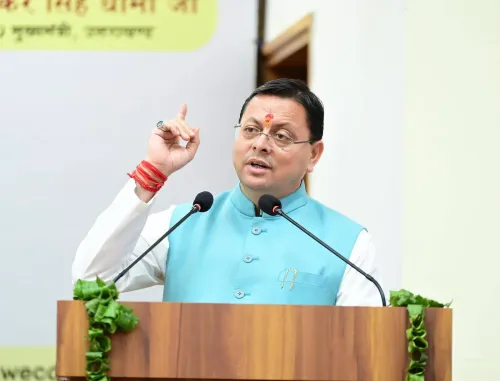
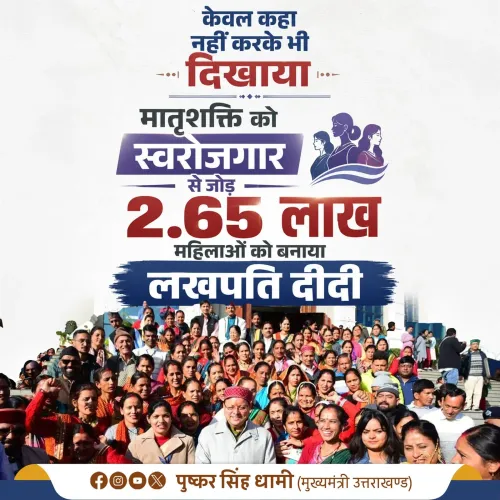
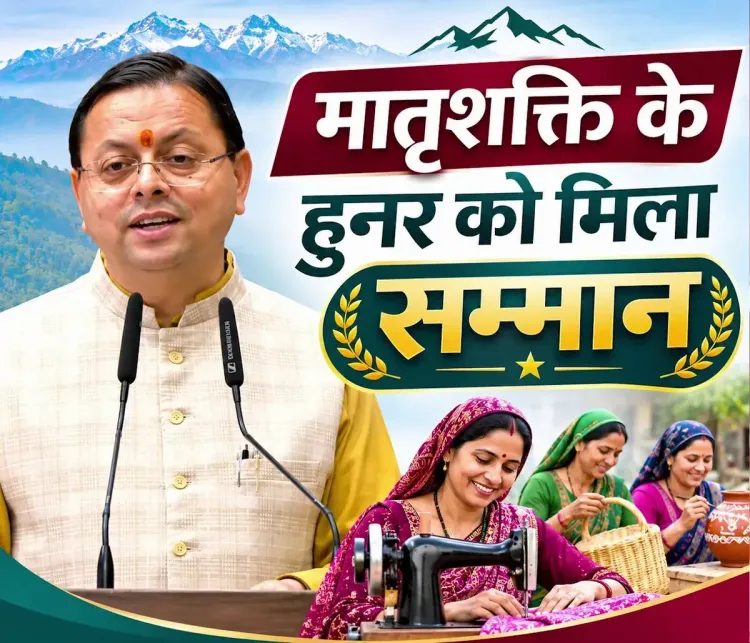
Uttarakhand Chief Minister Pushkar Singh Dhami said on Thursday, 26 November 2026, that more than 3.5 lakh women in the hill state have become Lakhpati Didis, while over 5 lakh women are finding new work through self-help groups. The post is a state scorecard on a national rural livelihoods drive that treats women's collectives as an income engine, not a side programme.
Dhami wrote that more than 3.5 lakh sisters have become Lakhpati Didis and that more than 5 lakh women linked to self-help groups are getting new employment opportunities. The Hindi line 3.5 lakh se adhik behnein bani lakhpati didi (more than 3.5 lakh sisters have become Lakhpati Didis) puts the women, not the file, at the centre of the claim.
The Rs 1 lakh bar that names a Lakhpati Didi
A Lakhpati Didi is a self-help group member whose annual income from a sustainable livelihood reaches at least Rs 1 lakh. The label sits inside the Deendayal Antyodaya Yojana-National Rural Livelihoods Mission (DAY-NRLM), launched in 2011 to organise rural women into savings, credit and micro-enterprise circles.
From 2023 the Lakhpati Didi strand was scaled nationally with a target of two crore women crossing that income line. Dhami's 3.5 lakh figure is Uttarakhand's stated share of that drive. The counts are those reported by the chief minister.
Five lakh women inside the SHG net
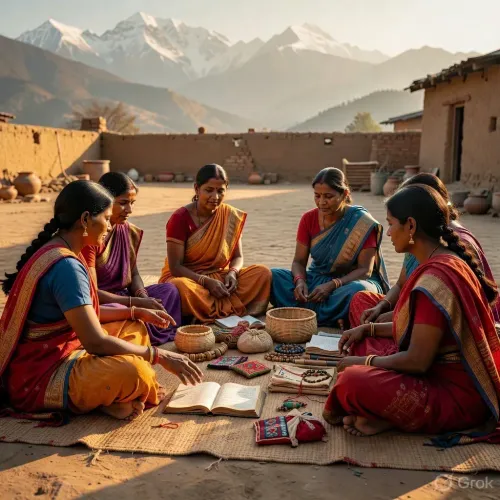
Self-help groups are the plumbing: small, women-led circles that pool savings, tap bank credit, and run farm, dairy, handicraft or services work. Dhami said more than 5 lakh women in Uttarakhand are now tied to those groups and drawing fresh livelihood chances.
In a state of scattered hill hamlets, formal jobs are thin and seasonal migration still pulls households apart. An SHG is often the nearest institution that can hold cash, credit and a market link in one courtyard.
A long NRLM pipeline, not a one-day note
DAY-NRLM is centrally sponsored and runs across Indian states. Uttarakhand's update on SHG coverage and Lakhpati Didi incomes fits a familiar pattern of states reporting delivery of a national women's livelihood scheme. Rural development departments typically follow with income checks and new group formation.
The next public test is whether those Rs 1 lakh livelihoods hold through a lean agricultural season in the hills, and whether SHG credit actually reaches the next village over the ridge.
Point of View
Not a new law. Uttarakhand is advertising delivery of DAY-NRLM and the 2023 Lakhpati Didi scale-up, lining a BJP-ruled hill state up with a national income-target narrative. The politics is quiet: sisters and SHGs, not an opposition clash. The policy question that follows is durability, whether those Rs 1 lakh livelihoods hold in scattered Himalayan markets.
NationPress
26 Nov 2026
Frequently Asked Questions
What did Uttarakhand CM Pushkar Singh Dhami say about Lakhpati Didis?
On 26 November 2026 he said more than 3.5 lakh women in Uttarakhand have become Lakhpati Didis. He also said more than 5 lakh women joining self-help groups are getting new employment opportunities.
What is the Lakhpati Didi scheme?
Lakhpati Didi is a DAY-NRLM strand that aims to help women in self-help groups earn at least Rs 1 lakh a year from sustainable livelihoods. It was scaled nationally from 2023 with a target of two crore such women.
What is DAY-NRLM and when was it launched?
Deendayal Antyodaya Yojana-National Rural Livelihoods Mission is a centrally sponsored programme launched in 2011. It mobilises rural women into self-help groups for savings, credit and micro-enterprise.
How many Uttarakhand women did Dhami say are in self-help groups?
He said more than 5 lakh women are linked to self-help groups and finding new employment opportunities. The figure is the one stated in his post.
Who is Pushkar Singh Dhami?
Pushkar Singh Dhami is the Chief Minister of Uttarakhand and a BJP leader. He posted the Lakhpati Didi and SHG update on 26 November 2026.