CM Dhami Pays Tribute to Folk Singer Kabutri Devi on Death Anniversary
Synopsis
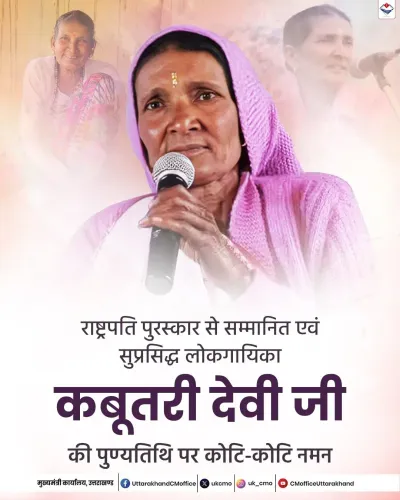
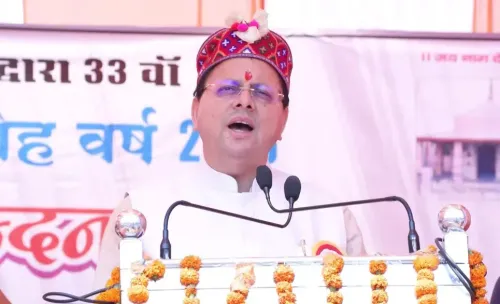
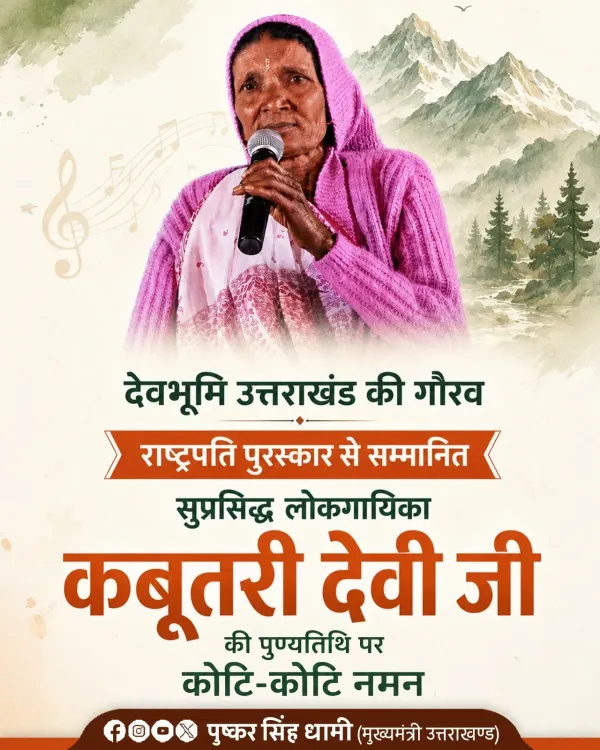
Uttarakhand Chief Minister Pushkar Singh Dhami on 7 July 2026 paid tribute to Presidential Award-winning Garhwali folk singer Kabutri Devi on her death anniversary, calling her contribution to the state's folk culture an enduring source of inspiration for future generations.
Key Takeaways
Chief Minister Pushkar Singh Dhami posted a tribute to folk singer Kabutri Devi on her death anniversary on 7 July 2026 .
Kabutri Devi was a recipient of the Rashtrapati Puraskar (Presidential Award) for her contribution to Indian folk arts.
She is recognised for giving national visibility to the folk traditions and dialects of the Garhwal region of Uttarakhand .
Dhami described her musical legacy as an 'unparalleled contribution' that will continue to inspire future generations.
Uttarakhand , formed in 2000 , has consistently emphasised the protection of Garhwali and Kumaoni folk traditions as part of its cultural identity.
Such tributes by the state government often precede formal cultural policy announcements including folk festivals and artist welfare schemes.
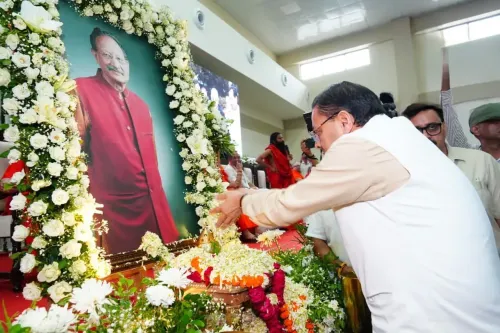
Uttarakhand Chief Minister Pushkar Singh Dhami on Tuesday, 7 July 2026, paid homage to celebrated folk singer Kabutri Devi on her death anniversary, honouring her lifelong contribution to the folk traditions of Devbhoomi Uttarakhand. Dhami described her as an irreplaceable voice who gave new identity to the state's rich folk culture through her melodious singing and traditional songs.
Context
In his post, Chief Minister Dhami offered koti-koti naman (countless salutations) to Kabutri Devi, a Rashtrapati Puraskar (Presidential Award) recipient recognised nationally for her rendition of Garhwali folk songs. He wrote that her 'unparalleled contribution to the preservation and promotion of folk culture will always remain a source of inspiration.' Dhami further noted that her 'musical devotion and cultural heritage will continue to guide future generations.'
Kabutri Devi was a prominent voice from the Garhwal region of Uttarakhand, celebrated for keeping alive local dialects and performing arts traditions that might otherwise have faded from public memory.
Policy Backdrop
When Uttarakhand was carved out as a separate Himalayan state in 2000, the protection of regional languages and performing arts — spanning both Garhwali and Kumaoni traditions — was embedded in its founding cultural identity. The state has since positioned itself as Devbhoomi (Land of the Gods), a branding that draws equally on spiritual heritage and living folk traditions.
At the national level, the Ministry of Culture and the Sangeet Natak Akademi administer recognition mechanisms for folk and traditional artists, including the Presidential Award that Kabutri Devi received. Such honours are among the highest conferred on practitioners of intangible cultural heritage in India.
Stakeholders and Impact
Garhwali communities and folk-music practitioners across Uttarakhand regard Kabutri Devi as a foundational figure whose recordings and live performances brought regional songs to audiences far beyond the hills. Her work is considered a reference point for younger artists attempting to learn and sustain the tradition.
Public tributes by sitting chief ministers to deceased folk artists carry institutional weight: they signal state-level commitment to intangible heritage and often precede formal policy steps such as artist pensions, archival digitisation projects, or folk festival programming.
What's Next
Observers of Uttarakhand's cultural policy will watch for announcements tied to the state government's next cycle of cultural awards or folk festival calendars, which frequently follow high-profile commemorations. Proposals for digitising folk archives or strengthening artist welfare schemes remain areas of active discussion within the state's cultural administration.
Chief Minister Dhami's tribute underscores a broader pattern in which Himalayan states use artist commemorations to reinforce distinct regional identity — a strategy that intersects with tourism promotion and the preservation of living cultural practices for future generations.
Point of View
The tribute positions Uttarakhand's folk heritage as both nationally validated and locally irreplaceable. This kind of symbolic statecraft often serves as a precursor to tangible policy moves — folk festivals, digitisation drives, or artist pension schemes — that translate cultural sentiment into governance. The tribute also reflects the BJP-led state government's broader effort to anchor its political identity in the cultural and spiritual distinctiveness of Uttarakhand.
NationPress
7 Jul 2026
Frequently Asked Questions
Who was Kabutri Devi?
Kabutri Devi was a celebrated folk singer from the Garhwal region of Uttarakhand, known for her rendition of traditional Garhwali songs. She received the Rashtrapati Puraskar (Presidential Award) for her distinguished contribution to India's folk arts and cultural heritage.
Why did CM Dhami pay tribute to Kabutri Devi?
Chief Minister Pushkar Singh Dhami paid tribute to Kabutri Devi on her death anniversary on 7 July 2026, honouring her lifelong contribution to the preservation and promotion of Uttarakhand's folk culture and traditions.
What is the Rashtrapati Puraskar given to folk artists?
The Rashtrapati Puraskar, or Presidential Award, is one of India's highest honours for practitioners of arts and culture. It is administered at the national level and recognises distinguished service in fields including folk music, dance, and other performing arts traditions.
What is Devbhoomi Uttarakhand?
Devbhoomi, meaning 'Land of the Gods,' is the cultural and spiritual identity associated with Uttarakhand. The Himalayan state, formed in 2000, promotes this identity through its religious sites, folk traditions, and the Garhwali and Kumaoni cultural heritage of its people.
What policies does Uttarakhand have for folk culture preservation?
Since its formation in 2000, Uttarakhand has emphasised safeguarding regional languages and performing arts as part of its cultural mandate. The state government periodically announces folk festivals, cultural awards, and artist welfare measures aligned with national schemes administered by bodies such as the Sangeet Natak Akademi.