Shekhawat: Airports Now Symbols of Heritage and Progress
Synopsis
Union Culture Minister Gajendra Singh Shekhawat on 7 July 2026 spotlighted India's airport modernisation drive, where new terminals blend world-class infrastructure with regional heritage — from Ayodhya's Ram Mandir to Agartala's tribal art — under PM Modi's 'Virasaat bhi, Vikas bhi' vision.
Key Takeaways
Union Culture and Tourism Minister Gajendra Singh Shekhawat posted on 7 July 2026 praising the cultural integration in India's new airport terminals.
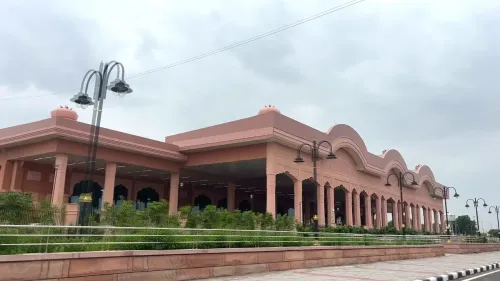
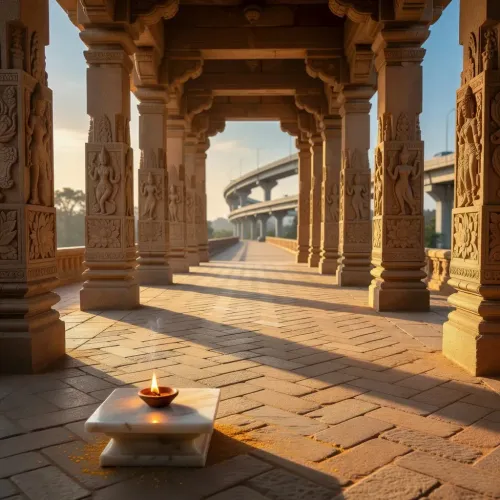
New terminals incorporate motifs from the Ram Mandir in Ayodhya , Mithila-Nalanda culture of Patna , and tribal art from Agartala .
The initiative is guided by Prime Minister Narendra Modi 's 'Virasaat bhi, Vikas bhi' (Heritage too, Development too) framework, articulated since 2014 .
The Airports Authority of India has overseen cultural integration across more than 100 new or upgraded terminals since 2014.
Local artisans, the tourism industry, and hundreds of millions of annual air passengers are the primary beneficiaries and audience of these installations.
Similar culturally-themed terminals are expected to roll out at upcoming airports in Uttar Pradesh , Bihar , and Northeast India .
Union Culture and Tourism Minister Gajendra Singh Shekhawat on Tuesday, 7 July 2026, highlighted how India's newly built and upgraded airport terminals are being transformed into showcases of regional culture and heritage, in line with Prime Minister Narendra Modi's guiding vision of 'Virasaat bhi, Vikas bhi' (Heritage too, Development too).
Context
In his post on X, Shekhawat wrote that India's airports are no longer merely transit points but have become 'prateek' (symbols) of the country's rich history and art. He specifically cited the integration of motifs inspired by the Ram Mandir in Ayodhya, the Mithila-Nalanda culture of Patna, and tribal art from Agartala into the design language of new terminals. 'This is modern India's flight,' he wrote, 'one that touches the sky while staying rooted to its origins.'
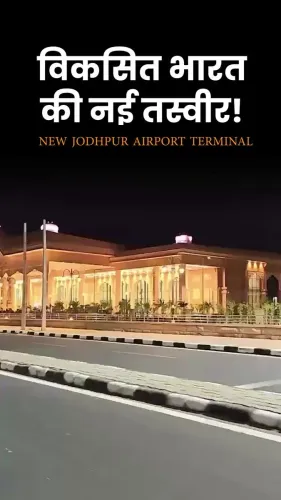
The post was accompanied by a video, reinforcing the visual dimension of the cultural installations being highlighted by the ministry.
Policy Backdrop
The 'Virasaat bhi, Vikas bhi' framework has been a recurring theme in Prime Minister Modi's public addresses since 2014, positioning heritage preservation not as a constraint on development but as an integral part of it. Under this approach, the Airports Authority of India (AAI) has overseen the construction or upgrade of more than 100 terminals across the country, with regional artistic and cultural elements woven into architecture, murals, and interior design.
This template has been applied beyond aviation — highways, railway stations, and urban redevelopment projects have similarly incorporated local cultural identities, making public infrastructure a vehicle for projecting India's civilisational diversity.
Stakeholders and Impact
The initiative directly benefits local artisans and craft communities whose traditional art forms — from Mithila paintings to Tripura's tribal motifs — gain national and international visibility through high-footfall public spaces. For the broader tourism industry, culturally themed airports serve as a first and last impression, potentially deepening a traveller's curiosity about the region they are visiting or departing from.
Air passengers, numbering in the hundreds of millions annually across Indian airports, are the most immediate audience for these installations, experiencing regional heritage as part of routine transit.
What's Next
The Culture and Tourism Ministry is expected to continue advocating for this model as new terminal projects come online in Uttar Pradesh, Bihar, and Northeast India. Parliamentary sessions and the ministry's annual tourism report are likely platforms where the scale and outcomes of such cultural integration will be formally documented and debated. The post by Shekhawat signals that the ministry intends to keep this narrative prominent as a pillar of India's soft-power and domestic tourism strategy.
Point of View
Vikas bhi' brand, deploying infrastructure as a cultural statement ahead of what is likely to be a busy parliamentary and tourism-policy season. By naming three geographically and culturally distinct sites — Ayodhya in the Hindi heartland, Patna representing Bihar's ancient scholarly legacy, and Agartala representing the Northeast — the minister signals a pan-India cultural outreach rather than a narrow regional appeal. This fits a broader pattern where the government uses high-visibility public assets like airports and railway stations as soft-power tools, making the case that modernity and tradition are complementary rather than competing. The framing also subtly positions the Culture Ministry as a cross-sectoral actor, extending its mandate well beyond museums and monuments into infrastructure policy.
NationPress
6 Oct 2026
Frequently Asked Questions
What is the 'Virasaat bhi, Vikas bhi' vision for Indian airports?
'Virasaat bhi, Vikas bhi' — meaning 'Heritage too, Development too' — is a framework articulated by Prime Minister Narendra Modi since 2014, under which new infrastructure projects, including airport terminals, are designed to incorporate regional cultural and artistic elements alongside world-class facilities.
Which airports are being given cultural themes under this initiative?
Union Minister Gajendra Singh Shekhawat cited terminals inspired by the Ram Mandir in Ayodhya, the Mithila-Nalanda culture of Patna, and tribal art from Agartala as examples of this cultural integration in India's airport modernisation programme.
How many Indian airports have been upgraded with cultural elements?
The Airports Authority of India has overseen the construction or upgrade of more than 100 terminals since 2014, with many incorporating regional artistic identities as part of the broader heritage-plus-development policy.
How does this initiative benefit local artisans?
Traditional art forms such as Mithila paintings and Tripura's tribal motifs gain high visibility through their integration into busy airport terminals, providing artisan communities recognition and potentially boosting demand for their crafts among domestic and international travellers.
What is Gajendra Singh Shekhawat's role in this initiative?
Gajendra Singh Shekhawat is the Union Minister of Culture and Tourism and a senior BJP leader and Lok Sabha MP from Jodhpur, Rajasthan. His ministry advocates for embedding India's cultural heritage into public infrastructure projects, including the ongoing airport modernisation drive.