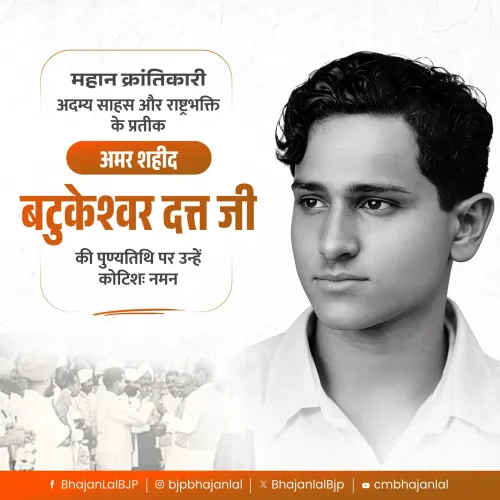
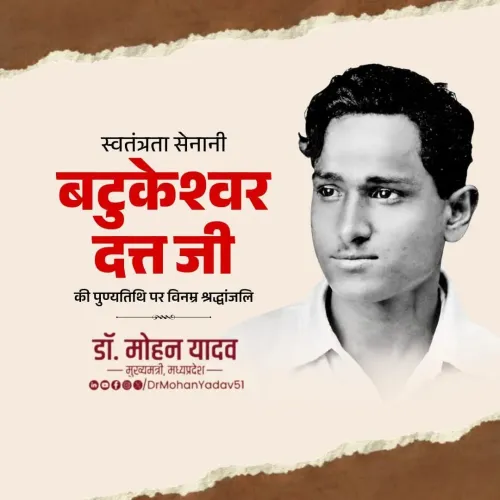
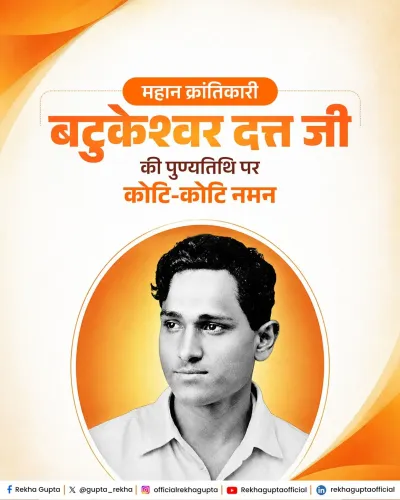
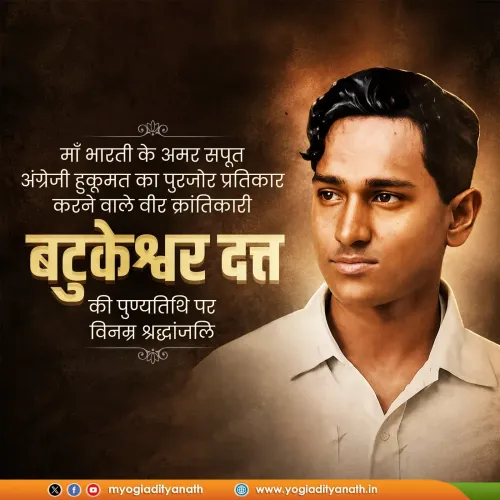
CM Dhami Pays Tribute to Revolutionary Batukeshwar Dutt
Synopsis
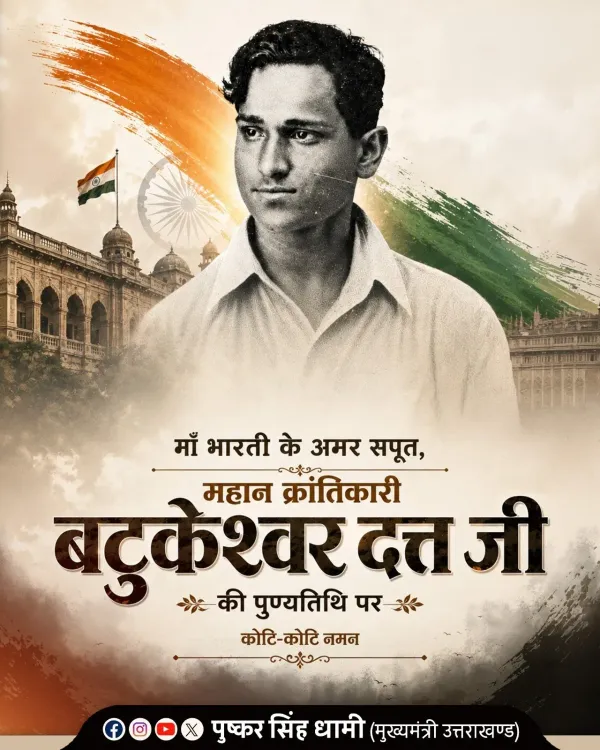
Uttarakhand Chief Minister Pushkar Singh Dhami paid tribute to revolutionary Batukeshwar Dutt on his death anniversary, saluting his fearlessness and resolve during India's independence struggle. Dutt is remembered for the 1929 Central Legislative Assembly bombing alongside Bhagat Singh.
Key Takeaways
Uttarakhand Chief Minister Pushkar Singh Dhami paid tribute to revolutionary Batukeshwar Dutt on his death anniversary via a post on X.
Batukeshwar Dutt and Bhagat Singh carried out the iconic Central Legislative Assembly bombing on 8 April 1929 to protest British colonial laws.
Dutt was imprisoned in the Cellular Jail in the Andaman and Nicobar Islands and passed away on 8 July 1965 .
CM Dhami described Dutt's contributions as a source of enduring inspiration for national service and patriotism among Indian citizens.
Such tributes are part of a broader political practice among BJP leaders of invoking independence-era revolutionaries to reinforce nationalist messaging.
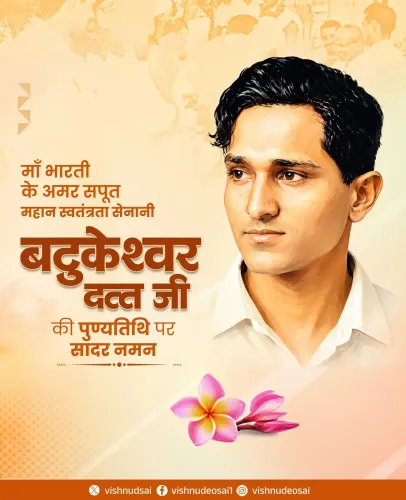
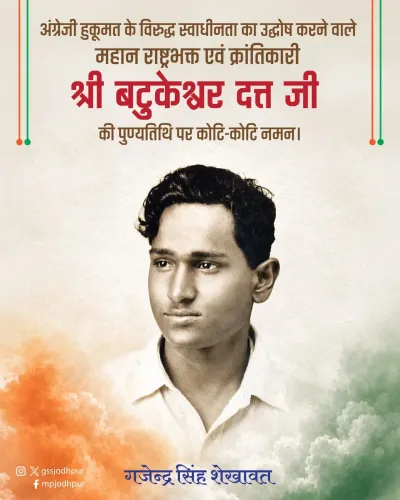
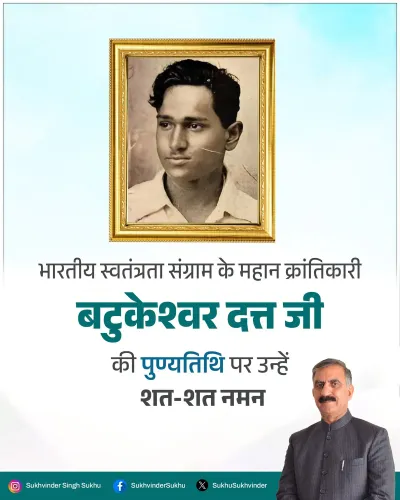
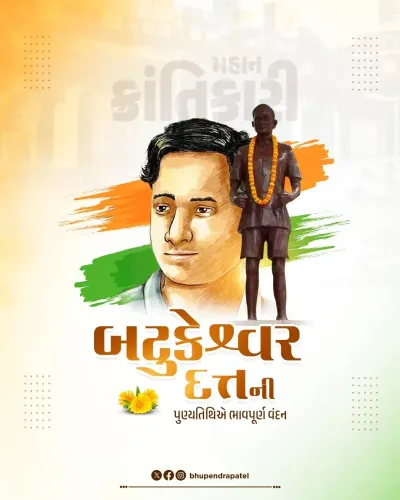
Uttarakhand Chief Minister Pushkar Singh Dhami on Monday paid tribute to freedom fighter and revolutionary Batukeshwar Dutt on his death anniversary, honouring his role in India's independence struggle through a post on X.
In his message, CM Dhami offered 'koti-koti naman' — countless salutations — to Dutt, describing him as a 'great freedom fighter, immortal son of Mother India, and a brave revolutionary.' He wrote that Dutt's 'fearlessness, indomitable courage, and unbreakable resolve' in the independence movement would continue to inspire citizens on the path of national service and patriotism.
Dhami further said that Dutt's 'dedication to the motherland and the ideal of placing national interest above all else shall always be remembered.'
Context
Batukeshwar Dutt is remembered as one of the most daring figures of India's anti-colonial resistance. On 8 April 1929, he and fellow revolutionary Bhagat Singh threw non-lethal smoke bombs inside the Central Legislative Assembly in Delhi to protest repressive colonial legislation, deliberately courting arrest to use the trial as a public platform against British rule.
The act was designed to 'make the deaf hear,' as Dutt and Bhagat Singh famously declared. Dutt was subsequently tried, convicted, and transported to the Cellular Jail in the Andaman and Nicobar Islands, where he endured years of imprisonment. He passed away on 8 July 1965.
Policy Backdrop
Commemorating pre-1947 revolutionaries through public statements has become a consistent practice among Indian elected representatives, particularly around death and birth anniversaries of iconic independence-era figures. These tributes serve to connect contemporary governance with the legacy of the freedom struggle.
Such commemorations are especially visible from BJP office-holders at both state and national levels, who regularly invoke figures like Bhagat Singh, Subhas Chandra Bose, and their contemporaries as symbols of nationalist resolve. CM Dhami has consistently participated in this tradition since assuming office in Uttarakhand.
Stakeholders and Impact
Tributes of this nature are primarily directed at the general public and students, reinforcing awareness of lesser-highlighted revolutionary figures beyond the mainstream independence narrative. Batukeshwar Dutt, while historically significant, receives comparatively less public attention than his co-conspirator Bhagat Singh, making such statements part of a broader effort to widen the pantheon of remembered freedom fighters.
For Uttarakhand, a state with a strong tradition of military and patriotic sentiment, such messaging resonates with a public that places high value on national sacrifice and service.
What's Next
State-level commemorative events and school programmes centred on revolutionary history are typically organised around the death and birth anniversaries of figures like Batukeshwar Dutt. Such themes are also likely to find a place in official addresses during the annual Independence Day celebrations on 15 August.
As India approaches its Independence Day, tributes to freedom fighters are expected to intensify across political parties and government institutions, keeping the memory of the independence struggle at the centre of public discourse.
Point of View
Particularly those associated with Bhagat Singh's legacy. By invoking ideals of fearlessness and national sacrifice, such statements serve a dual purpose: preserving historical memory and reinforcing the party's nationalist credentials with a patriotism-conscious electorate. Dutt remains a relatively under-commemorated figure compared to Bhagat Singh, and state-level tributes help widen the recognised pantheon of freedom fighters. With Independence Day approaching, this messaging is likely to intensify across the political spectrum.
NationPress
21 Jul 2026
Frequently Asked Questions
Who was Batukeshwar Dutt?
Batukeshwar Dutt was an Indian revolutionary who, alongside Bhagat Singh, threw smoke bombs inside the Central Legislative Assembly in Delhi on 8 April 1929 to protest colonial laws. He was convicted and imprisoned in the Cellular Jail in the Andaman and Nicobar Islands, and died on 8 July 1965.
Why did Pushkar Singh Dhami pay tribute to Batukeshwar Dutt?
Uttarakhand CM Pushkar Singh Dhami posted a tribute on X to mark the death anniversary of Batukeshwar Dutt, honouring his courage and sacrifice during India's independence struggle.
What did Batukeshwar Dutt do in 1929?
In 1929, Batukeshwar Dutt and Bhagat Singh threw non-lethal smoke bombs inside the Central Legislative Assembly in Delhi to protest repressive British colonial legislation, deliberately seeking arrest to publicise their cause.
What is the connection between Bhagat Singh and Batukeshwar Dutt?
Bhagat Singh and Batukeshwar Dutt were fellow revolutionaries who carried out the 1929 Central Legislative Assembly bombing together. Both were tried and convicted; Bhagat Singh was executed in 1931, while Dutt survived imprisonment and lived until 1965.
Why do BJP leaders frequently pay tribute to independence-era revolutionaries?
Indian elected representatives across parties, and particularly BJP leaders, routinely mark the birth and death anniversaries of pre-1947 revolutionaries through public statements, connecting contemporary nationalist messaging to the legacy of the independence struggle.