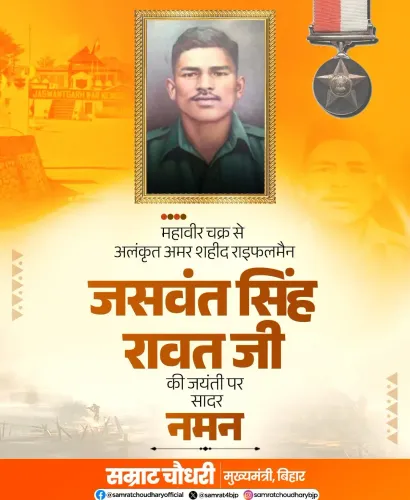
CM Dhami Pays Tribute to Rifleman Jaswant Singh Rawat on Martyrdom Day
Synopsis
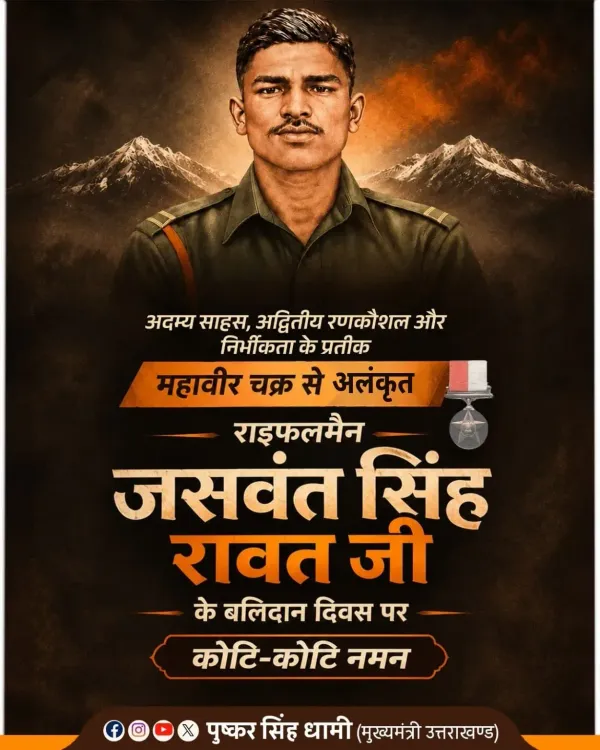
Uttarakhand CM Pushkar Singh Dhami marked the martyrdom day of Rifleman Jaswant Singh Rawat, posthumous Mahavir Chakra awardee, hailing his solitary stand against Chinese forces in the 1962 war as an enduring symbol of Indian military valour and national pride.
Key Takeaways
Rifleman Jaswant Singh Rawat was awarded the Mahavir Chakra posthumously for extraordinary courage during the 1962 India-China War .
He is believed to have held his position virtually alone against advancing Chinese troops in the Nuranang sector of the North-East Frontier Agency.
The site was later renamed Jaswant Garh and remains an active Army memorial in Arunachal Pradesh .
The Mahavir Chakra is India's second-highest wartime gallantry decoration, instituted in 1950 .
CM Dhami described Rawat as the pride of sainya-bhoomi Uttarakhand and called his sacrifice an inspiration for future generations.
Uttarakhand has one of India's highest per-capita rates of military service, underpinning the state's close identification with the armed forces.
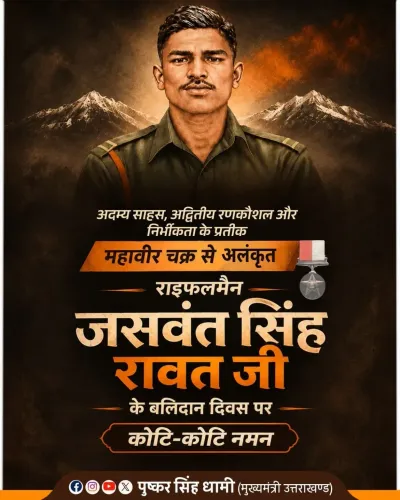
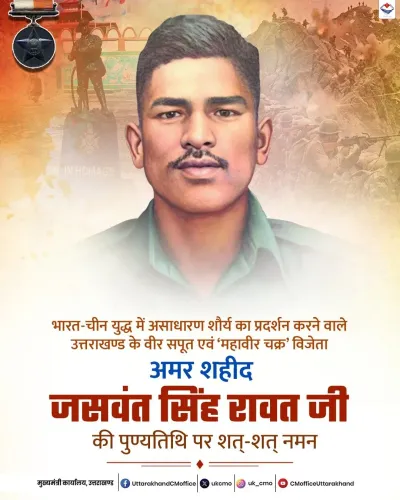
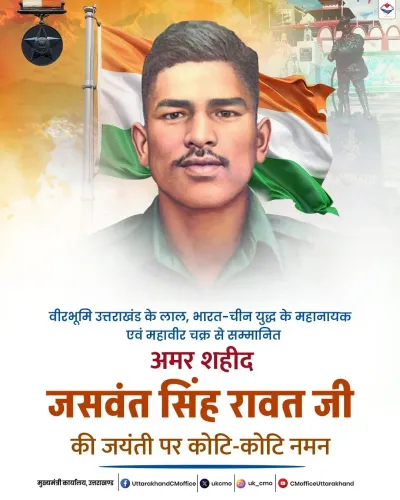
Sixty-four years after a lone rifleman from Uttarakhand held a mountain pass against an overwhelming Chinese advance, Uttarakhand Chief Minister Pushkar Singh Dhami paused to honour that sacrifice — posting a heartfelt tribute on Tuesday, November 17, 2026, marking the martyrdom day of Mahavir Chakra awardee Rifleman Jaswant Singh Rawat.
In his post, CM Dhami saluted Rawat as a symbol of 'adamy sahas, adviteeya ranakausal, asadharan veerta evam atoot rashtrbhakti' — 'indomitable courage, unmatched battle-craft, extraordinary valour and unbreakable patriotism' — describing him as the pride of what he called sainya-bhoomi Uttarakhand, the land of soldiers. He wrote that Rawat's 'unparalleled gallantry and valour in the 1962 India-China War has inscribed an indelible saga of bravery in Indian military history,' and that his supreme dedication to the motherland 'will forever remain the nation's pride and a source of inspiration for generations to come.'
The Stand at Nuranang: What Jaswant Singh Rawat Did
Rifleman Jaswant Singh Rawat, serving with the Garhwal Rifles, is credited with one of the most extraordinary acts of individual courage in the 1962 India-China War. During the fierce fighting in the North-East Frontier Agency sector, Rawat is said to have held his position virtually alone against advancing People's Liberation Army troops for an extended period, inflicting significant casualties before he fell. He was 19 years old. The Indian Army posthumously awarded him the Mahavir Chakra — India's second-highest wartime gallantry decoration, instituted in 1950 — recognising his conspicuous valour in the face of the enemy.
The site of his stand, Nuranang in present-day Arunachal Pradesh, was later renamed Jaswant Garh in his honour. The Army post there has since become a pilgrimage point for soldiers and civilians alike, with local legend holding that his spirit still guards the pass.
Uttarakhand's Unbroken Bond With the Uniform
Dhami's tribute is more than ceremonial — it reflects a deep, structural truth about the state he leads. Uttarakhand consistently records one of the highest per-capita rates of military service in India, its Garhwal and Kumaon hills having supplied soldiers to the Indian Army for well over a century. The twin regimental identities — the Garhwal Rifles and the Kumaon Regiment — carry battle honours stretching from both World Wars through 1947, 1962, 1965, 1971, and 1999. When the Chief Minister calls Uttarakhand sainya-bhoomi, it is a description backed by every village memorial and every family tree in the hills.
Uttarakhand chief ministers have issued public tributes on the anniversaries of 1962 war heroes as a matter of continuity across administrations, reinforcing the state's identity and keeping these stories alive for a generation that did not live through the conflict. The annual observance also forms part of a broader national pattern of commemorating the 1962 war — honouring individual sacrifice without reopening bilateral diplomatic sensitivities with China.
Why the 1962 Martyrs Still Matter in 2026
The 1962 war ended in a swift, painful reversal for India, and its strategic shadow has never fully lifted from the country's security calculus. Honouring its soldiers — men who fought with severe material disadvantage and yet produced acts of extraordinary personal courage — carries a particular weight. For a state like Uttarakhand, which shares a long border with China and continues to send its sons and daughters into uniform, the memory of Jaswant Singh Rawat is not archival. It is living.
As long as that border remains contested and those hills remain guarded, the rifleman's story will keep being told — from the memorial at Jaswant Garh to a Chief Minister's post on a November morning.
Point of View
A substantial electoral constituency in the hills. Invoking a 1962 hero also carries a subtle strategic resonance in 2026, when the India-China border dynamic remains a live national-security concern — honouring individual valour implicitly affirms the continuing vigilance of those who guard the same terrain. Tributes like these also serve a generational function, ensuring that soldiers who received no victory parade are written into public memory before living witnesses are gone. The ritual is sincere and politically astute in equal measure.
NationPress
17 Nov 2026
Frequently Asked Questions
Who was Rifleman Jaswant Singh Rawat?
Rifleman Jaswant Singh Rawat was a soldier from Uttarakhand serving with the Garhwal Rifles who displayed extraordinary individual courage during the 1962 India-China War , holding his position against advancing Chinese troops in the Nuranang sector. He was posthumously awarded the Mahavir Chakra , India's second-highest wartime gallantry decoration.
What is the Mahavir Chakra?
The Mahavir Chakra is India's second-highest military decoration for acts of conspicuous valour in the face of the enemy during war. It was instituted in 1950 and can be awarded posthumously.
Where is the Jaswant Garh memorial?
Jaswant Garh is an Indian Army memorial post in Arunachal Pradesh , located at the Nuranang site where Rifleman Jaswant Singh Rawat made his stand in the 1962 war. The post is named in his honour and is a point of tribute for soldiers and civilians.
Why is Uttarakhand called a sainya-bhoomi or land of soldiers?
Uttarakhand has one of the highest per-capita rates of military service in India, with the Garhwal and Kumaon hills supplying soldiers to the Indian Army for over a century through the Garhwal Rifles and Kumaon Regiment , both of which carry battle honours across multiple wars.
What did CM Dhami say about Jaswant Singh Rawat?
CM Pushkar Singh Dhami described Rawat as a symbol of 'indomitable courage, unmatched battle-craft, extraordinary valour and unbreakable patriotism,' saying his sacrifice in the 1962 India-China War had inscribed 'an indelible saga of bravery' in Indian military history and would inspire future generations.