CM Dhami joins Harela fest, pledges 10 lakh saplings
Synopsis
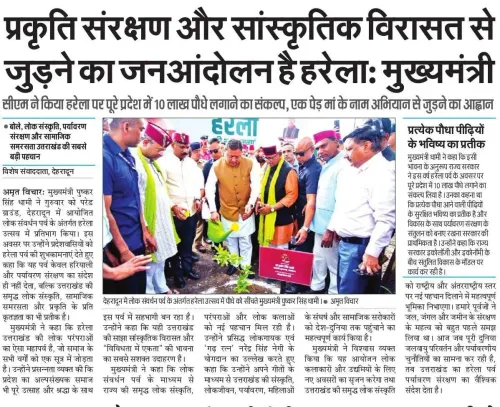
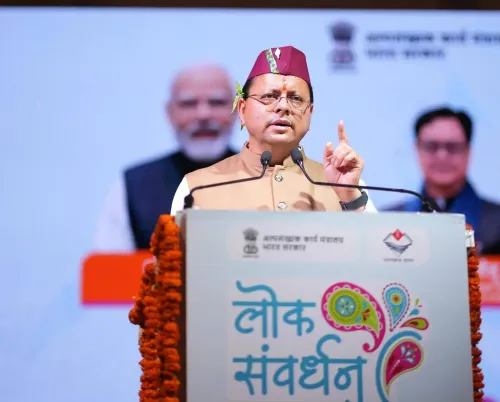
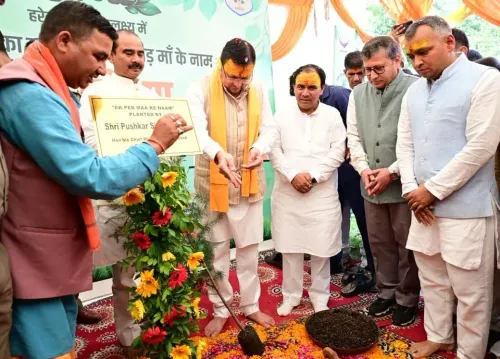
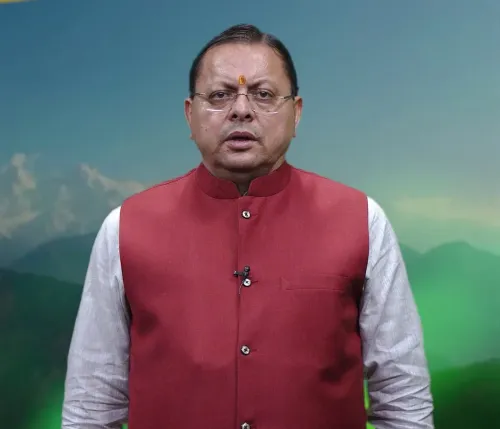
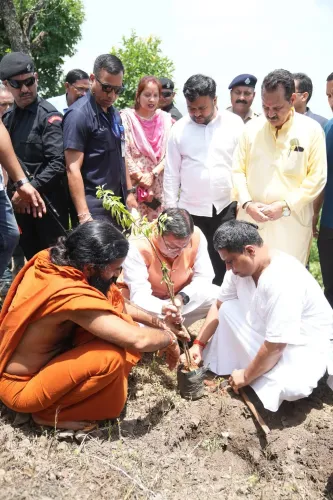
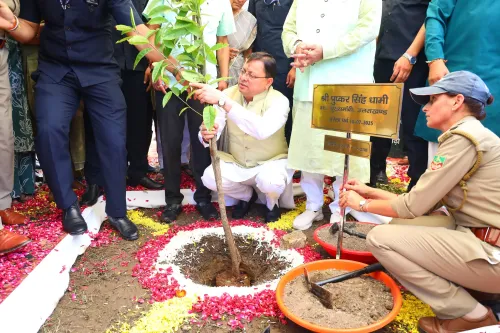
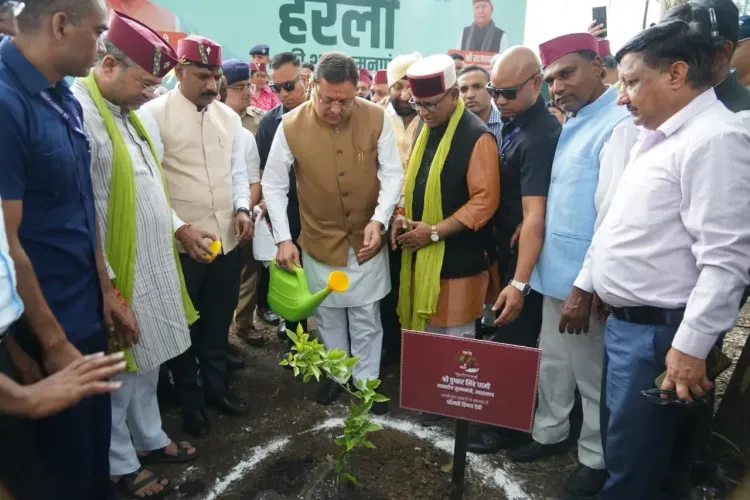
Chief Minister Pushkar Singh Dhami participated in the Harela Utsav under Lok Sanvardhan Parv at Parade Ground, Dehradun on 16 July 2026, pledging to plant 10 lakh saplings and highlighting the festival as a symbol of environmental responsibility and cultural unity.
Key Takeaways
CM Pushkar Singh Dhami attended the Harela Utsav under Lok Sanvardhan Parv at Parade Ground, Dehradun on 16 July 2026 .
The state government has pledged to plant 10 lakh (one million) saplings across Uttarakhand on the occasion of Harela.
Under PM Modi's 'Ek Ped Maa Ke Naam' campaign, Uttarakhand's target is two crore saplings ; approximately 1 crore 15 lakh have been planted so far.
CM Dhami honoured folk singer Narendra Singh Negi , recipient of the 'Garh Ratna' award, for his contribution to Uttarakhand's cultural outreach.
The Lok Sanvardhan Parv is designed to promote folk artists, weavers, craftspeople, and artisans of traditional cuisine, strengthening local livelihoods.
CM Dhami called Harela 'not merely a festival but a pledge of our responsibility towards nature,' linking the tradition to global climate challenges.
The Chief Minister's Office of Uttarakhand announced on 16 July 2026 that Chief Minister Pushkar Singh Dhami participated in the Harela Utsav held under the Lok Sanvardhan Parv at Parade Ground, Dehradun, extending greetings to the people of the state on the occasion of the festival.
Context
Harela — derived from the Hindi word for 'green' — is one of Uttarakhand's most significant folk festivals, traditionally observed in the month of Shravan. It centres on the symbolic sowing and sprouting of seeds, community tree planting, and the celebration of nature's abundance. CM Dhami described the festival as 'samaj ke sabhi vargon ko ek sutra mein jodne wala mahaprav' ('a grand festival that binds all sections of society into one thread'), underscoring its inclusive character.
The Chief Minister noted with satisfaction that the minority community of the state was participating in the festival 'with full enthusiasm and devotion,' calling it the strongest example of Uttarakhand's shared cultural heritage and the spirit of 'unity in diversity.'
Policy Backdrop
Uttarakhand has marked Harela annually since achieving statehood in 2000, institutionalising community tree planting as a civic act woven into cultural observance. This year, the state government has resolved to plant 10 lakh (one million) saplings across the state on the occasion of Harela, with CM Dhami stating that 'every sapling is a symbol of a secure future for coming generations.'
The drive dovetails with Prime Minister Narendra Modi's 'Ek Ped Maa Ke Naam' (One Tree in Mother's Name) campaign, which was launched in 2024 to transform tree planting into a mass public movement. Under this campaign, Uttarakhand has set a target of planting two crore (20 million) saplings, of which approximately 1 crore 15 lakh (11.5 million) have already been planted, according to the Chief Minister's address. CM Dhami called on every resident to plant a sapling in honour of their mother and nurture it until it becomes a full-grown tree.
The Chief Minister also paid tribute to celebrated folk singer and 'Garh Ratna' awardee Narendra Singh Negi, saying his songs have carried Uttarakhand's culture, folk life, environment, women's struggles, and social concerns to audiences across India and the world.
Stakeholders and Impact
The Lok Sanvardhan Parv serves as a platform for the state's folk artists, craftspeople, weavers, handicraft specialists, and artisans of traditional cuisine. CM Dhami said that purchasing local products is 'not merely economic support, but an effective means of preserving the state's cultural heritage and strengthening the livelihoods of thousands of families.'
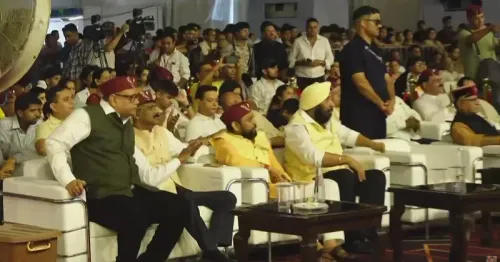
The event was attended by Cabinet Minister Khajan Das, Dehradun Mayor Saurabh Thapliyal, folk singer Narendra Singh Negi, local artists, craftspeople, departmental officials, elected representatives, and large numbers of women, youth, and members of the general public.
The convergence of cultural celebration and environmental commitment positions Harela as a model for community-led conservation — one that the state government is increasingly projecting at national and international levels.
What's Next
The state government's immediate benchmark is the completion of the 10 lakh sapling plantation drive tied to this year's Harela. The longer horizon is closing the gap on the two-crore sapling target under 'Ek Ped Maa Ke Naam,' with roughly 85 lakh saplings still to be planted. Observers will also watch whether the Lok Sanvardhan Parv format is extended to additional districts, broadening its reach among folk artists and rural entrepreneurs across Uttarakhand.
Point of View
The Dhami government is pursuing a dual strategy: deepening the BJP's roots in Uttarakhand's folk identity while aligning with the Centre's 'Ek Ped Maa Ke Naam' optics ahead of any electoral cycle. The deliberate mention of minority community participation in Harela signals an effort to project the festival as a civic rather than purely Hindu-religious occasion, broadening its political appeal. The Lok Sanvardhan Parv format also quietly advances a 'vocal for local' economic narrative without invoking the term, tying cultural pride to artisan livelihoods. Cumulatively, these moves position Uttarakhand's folk traditions as a soft-power asset that serves both conservation targets and governance branding.
NationPress
15 Oct 2026
Frequently Asked Questions
What is Harela festival in Uttarakhand?
Harela is a traditional Uttarakhand festival observed in the Hindu month of Shravan that celebrates nature, community tree planting, and the onset of the monsoon season. It is one of the state's most important folk festivals, symbolising the bond between people and the environment.
How many trees will be planted in Uttarakhand on Harela 2026?
The Uttarakhand state government has pledged to plant 10 lakh (one million) saplings across the state on the occasion of Harela 2026, as announced by Chief Minister Pushkar Singh Dhami at the Parade Ground event in Dehradun.
What is the 'Ek Ped Maa Ke Naam' campaign?
'Ek Ped Maa Ke Naam' (One Tree in Mother's Name) is a tree-plantation campaign launched by Prime Minister Narendra Modi in 2024 to make environmental conservation a mass public movement. Uttarakhand has a target of planting two crore saplings under this campaign, of which approximately 1 crore 15 lakh have been planted so far.
Who is Narendra Singh Negi and why was he mentioned at the Harela event?
Narendra Singh Negi is a celebrated Uttarakhand folk singer honoured with the 'Garh Ratna' award. CM Dhami mentioned him at the Harela Utsav for his contribution in carrying Uttarakhand's culture, folk life, environment, and social issues to audiences across India and the world through his songs.
What is the Lok Sanvardhan Parv in Uttarakhand?
Lok Sanvardhan Parv is a state-organised cultural festival in Uttarakhand that provides a platform to folk artists, craftspeople, weavers, handicraft specialists, and artisans of traditional cuisine, aiming to promote the state's rich folk culture and support local livelihoods.