CM Dhami Pushes Temple Revival, Folk Arts Under 'Vikas Bhi, Virasat Bhi'
Synopsis
Uttarakhand CM Pushkar Singh Dhami on 12 November 2026 reaffirmed planned development of ancient temples in the Kedarkhand and Manaskhand regions, and state support for folk artists and traditional art forms under the 'Vikas Bhi, Virasat Bhi' governance mantra.
Key Takeaways
CM Pushkar Singh Dhami posted on 12 November 2026 reaffirming the 'Vikas Bhi, Virasat Bhi' (Development as well as Heritage) governance mantra.
Systematic, planned development of ancient temples in both Kedarkhand and Manaskhand regions is stated to be under way.
The government says it is using 'various schemes' to encourage folk artists and traditional art forms across Uttarakhand.
The twin-circuit focus spans both the Garhwal (Kedarkhand) and Kumaon (Manaskhand) divisions, broadening beyond the existing Char Dham corridor.
No specific scheme names, funding figures, or project timelines have been publicly detailed as yet.
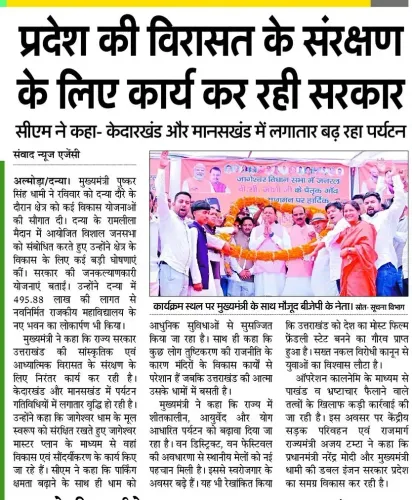
Development and devotion, hand in hand — that is the governing philosophy Uttarakhand Chief Minister Pushkar Singh Dhami is now translating into on-ground action across the state's ancient temple heartlands. On Thursday, 12 November 2026, Dhami reaffirmed on X that his government is committed to the holistic development of Uttarakhand under the mantra 'Vikas Bhi, Virasat Bhi' — 'Development as well as Heritage' — with a specific focus on the mythological temple belts of Kedarkhand and Manaskhand, alongside active promotion of folk artists and traditional art forms.
Kedarkhand and Manaskhand: Two Ancient Circuits Get a Planned Push
Kedarkhand, the Himalayan region anchoring some of Hinduism's most sacred pilgrimage sites — including Kedarnath — and Manaskhand, the Kumaon-side belt rich in mythological temple heritage, are at the centre of this latest development thrust. Dhami stated that 'systematic development' (suuniyojit vikas) of the ancient temples in both regions is under way. The twin-circuit framing signals a deliberate effort to distribute pilgrimage infrastructure investment across both the Garhwal and Kumaon divisions of the state, rather than concentrating upgrades solely on the marquee Char Dham route.
Uttarakhand governments have been upgrading Char Dham pilgrimage infrastructure since the mid-2010s, but the explicit naming of Kedarkhand and Manaskhand as distinct planned zones marks a broader template — extending the development umbrella to lesser-visited but historically significant temple clusters spread through the Himalayas.
Folk Artists and Traditional Arts: The Cultural Economy Angle
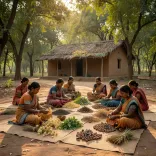
The second pillar of Dhami's post is equally pointed. The government says it is using 'various schemes' (vibhinn yojanaon) to encourage lok kalakars — folk artists — and paramparik vidhaon — traditional art forms. Uttarakhand's Garhwali and Kumaoni folk traditions, from Jagar ritual singing to traditional dance forms and craft, have long faced erosion as younger generations migrate to cities. State-level artist support schemes have existed in various forms over the past decade, and Dhami's statement signals a continued — and apparently expanded — commitment to that strand of cultural policy.
The pairing is deliberate: temple circuit upgrades drive pilgrim footfall and tourism revenue, while folk artist schemes ensure the living cultural ecosystem around those sites is not hollowed out in the process. It is heritage economics and cultural preservation running on the same track.
A BJP Governance Signature Writ Large in the Himalayas
The 'Vikas Bhi, Virasat Bhi' framing aligns Uttarakhand's approach with a wider pattern seen in BJP-governed states, where temple circuit investment and cultural identity programmes are positioned not as competing with development but as constitutive of it. For Uttarakhand — a state whose economy is structurally dependent on pilgrimage, tourism, and hydropower — this dual focus carries direct fiscal logic. Pilgrims and tourists drawn to well-maintained temple circuits generate revenue that funds the very schemes supporting the folk traditions those visitors come to experience.
What the government has not yet detailed publicly — specific scheme names, budget allocations, or project timelines for the Kedarkhand and Manaskhand upgrades — will be the real test of ambition meeting execution. The announcement plants the flag; the infrastructure and the cheques have to follow.
Point of View
Virasat Bhi' framing is a textbook application of the BJP's broader cultural-economy governance model — using religious heritage as both a development lever and a political identity signal. By explicitly naming Kedarkhand and Manaskhand rather than simply invoking Char Dham, the government signals an intent to extend the pilgrimage dividend to smaller, less-monetised temple clusters, which could meaningfully diversify Uttarakhand's tourism revenue base. The folk artist component addresses a genuine cultural erosion concern, but its impact will depend entirely on scheme design and delivery — categories where announcements have historically outpaced implementation in hill-state governance. Watch for budget session allocations and district-level rollouts as the real indicators of whether this rhetoric hardens into policy.
NationPress
12 Nov 2026
Frequently Asked Questions
What is 'Vikas Bhi, Virasat Bhi' in Uttarakhand?
'Vikas Bhi, Virasat Bhi' — meaning 'Development as well as Heritage' — is the governance mantra articulated by Chief Minister Pushkar Singh Dhami, emphasising that economic development and cultural-religious heritage preservation must go hand in hand in Uttarakhand.
What is Kedarkhand and Manaskhand in Uttarakhand?
Kedarkhand refers to the Garhwal division of Uttarakhand, home to ancient temples including Kedarnath, while Manaskhand refers to the Kumaon division's belt of mythological and historical temple sites. Both are distinct pilgrimage regions within the state.
What is the Uttarakhand government doing for folk artists?
The Dhami government has stated it is promoting folk artists and traditional art forms through 'various schemes', a continuation of Uttarakhand's decade-long state-level support for Garhwali and Kumaoni performing arts and crafts traditions.
How does temple development help Uttarakhand's economy?
Uttarakhand's economy is significantly dependent on pilgrimage and religious tourism. Upgrading temple infrastructure in circuits like Kedarkhand and Manaskhand increases pilgrim footfall, generating revenue for local communities and the state exchequer.
Is Char Dham the only temple circuit being developed in Uttarakhand?
No. While the Char Dham circuit has received the most prominent infrastructure investment since the mid-2010s, CM Dhami's latest statement signals that the Kedarkhand and Manaskhand temple belts — covering a wider range of ancient sites — are also receiving planned, systematic development attention.