CM Dhami Rallies Srinagar Crowd Against Congress 'Anarchy'
Synopsis
Uttarakhand CM Pushkar Singh Dhami rallied a massive crowd in Srinagar, Pauri Garhwal on 31 October 2026, branding Congress as 'anarchic' under the 'Save Democracy, Remove Anarchy' campaign — tagging PM Modi, Amit Shah and Rajnath Singh in a nationally coordinated BJP messaging push.
Key Takeaways
Uttarakhand CM Pushkar Singh Dhami addressed a large public gathering in Srinagar, Pauri Garhwal on 31 October 2026 .
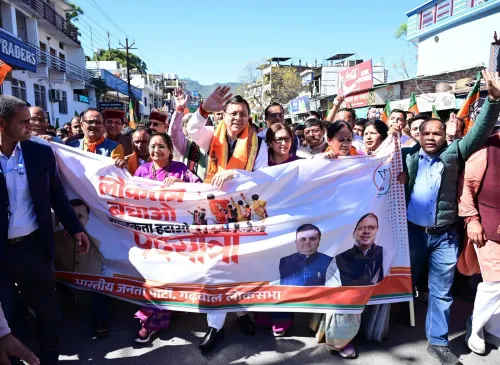
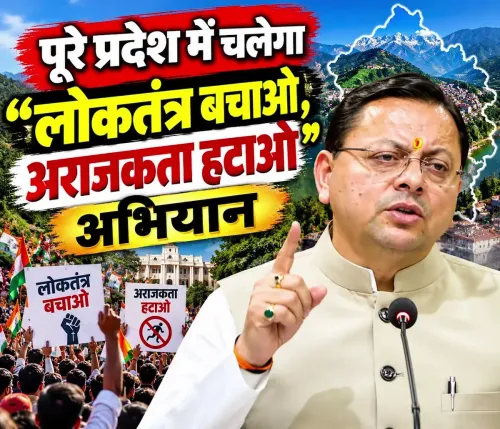
The rally was held under the slogan 'Loktantra Bachao, Arajkata Hatao' ('Save Democracy, Remove Anarchy'), targeting the Indian National Congress .
Dhami tagged PM Narendra Modi , Amit Shah , Rajnath Singh , and BJP4India in the post, signalling national party coordination.
BJP won 47 seats in Uttarakhand's 2022 assembly elections , returning Dhami to power; the party is now working to maintain momentum ahead of the next cycle.
The event is part of a broader BJP pattern of state-level mass rallies deploying anti-Congress democracy messaging.
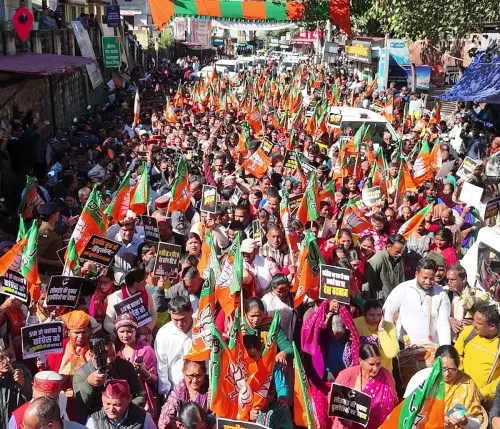
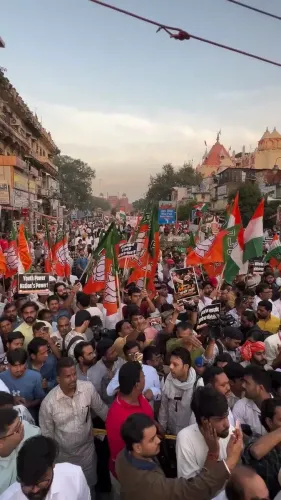
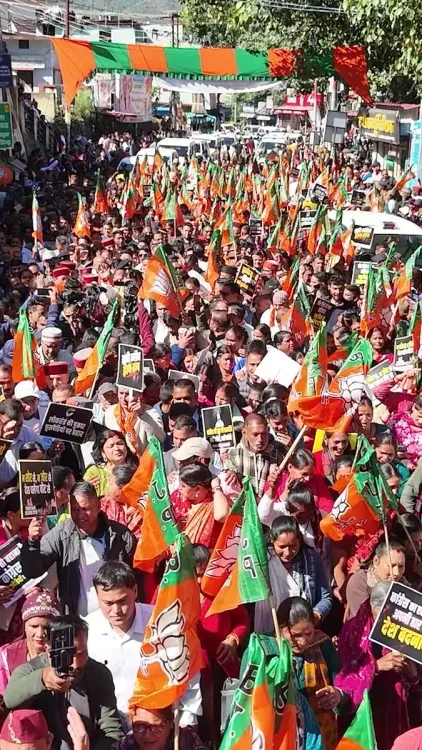
A sea of supporters converged on Srinagar, Pauri Garhwal on Saturday, 31 October 2026, as Uttarakhand Chief Minister Pushkar Singh Dhami led a charged public gathering under the banner 'Loktantra Bachao, Arajkata Hatao' — 'Save Democracy, Remove Anarchy' — squarely targeting the Indian National Congress.
Tagging Prime Minister Narendra Modi, Home Minister Amit Shah, Defence Minister Rajnath Singh, and the official BJP handle, Dhami described the turnout as a 'jansamudra' — a ocean of people — gathered in resistance to what he called Congress's 'arajkata' (anarchy). The post's framing — 'Congress ki arajkata ke viruddh' (against Congress's anarchy) — signals a deliberate, nationally coordinated messaging effort, not a standalone state event.
Why Srinagar, Pauri Garhwal?
Srinagar is the administrative and commercial heart of Pauri Garhwal district, one of Uttarakhand's politically significant constituencies. Holding a mass rally here carries symbolic weight — the town sits in the Garhwal Himalayan belt, a region that delivered substantial margins to BJP in the 2022 Uttarakhand assembly elections, when the party won 47 seats and returned Dhami to the chief minister's chair despite early turbulence around his own seat loss and subsequent by-election win.
By returning to this geography with an explicitly anti-Congress message, the party is working to consolidate and energise a base it cannot afford to take for granted heading into the next electoral cycle.
The 'Save Democracy' Playbook
The slogan 'Loktantra Bachao, Arajkata Hatao' is not improvised rhetoric — it slots directly into a national BJP communication strategy that frames the Congress as a destabilising, anti-democratic force. State leaders across BJP-governed states have deployed variants of this language at mass gatherings, creating a chorus that amplifies the central party's narrative at the grassroots level.
Dhami's decision to tag four of the country's most senior BJP leaders — including PM Modi — in a state-level rally post signals that the event was designed as much for national political visibility as for local mobilisation. It is the kind of coordinated signalling that keeps state units connected to the party's central command and keeps regional leaders visible on the national stage.
With Uttarakhand's next assembly election on the horizon, every large public gathering doubles as a demonstration of organisational strength — and a message to opposition and party workers alike about who controls the political momentum in the hills.
Point of View
Shah and Rajnath Singh, Dhami is simultaneously performing loyalty to the central leadership and positioning himself as a credible mobiliser in a hill state that matters disproportionately to the BJP's 'Dev Bhoomi' brand. The 'anarchy' language is also a pre-emptive strike: it makes it harder for Congress to run a governance-based campaign by keeping the narrative on values rather than deliverables. Whether turnout in Pauri Garhwal translates to organisational discipline across Uttarakhand's 70 constituencies remains the real test.
NationPress
31 Oct 2026
Frequently Asked Questions
What was the rally in Srinagar Pauri Garhwal about?
Uttarakhand CM Pushkar Singh Dhami held a mass public gathering in Srinagar, Pauri Garhwal on 31 October 2026 under the slogan 'Save Democracy, Remove Anarchy', targeting the Indian National Congress.
What does 'Loktantra Bachao Arajkata Hatao' mean?
'Loktantra Bachao, Arajkata Hatao' is a Hindi slogan meaning 'Save Democracy, Remove Anarchy' — used by BJP leaders to criticise the Congress party's governance record.
Why did Dhami tag PM Modi and Amit Shah in his rally post?
Tagging senior BJP leaders like PM Modi, Amit Shah and Rajnath Singh signals national party coordination and amplifies the state rally's visibility as part of a wider BJP political campaign.
When is Uttarakhand's next assembly election?
Uttarakhand's next assembly election is expected in early 2027. The 2022 elections saw BJP win 47 seats under Dhami's leadership.
What is BJP's political record in Pauri Garhwal and Uttarakhand?
BJP has been the dominant force in Uttarakhand, winning the 2022 assembly election with 47 seats and retaining Pushkar Singh Dhami as Chief Minister. Pauri Garhwal has historically backed the party strongly.