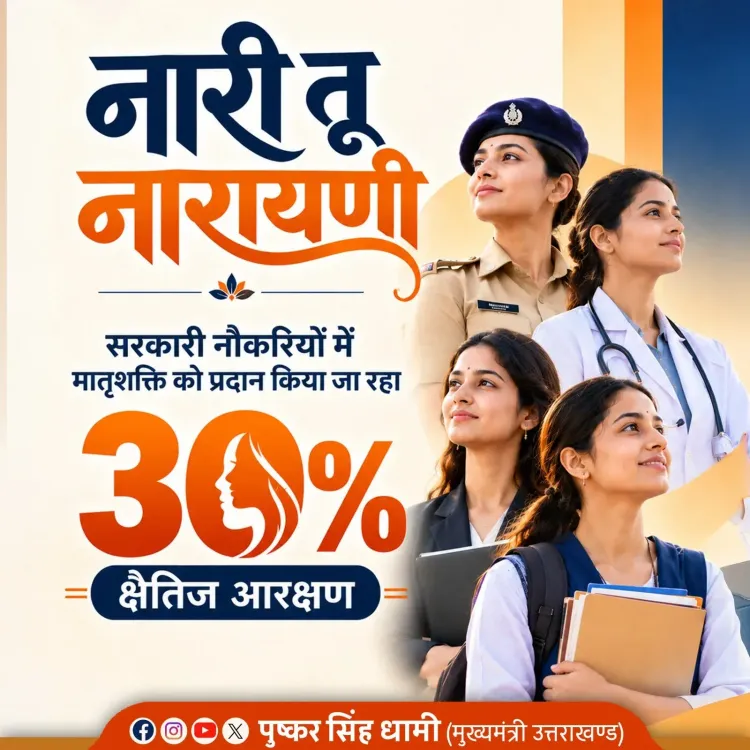
CM Dhami reaffirms 30% women's quota in Uttarakhand govt jobs
Synopsis
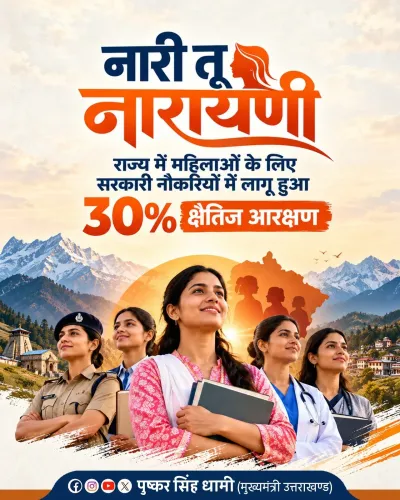
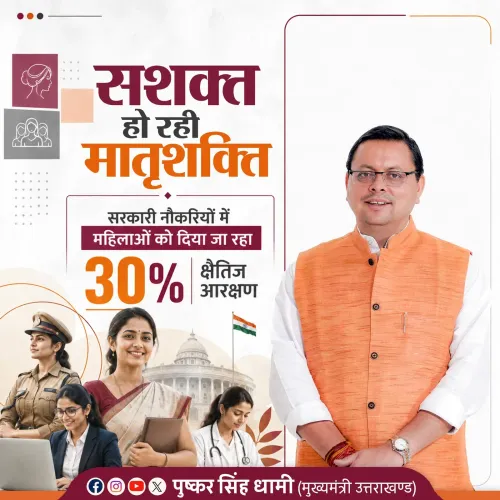
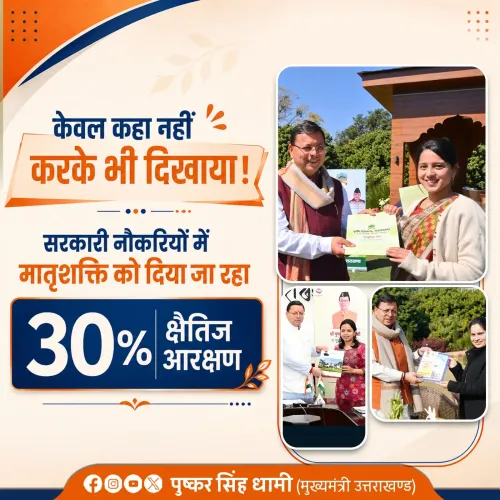
Uttarakhand CM Pushkar Singh Dhami has reaffirmed the state government's decision to provide 30% horizontal reservation for women in government jobs, calling it central to building a 'Developed Uttarakhand' and ensuring every woman can live with self-respect and opportunity.
Key Takeaways
Uttarakhand CM Pushkar Singh Dhami reaffirmed on 19 October 2026 that 30% horizontal reservation for women in state government jobs is a top government priority.
Horizontal reservation means women from each vertical category (SC, ST, OBC, General) receive a guaranteed share within their category, creating a structural hiring floor.
The policy is framed as essential to the BJP government's 'Developed Uttarakhand' vision, tying female workforce inclusion to overall state progress.
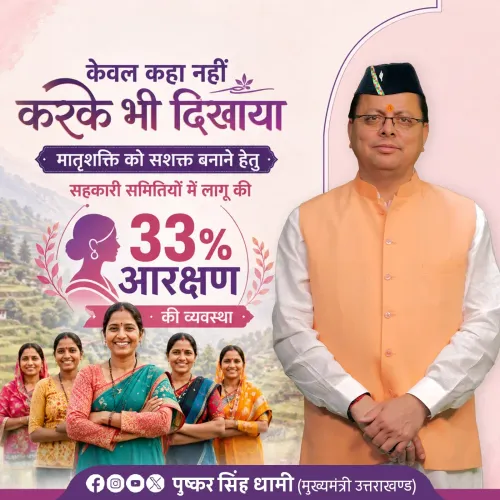
India's constitutional precedent for gender quotas dates to the 73rd and 74th Amendments of 1992 , which introduced 33% reservation for women in local self-government bodies.
Uttarakhand's geography — high male out-migration, rural female-anchored economies — makes formal public-sector inclusion for women especially consequential.
Concrete impact will depend on implementation in upcoming recruitment notifications and amendments to state service rules.
A 30% horizontal reservation for women in government jobs is the clearest signal yet of where Uttarakhand Chief Minister Pushkar Singh Dhami wants to plant his state's flag on gender equity — and on Monday, 19 October 2026, he made the political case for it in plain terms.
Posting in Hindi, CM Dhami wrote: 'प्रदेश की मातृशक्ति को समान अवसर प्रदान कर उन्हें आत्मनिर्भर व सशक्त बनाना हमारी सरकार की सर्वोच्च प्राथमिकताओं में है' — 'Providing equal opportunities to the matrishakti (mother-power, a term for women) of the state and making them self-reliant and empowered is the highest priority of our government.' He added that the goal is for every sister to get adequate opportunities to move forward, realise her dreams, and live with self-respect — 'because when women are empowered, the resolve of a Developed Uttarakhand will be realised.'
What horizontal reservation actually means
The distinction matters. Horizontal reservation works as a cross-cutting layer on top of existing vertical categories — Scheduled Castes, Scheduled Tribes, Other Backward Classes, and the General category. Under a 30% horizontal quota, women from each vertical category claim their share within that category rather than competing across it. The net effect is a structural guarantee that at least three in ten government posts across categories go to women — a meaningful floor in states where female participation in public employment has historically lagged.
India's constitutional trajectory on gender quotas began with the 73rd and 74th Amendments of 1992, which mandated 33% reservation for women in local self-government bodies. That landmark shifted the conversation from aspiration to entitlement in panchayats and municipal councils. State governments have since extended similar logic to public employment, each doing so on its own legislative and administrative timetable.
Where Uttarakhand fits the national pattern
Uttarakhand is not the only state to have moved in this direction, but its geography gives the policy particular texture. The Himalayan state, carved out of Uttar Pradesh in 2000, has a large rural population and a well-documented history of male out-migration to cities and the armed forces — leaving women to anchor local economies and households. Female workforce participation in formal government roles has consequently been a persistent policy conversation in Dehradun.
Several other states across India have experimented with horizontal reservations ranging from 25% to 35% in various recruitment categories. Uttarakhand's stated 30% commitment aligns the state with the upper-middle band of that national range, signalling ambition beyond the minimum. The BJP government under Dhami — who has been in office since 2021 — has repeatedly framed women's empowerment alongside its 'Developed Uttarakhand' development narrative.
The gap between announcement and appointment letter
The harder question is always implementation. Horizontal reservation policies derive their real value from how consistently they are applied across individual recruitment cycles — in service rules, in notification language, and in the conduct of state public service commission examinations. Specific government orders, amendments to service rules, and their reflection in upcoming recruitment notifications will determine whether this commitment translates into measurable hiring outcomes.
For the thousands of women preparing for Uttarakhand government competitive exams right now, the political affirmation is welcome — but the recruitment calendar is where promises become permanent records.
Point of View
Echoing the Centre's 'Nari Shakti' branding. The real test is institutional: whether service-rule amendments and commission notifications follow with the same urgency as the social-media commitment. States that have announced similar quotas without updating recruitment machinery have seen legal challenges and delayed benefits — a cautionary pattern Dehradun will need to navigate.
NationPress
19 Oct 2026
Frequently Asked Questions
What is the 30% horizontal reservation for women in Uttarakhand government jobs?
It is a state policy that reserves 30% of posts in government jobs for women across all vertical categories — SC, ST, OBC, and General — meaning women compete within their own category and are guaranteed at least three in ten positions.
What is the difference between horizontal and vertical reservation?
Vertical reservation carves out separate pools for groups like SC, ST, and OBC. Horizontal reservation cuts across those pools — so a woman from the SC category, for instance, fills her quota within the SC vertical rather than drawing from a separate women's pool, avoiding double-counting.
Which other Indian states have horizontal reservation for women in government jobs?
Several states including Rajasthan, Madhya Pradesh, and Himachal Pradesh have implemented varying degrees of horizontal reservation for women in public employment, typically ranging from 25% to 35% depending on the job category.
When did Uttarakhand announce the 30% women's reservation in government jobs?
CM Pushkar Singh Dhami reaffirmed the policy on 19 October 2026. The exact date of the original formal government order has not been publicly confirmed yet, and implementation details through recruitment notifications are awaited.
How does this policy connect to Uttarakhand's development goals?
CM Dhami has explicitly linked women's empowerment to the 'Developed Uttarakhand' vision, arguing that the state's growth targets cannot be met without ensuring women have equal access to formal employment and economic self-reliance.