CM Dhami Reviews Banking, Credit & Self-Employment Schemes at 97th SLBC Meet
Synopsis
Chief Minister Pushkar Singh Dhami chaired the 97th State Level Bankers Committee meeting on 10 July 2026, reviewing credit disbursement, financial inclusion, and self-employment schemes across Uttarakhand's hill districts.
Key Takeaways
CM Pushkar Singh Dhami presided over the 97th SLBC meeting on 10 July 2026 in Uttarakhand.
The review covered banking services, loan disbursement, financial inclusion, and self-employment schemes .
Uttarakhand has conducted quarterly SLBC meetings since statehood in 2000 to monitor priority sector lending.
State schemes like Mukhya Mantri Swarozgar Yojana are aligned with national programmes including Mudra and Stand-Up India .
Outcomes are expected to shape revised annual credit plan targets for FY 2026-27 .
Improved credit flow in hill districts aims to address chronic out-migration from rural Uttarakhand.
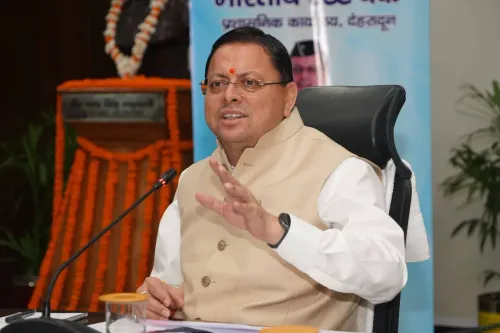
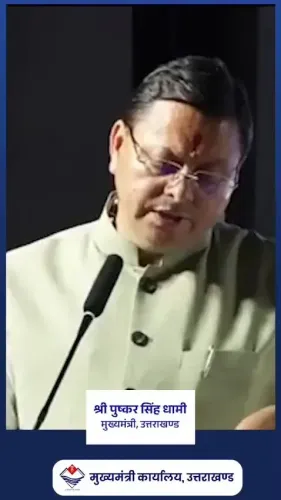
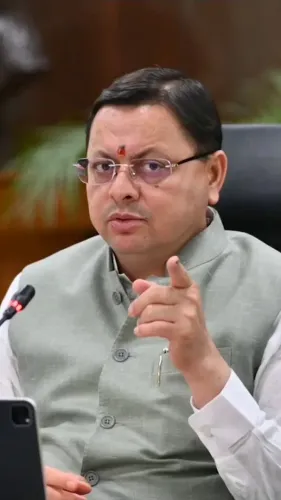
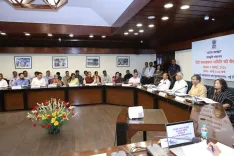
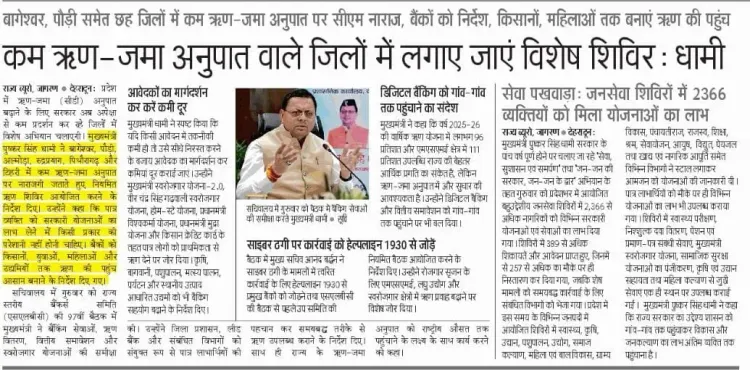
The Chief Minister's Office of Uttarakhand announced on Friday, 10 July 2026 that Chief Minister Pushkar Singh Dhami chaired the 97th meeting of the State Level Bankers Committee (SLBC), conducting a comprehensive review of banking services, credit disbursement, financial inclusion, and various self-employment schemes across the state.
The Chief Minister's Office shared the development on X, stating: 'मुख्यमंत्री श्री पुष्कर सिंह धामी ने राज्य स्तरीय बैंकर्स समिति की 97वीं बैठक में बैंकिंग सेवाओं, ऋण वितरण, वित्तीय समावेशन तथा विभिन्न स्वरोजगार योजनाओं की समीक्षा की।' — ('Chief Minister Pushkar Singh Dhami reviewed banking services, loan disbursement, financial inclusion, and various self-employment schemes at the 97th meeting of the State Level Bankers Committee.')
Context
The State Level Bankers Committee is a tripartite forum comprising banks, the Reserve Bank of India, and the state government. It serves as the primary institutional mechanism for coordinating credit planning and monitoring the implementation of government-backed financial schemes at the state level. Uttarakhand has convened quarterly SLBC meetings since its formation as a state in 2000, using the platform to address persistent credit gaps in its remote hill districts.
The 97th edition of this meeting signals a sustained cadence of financial oversight by the Dhami government, which has prioritised banking penetration in geographically challenging terrain where access to formal credit has historically lagged behind plains-based states.
Policy Backdrop
The review encompassed self-employment schemes, an area that has been a standing agenda item in SLBC forums since 2017, when Uttarakhand began aligning state programmes such as the Mukhya Mantri Swarozgar Yojana with national initiatives including Mudra and Stand-Up India. These linkages are designed to channel institutional credit to micro-entrepreneurs, women, and marginalised borrowers who may lack collateral.
The broader national push for financial inclusion, which accelerated with the launch of Pradhan Mantri Jan Dhan Yojana (PMJDY) in 2014, has made SLBC meetings a critical accountability checkpoint. States are expected to demonstrate progress against priority sector lending targets prescribed by the RBI, and Uttarakhand's hill geography makes that compliance both more urgent and more logistically complex.
Stakeholders and Impact
The primary beneficiaries of a rigorous SLBC review are rural borrowers, self-employed youth, and small entrepreneurs spread across Uttarakhand's 13 districts. Improved credit disbursement under self-employment schemes can directly reduce out-migration from hill villages — a structural challenge the state has grappled with for decades.
Bankers and branch managers operating in remote areas also stand to receive clearer targets and accountability frameworks emerging from such high-level reviews. The participation of the Chief Minister himself signals political priority attached to these outcomes, which can accelerate inter-departmental coordination on subsidy linkages and guarantee schemes.
What's Next
The outcomes of the 97th SLBC meeting are expected to feed into revised annual credit plan targets for FY 2026-27. Stakeholders will watch for any upward revision in disbursement targets under self-employment heads and for specific directions to banks on improving coverage in underserved blocks. The next quarterly SLBC meeting will serve as the next formal checkpoint for measuring progress against any commitments made in this session.
With the state government maintaining a regular review rhythm, the trajectory of financial inclusion in Uttarakhand's hill districts will be closely tracked by both policy observers and development finance institutions operating in the region.
Point of View
But the hill state's geography continues to make last-mile banking penetration structurally difficult. By anchoring self-employment scheme reviews within this forum, the Dhami government is tying state-level welfare delivery to the national financial inclusion architecture — a pattern seen across BJP-governed hill and northeastern states. The regularity of these reviews will matter more than any single meeting; consistent follow-through on credit plan targets will determine whether this signals genuine policy momentum or routine institutional theatre.
NationPress
10 Jul 2026
Frequently Asked Questions
What is the State Level Bankers Committee (SLBC) in Uttarakhand?
The State Level Bankers Committee (SLBC) is a tripartite forum of banks, the Reserve Bank of India, and the Uttarakhand state government that coordinates credit planning, monitors priority sector lending, and oversees the implementation of financial inclusion schemes across the state.
What did CM Pushkar Singh Dhami review at the 97th SLBC meeting?
CM Pushkar Singh Dhami reviewed banking services, loan disbursement, financial inclusion progress, and various self-employment schemes at the 97th SLBC meeting held on 10 July 2026.
What is Mukhya Mantri Swarozgar Yojana in Uttarakhand?
Mukhya Mantri Swarozgar Yojana is a state-level self-employment scheme in Uttarakhand that provides institutional credit to micro-entrepreneurs and youth, aligned with national programmes like Mudra and Stand-Up India since 2017.
How often does Uttarakhand hold SLBC meetings?
Uttarakhand holds SLBC meetings quarterly, a practice maintained since the state's formation in 2000, to review credit disbursement and financial inclusion targets set by the RBI.
Why is financial inclusion important for Uttarakhand's hill districts?
Uttarakhand's hill districts have historically had lower banking penetration than plains states due to challenging terrain, making financial inclusion initiatives critical to providing formal credit access to rural borrowers and reducing out-migration from villages.