CM Dhami Revives 'Jan Jan Ki Sarkar' Outreach from July 4
Synopsis
The Uttarakhand Chief Minister's Office announced that CM Pushkar Singh Dhami's 'Jan Jan Ki Sarkar - Jan Jan Ke Dwar' doorstep governance programme will resume on 4 July 2026, aiming to bring government services and grievance redressal directly to citizens across the state's districts.
Key Takeaways
The Uttarakhand CMO announced on 1 July 2026 that the 'Jan Jan Ki Sarkar - Jan Jan Ke Dwar' programme will restart on 4 July 2026 .
The initiative was revived on the directions of Chief Minister Pushkar Singh Dhami .
The programme is designed to deliver government services and grievance redressal directly to citizens, especially in remote hill districts.
District officials and departmental staff are deployed at outreach camps to handle petitions, certificates, and welfare scheme enrolments.
The revival reflects the Dhami administration's recurring approach of physical citizen outreach to complement digital governance channels.
District-wise camp schedules, participation figures, and grievance disposal rates will be key metrics to watch after the July restart.
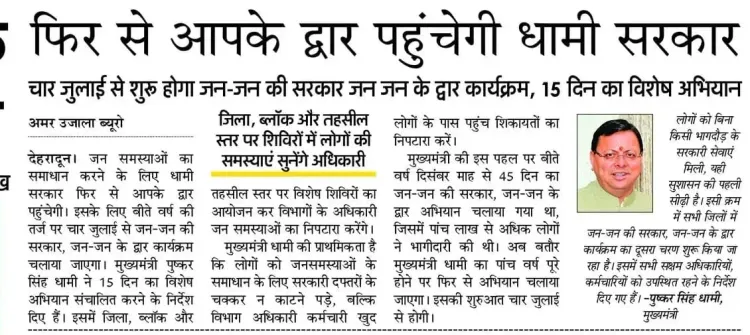
The Chief Minister's Office of Uttarakhand announced on Wednesday, 1 July 2026 that the state government's citizen-outreach programme 'Jan Jan Ki Sarkar - Jan Jan Ke Dwar' will resume on 4 July 2026, on the directions of Chief Minister Pushkar Singh Dhami.
The post by the official CMO account stated: 'Jan Jan Ki Sarkar - Jan Jan Ke Dwar' ('Government for all — at everyone's doorstep') will restart from 4 July on the directive of Chief Minister Shri Pushkar Singh Dhami. The announcement signals a fresh phase of the periodic doorstep governance initiative that the Dhami administration has used to extend direct public services and grievance redressal to citizens across Uttarakhand's districts.
Context
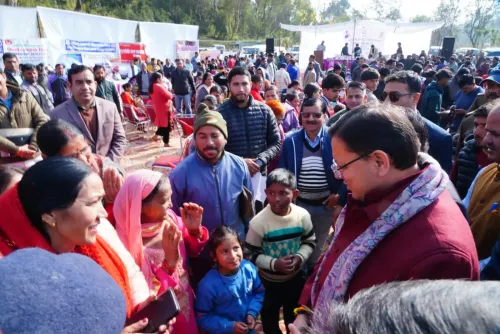
The programme is designed to bring government services directly to citizens, particularly in remote and hilly areas of Uttarakhand where access to district headquarters and administrative offices can be difficult. Under the initiative, government officials and representatives reach out to communities to receive petitions, assist with scheme enrolment, and resolve pending grievances on the spot. The announcement comes as the state enters the second half of 2026, with the administration signalling renewed momentum on citizen interface.Policy Backdrop
The Dhami government, in power since 2021, has periodically revived physical outreach formats alongside digital portals to address the last-mile access gap that is especially pronounced in Uttarakhand's Himalayan terrain. The 'Jan Jan Ki Sarkar - Jan Jan Ke Dwar' model reflects a broader administrative approach of taking government to the citizen rather than requiring the citizen to navigate bureaucratic channels. Across Indian states, such camp-based outreach programmes have served as a practical complement to online grievance portals, particularly for populations with limited digital access or literacy. The Uttarakhand government's revival of this programme is consistent with that pattern.Stakeholders and Impact
The primary beneficiaries are rural and semi-urban residents of Uttarakhand, including those in hill districts who face geographic barriers to accessing government offices. District-level officials, revenue staff, and departmental representatives are expected to be deployed at outreach camps to handle applications, certificates, and welfare scheme registrations in person. For the state administration, the programme also functions as a direct feedback mechanism, allowing officials to gauge ground-level concerns and pending welfare delivery gaps across constituencies.What's Next
With the programme confirmed to restart on 4 July 2026, attention will now turn to the district-wise schedule of camps, the range of services and departments covered, and the metrics of citizen participation and grievance disposal. If the administration follows through with systematic follow-up on cases registered during the camps, the initiative could serve as a measurable indicator of responsive governance in the run-up to the state's administrative calendar. The scale and geographic spread of the July restart will be closely watched by district officials and citizens alike.Point of View
Particularly ahead of politically significant periods. For the Dhami government, the programme serves a dual purpose: addressing genuine last-mile service delivery gaps in a geographically challenging state, and maintaining a visible public-connect narrative. The timing in early July, with the announcement made on the first day of the month, suggests a deliberate effort to signal fresh administrative energy. The real test, as with past iterations of such programmes, will be whether grievance disposal rates and follow-up action match the outreach ambition.
NationPress
1 Jul 2026
Frequently Asked Questions
What is the 'Jan Jan Ki Sarkar - Jan Jan Ke Dwar' programme in Uttarakhand?
'Jan Jan Ki Sarkar - Jan Jan Ke Dwar' is a citizen-outreach programme run by the Uttarakhand government under CM Pushkar Singh Dhami, in which government officials visit districts to provide doorstep services, accept petitions, assist with welfare scheme enrolment, and resolve grievances directly with residents.
When will 'Jan Jan Ki Sarkar' restart in Uttarakhand in 2026?
The programme is set to restart on 4 July 2026 , as announced by the Chief Minister's Office of Uttarakhand on 1 July 2026.
Who ordered the revival of the Jan Jan Ki Sarkar programme?
Chief Minister Pushkar Singh Dhami directed the restart of the programme, according to the official announcement from the Uttarakhand CMO.
Which citizens benefit from the Jan Jan Ke Dwar outreach camps?
The programme primarily benefits rural and semi-urban residents of Uttarakhand, especially those in hilly and remote areas who face difficulty accessing district headquarters and government offices in person.
What services are provided under Jan Jan Ki Sarkar in Uttarakhand?
The camps typically cover in-person grievance registration, certificates, welfare scheme enrolments, and direct interaction with district and departmental officials, bringing multiple government services to citizens at the local level.