CM Dhami Reaffirms Welfare Pledge in Jan Vishwas Message
Synopsis
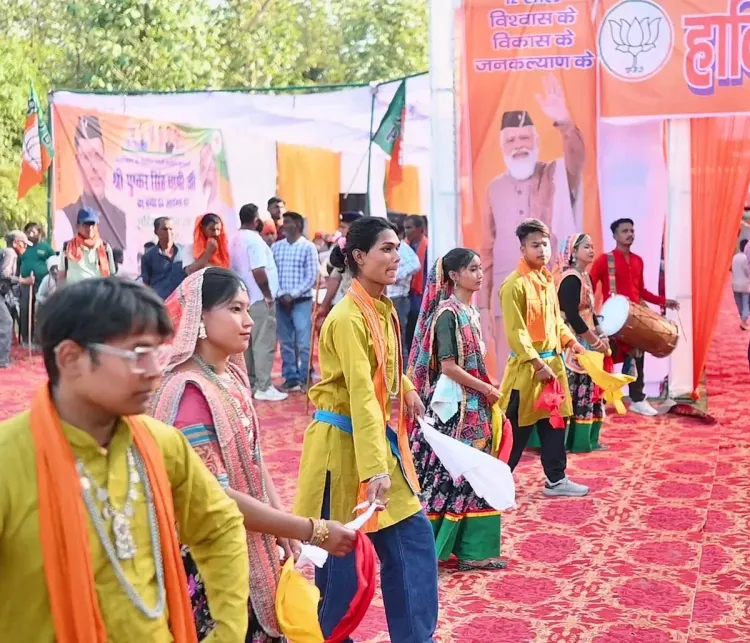
Uttarakhand Chief Minister Pushkar Singh Dhami on 15 June 2026 posted a welfare-and-trust message on X, invoking the BJP's signature 'jan vishwas, jan kalyan' framework as his government looks toward the 2027 state assembly elections.
Key Takeaways
CM Pushkar Singh Dhami posted on X on 15 June 2026 reaffirming his government's commitment to public trust and welfare.
The Hindi post translates as: 'A journey of public trust, with the resolve for public welfare.' Uttarakhand has been under BJP rule since 2017 ; Dhami secured a second term in the 2022 assembly elections .
The 'jan vishwas, jan kalyan' framing is a recurring BJP governance slogan linking state performance to national welfare delivery.
The state's policy focus includes Char Dham pilgrimage infrastructure, tourism revival, and social-sector spending.
The next Uttarakhand assembly elections are due in 2027 , making welfare messaging increasingly significant.
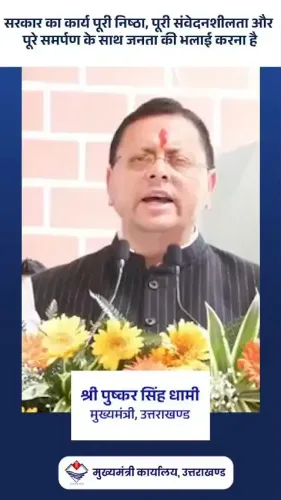
Uttarakhand Chief Minister Pushkar Singh Dhami on Monday, 15 June 2026 renewed his administration's commitment to public trust and welfare, posting a message on X that encapsulated his government's governing philosophy in a single line: 'जनविश्वास की यात्रा, जनकल्याण के संकल्प के साथ' — 'A journey of public trust, with the resolve for public welfare.'
Context
The post, brief but deliberate, draws on a well-established vocabulary in Bharatiya Janata Party governance messaging — the twin pillars of jan vishwas (public trust) and jan kalyan (public welfare). For Dhami, now in his second consecutive term as Chief Minister of Uttarakhand, such messaging serves as a public reaffirmation of the mandate voters delivered in the 2022 state assembly elections. The BJP retained power that year on a platform of continued welfare delivery and governance reform.
The post coincides with a period when the Dhami administration has been focused on consolidating its development agenda ahead of the next electoral cycle. No specific event triggering the June 2026 message has been independently confirmed.
Policy Backdrop
Uttarakhand under BJP rule since 2017 has channelled significant attention toward pilgrimage infrastructure under the Char Dham corridor, tourism revival, and social-sector spending. The 'jan kalyan' framing links these state-level initiatives to the broader national welfare programme architecture promoted by the BJP at the Centre since 2014.
Similar slogans centred on public trust and welfare delivery have appeared consistently across BJP-governed states, functioning as a rhetorical thread that connects local administrative performance to national political identity. For Dhami, deploying this language reinforces the image of a government in active service of its constituents rather than one coasting on past electoral success.
Stakeholders and Impact
The message is directed primarily at Uttarakhand's voters and residents, who will next go to the polls in the 2027 state assembly elections. Welfare beneficiaries — spanning rural households, pilgrimage-economy workers, and border-area communities — form the core constituency this framing is designed to reassure.
For the broader BJP ecosystem, the post reinforces administrative continuity messaging at a time when state governments are expected to demonstrate tangible delivery on welfare promises made during election campaigns.
What's Next
Political observers will watch the Uttarakhand government's next budget presentation and any new welfare-scheme announcements for concrete policy moves that give substance to the Chief Minister's stated resolve. With 2027 assembly elections on the horizon, the frequency and specificity of such public communications from Dhami are likely to increase as the administration seeks to consolidate its governance record in the public mind.
Point of View
Slogan-form post is a calculated piece of political signalling rather than a policy announcement — the kind of low-cost, high-frequency messaging that BJP state governments use to keep welfare optics warm between budget cycles. Coming roughly a year before the 2027 Uttarakhand assembly elections, it marks the informal start of the incumbent's narrative consolidation phase. The 'jan vishwas' vocabulary also serves a defensive function: it pre-empts opposition charges of governance fatigue by framing the administration as still in motion, still accountable. Whether the messaging translates into voter confidence will depend on the concrete welfare and infrastructure outcomes the government can point to by campaign season.
NationPress
14 Sept 2026
Frequently Asked Questions
What did Uttarakhand CM Pushkar Singh Dhami post on X on 15 June 2026?
CM Dhami posted a Hindi message translating to 'A journey of public trust, with the resolve for public welfare,' reaffirming his government's welfare and governance commitment.
What does 'jan vishwas jan kalyan' mean in the context of BJP governance?
'Jan vishwas' means public trust and 'jan kalyan' means public welfare; together they form a core BJP governance slogan used across multiple states to link administrative performance with welfare delivery since 2014.
When are the next Uttarakhand assembly elections?
The next Uttarakhand state assembly elections are scheduled for 2027, making the current period a critical phase for the Dhami government to consolidate its governance record.
What are the key policy areas of the Dhami government in Uttarakhand?
The Dhami administration has focused on Char Dham pilgrimage infrastructure, tourism revival, border-area development, and social-sector welfare spending since taking office in 2021.
How many terms has Pushkar Singh Dhami served as Uttarakhand Chief Minister?
Pushkar Singh Dhami has served two consecutive terms as Chief Minister of Uttarakhand, first from March 2021 and then re-elected after the BJP's victory in the 2022 state assembly elections.