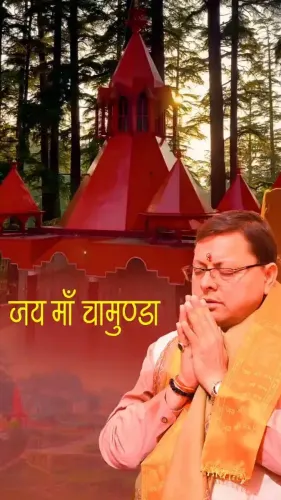
CM Dhami spotlights Munsyari's Nanda Devi Temple and Panchachuli views

Synopsis
Uttarakhand CM Pushkar Singh Dhami has promoted the Maa Nanda Devi Temple in Munsyari, Pithoragarh, calling it a premier spiritual site with stunning Panchachuli and Himalayan views, urging visitors to include it in their Pithoragarh itinerary.
Key Takeaways
CM Pushkar Singh Dhami promoted the Maa Nanda Devi Temple in Munsyari, Pithoragarh on 19 November 2026 .
The temple is a key pilgrimage site in the Kumaon Himalayas , dedicated to goddess Nanda Devi.
The Panchachuli mountain range , visible from the temple, is a central draw for both pilgrims and tourists.
Pithoragarh district borders Nepal and has historically received lower tourist footfall than Uttarakhand's Garhwal circuit.
The promotion reflects the state government's push to expand spiritual tourism beyond the established Char Dham circuit into Kumaon.
Increased visitor traffic supports local livelihoods in a border district with limited economic alternatives.
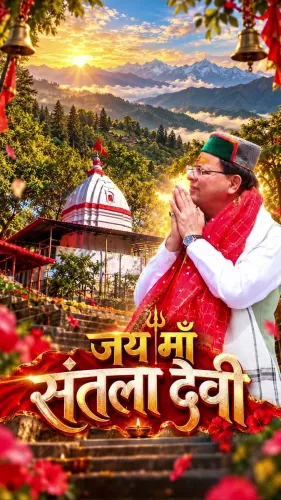
Tucked into the high reaches of the Kumaon Himalayas, the Maa Nanda Devi Temple in Munsyari, Pithoragarh holds a rare double distinction — a living centre of faith and a front-row seat to some of the most dramatic mountain scenery in India. Uttarakhand Chief Minister Pushkar Singh Dhami turned the spotlight on this pilgrim site on Thursday, 19 November 2026, inviting visitors to make the temple a must-stop on any journey to Pithoragarh district.
Posting in Hindi, CM Dhami described the temple as 'a primary centre of faith and spirituality, as well as an incomparable symbol of the Himalayas' breathtaking natural beauty.' He drew particular attention to the Panchachuli mountain range — the five-peaked massif that dominates the skyline above Munsyari — calling the combined spiritual and scenic experience 'otherworldly' (alaukik).
Where the Panchachuli peaks meet a goddess's shrine
Munsyari sits at roughly 2,200 metres in the innermost reaches of Pithoragarh district, Uttarakhand's border district abutting Nepal. The Maa Nanda Devi Temple here venerates the same mountain goddess central to the broader Kumaon cultural calendar — Nanda Devi, whose name the region's highest peak also carries. The Panchachuli range, rising to over 6,900 metres at its tallest summit, forms the dramatic north-eastern backdrop that pilgrims and trekkers alike travel days to see.
The convergence of pilgrimage and panorama is precisely the tourism proposition CM Dhami is amplifying. His post explicitly urges anyone visiting Pithoragarh to 'certainly seek the blessings of Maa Nanda Devi and enjoy the spiritual experience and incomparable natural beauty of this sacred land.'
Dhami's push to extend Uttarakhand's spiritual tourism map
The post fits a deliberate pattern. While Char Dham — Badrinath, Kedarnath, Gangotri, Yamunotri — anchors Uttarakhand's pilgrimage economy, the state government has consistently worked to extend the tourism map into the Kumaon hills, where border districts like Pithoragarh receive a fraction of the footfall despite equivalent spiritual and scenic credentials.
Munsyari has in recent years been positioned as a trekking and adventure base, but the CM's framing broadens the pitch: this is not only an adventure destination but a site of active goddess worship with Himalayan grandeur built in. For domestic pilgrims seeking an alternative to crowded Garhwal circuits, the message is pointed and practical.
The broader economic logic is real. Increased visitor traffic to Pithoragarh supports local homestays, porters, guides, and temple trusts in a district where economic alternatives are limited and out-migration has historically been high. Promotional messaging from the Chief Minister functions as a low-cost multiplier for state tourism machinery.
Whether the post is followed by concrete infrastructure announcements — better road access to Munsyari, improved facilities at the temple complex, or packaged pilgrimage itineraries from the state tourism department — will determine how much of this spotlight converts into sustained footfall.
For now, the signal from Dehradun is clear: Pithoragarh's sacred peaks are open, waiting, and officially recommended.
Point of View
The state is essentially building a second tourism narrative that can run year-round and attract a broader demographic than the peak Char Dham season allows. For a border district like Pithoragarh — where out-migration and limited economic activity are chronic concerns — Chief Ministerial visibility can meaningfully shift travel consideration. The real test, however, lies in whether such promotional signals translate into infrastructural investment: improved connectivity and visitor facilities at Munsyari will determine whether attention converts to actual arrivals.
NationPress
19 Nov 2026
Frequently Asked Questions
Where is the Maa Nanda Devi Temple in Munsyari?
The Maa Nanda Devi Temple is located in Munsyari , a hill town in Pithoragarh district , Uttarakhand, situated at approximately 2,200 metres above sea level in the Kumaon Himalayas.
What is the Panchachuli mountain range?
Panchachuli is a group of five Himalayan peaks in the Kumaon region of Uttarakhand, with the highest summit exceeding 6,900 metres. The range is clearly visible from Munsyari and is a major attraction for trekkers and pilgrims visiting the area.
Why is CM Dhami promoting the Nanda Devi Temple in Munsyari?
CM Pushkar Singh Dhami is promoting the temple as part of Uttarakhand's effort to extend its spiritual and nature tourism map beyond the Char Dham circuit into the Kumaon hills, particularly in border districts like Pithoragarh that receive less tourist traffic.
How do I get to Munsyari in Pithoragarh?
Munsyari is accessible by road from Pithoragarh town , which is the nearest major urban centre. The journey involves mountain roads through the Kumaon hills; the nearest airports are at Pithoragarh (Naini Saini) and Pantnagar.
Is Munsyari a good place for pilgrimage and trekking?
Yes. Munsyari serves as both a pilgrimage base — home to the Maa Nanda Devi Temple — and a trekking hub offering access to the Milam, Ralam, and Namik glaciers, with panoramic views of the Panchachuli peaks from town.