CM Dhami unveils ₹7,844 cr supplementary budget for Uttarakhand
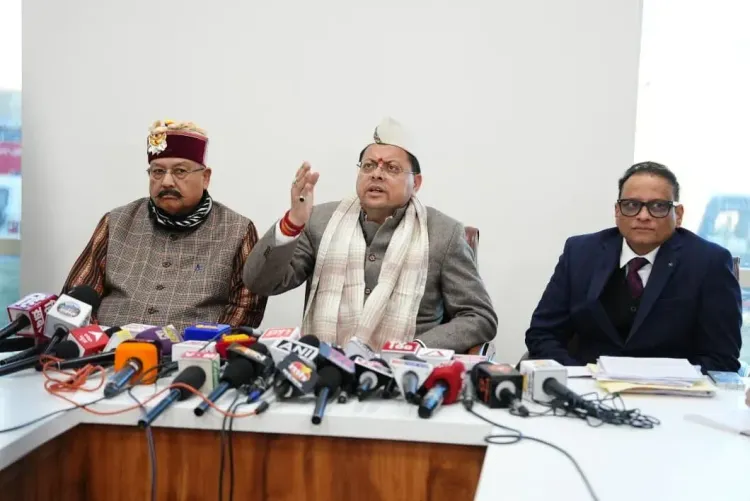
Synopsis
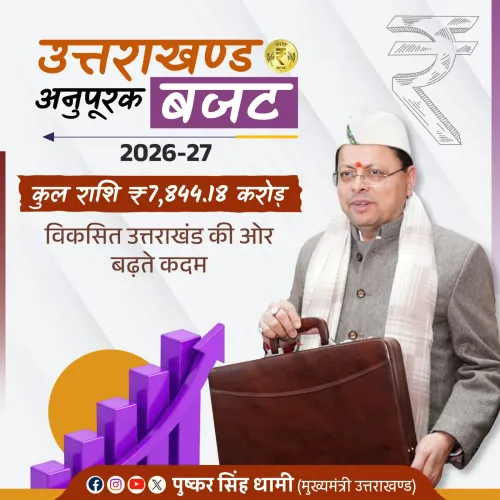
Chief Minister Pushkar Singh Dhami announced Uttarakhand's ₹7,844.18 crore supplementary budget for 2026-27 at Gairsain, citing GSDP growth from ₹2.55 lakh crore to ₹3.82 lakh crore, joint-first SDG ranking, and key allocations for farmers, local bodies, health and education.
Key Takeaways
Uttarakhand's supplementary budget for 2026-27 totals ₹7,844.18 crore , split between ₹4,164.32 crore capital and ₹3,679.86 crore revenue expenditure.
State GSDP is estimated to grow from ₹2.55 lakh crore (2022) to ₹3.82 lakh crore (2026-27) ; per capita income from ₹1.95 lakh to ₹2.74 lakh .
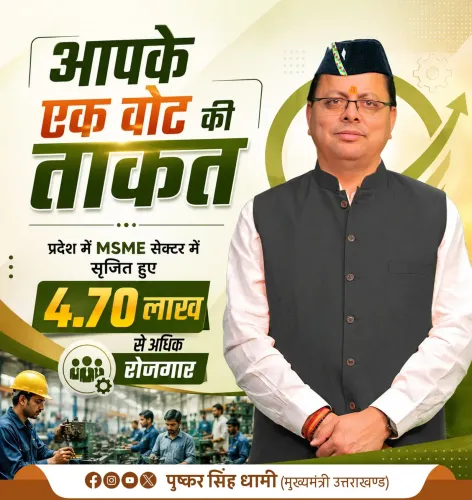
Startups have risen from 702 to 1,978 and MSME units from approximately 60,000 to one lakh .
Uttarakhand achieved joint first rank in NITI Aayog's SDG India Index 2023-24 with a score of 79 .
Local bodies' share of state tax revenue proposed to increase from 10.5% to 12.5% with ₹721 crore allocated, per Sixth State Finance Commission recommendations.
Key allocations include ₹1,100 crore for farmer procurement (Annapurti Yojana), ₹300 crore for Jal Jeevan Mission, and ₹290 crore for Divya Kumbh infrastructure.
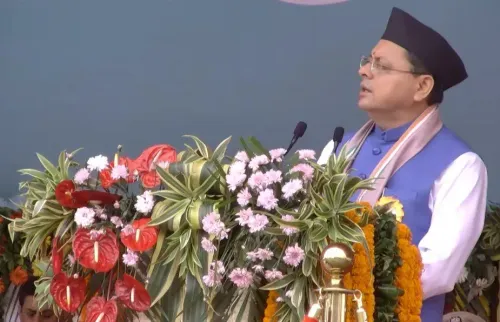
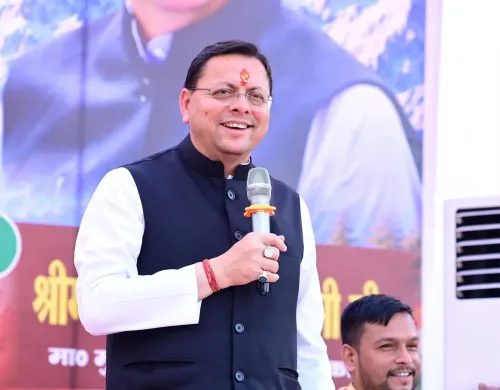
Speaking from Gairsain (Bharadisain) — Uttarakhand's symbolic summer capital — Chief Minister Pushkar Singh Dhami on Tuesday, 27 October 2026 laid out a sweeping economic case for the state's future, anchoring a ₹7,844.18 crore supplementary budget for 2026-27 to the larger ambition of making Uttarakhand a 'developed, prosperous and self-reliant' state by 2047.
From ₹2.55 lakh crore to ₹3.82 lakh crore: the GSDP leap
Dhami opened with the headline numbers. In 2022, Uttarakhand's Gross State Domestic Product stood at approximately ₹2.55 lakh crore. By 2026-27, that figure is estimated to reach ₹3.82 lakh crore — a near-50% expansion in four years. Per capita income has tracked the same arc, rising from roughly ₹1.95 lakh to ₹2.74 lakh over the same period.
The entrepreneurial ecosystem tells a parallel story. Startups in the state have grown from 702 to 1,978, while MSME units have jumped from around 60,000 to one lakh. Multidimensional poverty, the Chief Minister noted, has also declined — a claim backed by Uttarakhand's joint first rank nationally in NITI Aayog's SDG India Index 2023-24, where the state scored 79 points.
What ₹7,844 crore buys: the line-by-line breakdown
The supplementary budget splits into ₹4,164.32 crore in capital expenditure and ₹3,679.86 crore in revenue expenditure. The single largest provision is ₹1,100 crore under the Annapurti Yojana for state procurement of paddy and wheat directly from farmers — a direct income-support play for Uttarakhand's agrarian communities.
Infrastructure gets ₹500 crore under a special assistance scheme, while the Jal Jeevan Mission draws ₹300 crore for rural water supply. The Gairsain water-supply dam project — locally significant, given Tuesday's venue — has been allocated ₹122 crore. An upcoming Divya Kumbh festival and the Haridwar-Ganga Corridor, along with the Nanda Rajjat Yatra, collectively receive roughly ₹290 crore for infrastructure and logistics.
On social investment: the Atal Ayushman Yojana gets ₹100 crore, employees' Golden Card health cover ₹125 crore, and medical education — including the Pithoragarh and Rudrapur Medical Colleges — approximately ₹160 crore. Digital learning across schools and universities draws ₹200 crore. Youth competitive-exam support, a sports university, a women's sports college, athlete training and scholarships also find line items in the budget.
Local bodies get a bigger share of the tax pie
Perhaps the most structurally significant provision is the proposed increase in local body devolution. Acting on the recommendations of the Sixth State Finance Commission, the government proposes raising local bodies' share of state tax revenue from 10.5% to 12.5% — with ₹721 crore earmarked for the purpose. This transfer would give rural panchayats and urban municipalities direct, discretionary resources for development projects rather than routing everything through state departments.
Viksit Bharat 2047 and 26 years of statehood
Dhami placed the budget within a longer arc. Uttarakhand completes roughly 26 years as a state — it was carved out of Uttar Pradesh in November 2000 after a sustained popular movement. The Chief Minister credited that movement's activists, the hard work of residents, and grassroots participation for the state's progress. He explicitly aligned Uttarakhand's 2047 roadmap with Prime Minister Narendra Modi's Viksit Bharat @2047 national vision.
He also stressed process: pre-budget consultations over the past five years have gathered inputs from farmers, women, youth, entrepreneurs and sectoral representatives. The government, he said, has maintained a revenue surplus position while prioritising financial discipline, transparency and efficient use of public money.
Twenty-six years after statehood was won in the streets, Uttarakhand is now betting that a disciplined supplementary budget — and joint-first on the SDG index — can prove the hill state has found its economic footing. The next test is delivery.
Point of View
From 10.5% to 12.5% of state tax revenue, is structurally meaningful: it shifts real spending power to panchayats and urban bodies, which could accelerate last-mile delivery if implementation matches intent. The GSDP and startup figures signal genuine economic momentum, though the true stress test will be whether capital expenditure — more than half the supplementary budget — actually gets spent before the fiscal year ends, a perennial challenge for mountain-terrain states. Gairsain's choice as the venue is itself a political signal, reinforcing the long-running demand for a fully functional permanent capital in the hills.
NationPress
27 Oct 2026
Frequently Asked Questions
What is the total size of Uttarakhand's supplementary budget for 2026-27?
Uttarakhand's supplementary budget for 2026-27 totals ₹7,844.18 crore , comprising ₹4,164.32 crore in capital expenditure and ₹3,679.86 crore in revenue expenditure, as announced by Chief Minister Pushkar Singh Dhami at Gairsain on 27 October 2026.
What rank did Uttarakhand get in the NITI Aayog SDG India Index?
Uttarakhand secured joint first rank nationally in the NITI Aayog SDG India Index 2023-24 with a score of 79 points , reflecting progress across sustainable development goals including health, education and economic growth.
How much has Uttarakhand's GSDP grown between 2022 and 2026-27?
Uttarakhand's Gross State Domestic Product is estimated to have grown from approximately ₹2.55 lakh crore in 2022 to ₹3.82 lakh crore in 2026-27 , while per capita income rose from roughly ₹1.95 lakh to ₹2.74 lakh in the same period.
What is the local body devolution proposal in Uttarakhand's budget?
Based on the Sixth State Finance Commission recommendations, the Uttarakhand government has proposed increasing local bodies' share of state tax revenue from 10.5% to 12.5% , with ₹721 crore set aside for this transfer to rural and urban bodies.
What is Gairsain and why is it significant for Uttarakhand?
Gairsain (Bharadisain) is a town in the Chamoli district of Uttarakhand that serves as the state's declared summer capital. It holds deep symbolic importance as a site championed by the state's statehood movement activists who sought a hill-based capital, making it a politically meaningful venue for major government announcements.