Uttarakhand's Dhami Administration Introduces an Inclusive Rs 1.11 Lakh Crore Budget Focused on Key Sectors
Synopsis
On March 9, Uttarakhand's government revealed a budget of Rs 1.11 lakh crore for 2026-27, centering on the 'GYAN' model for inclusive growth. Chief Minister Pushkar Singh Dhami highlighted the commitment to uplift the underprivileged, empower youth, support farmers, and enhance women's welfare.
Key Takeaways
Uttarakhand's budget for 2026-27 totals Rs 1.11 lakh crore .
The GYAN model focuses on four pillars: welfare for the poor , youth empowerment , support for farmers , and women's empowerment .
Major allocations include Rs 1,300 crore for food security and Rs 167.05 crore for pension schemes.
Youth development initiatives include Rs 60 crore for entrepreneurship and Rs 62.29 crore for skill training.
A total of Rs 19,692.02 crore is allocated for promoting gender equality.
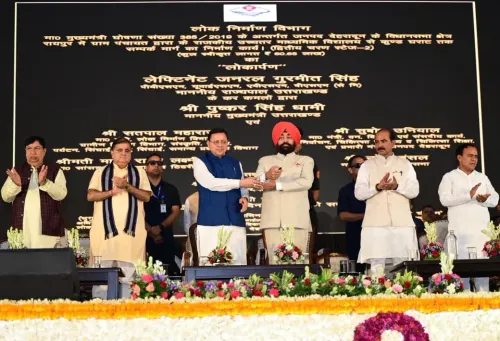
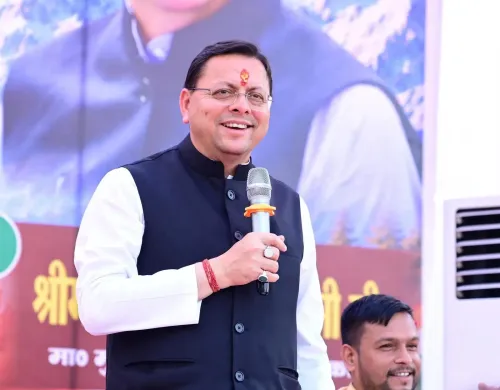
Gairsain (Chamoli), March 9 (NationPress) The government of Uttarakhand has unveiled a remarkable budget of Rs 1.11 lakh crore for the fiscal year 2026-27, focusing on inclusive growth through the innovative “GYAN” model. Chief Minister Pushkar Singh Dhami emphasized that the state's development strategy is anchored on four fundamental pillars: welfare for the underprivileged, empowerment of the youth, support for farmers (annadata), and women's empowerment.
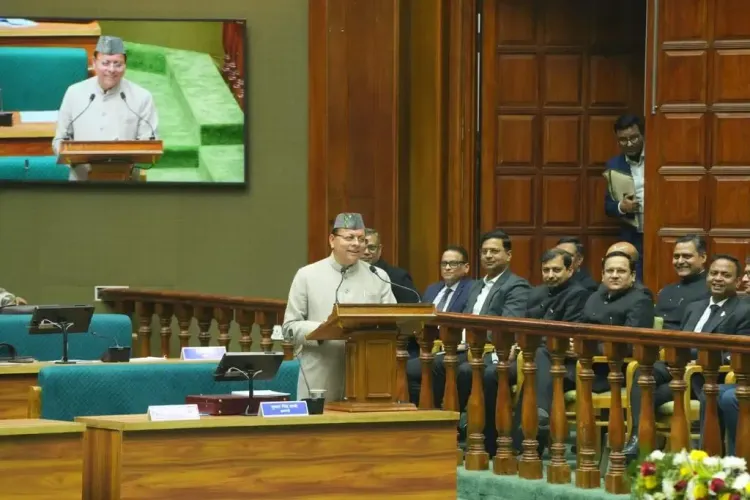
The budget was introduced on the inaugural day of the Assembly's Budget Session, following the Governor's address—a notable first for the state. The Uttarakhand Legislative Assembly's session is set to run from March 9 to March 13 at the Vidhan Bhavan in Bharadisain (Gairsain), the state's summer capital.
While delivering the budget, CM Dhami, who also handles the finance portfolio, stated that the government aspires to integrate every segment of society into the state’s development journey. “Our vision is to cultivate a prosperous, empowered, and self-sufficient Uttarakhand by involving every citizen in the developmental mainstream,” he conveyed.
Under the 'G' segment of the GYAN model—Garib Kalyan (welfare of the poor)—the administration has earmarked substantial funds for social welfare and housing initiatives.
A major allocation of Rs 1,300 crore has been designated for the Annapurti Scheme, aimed at ensuring food security for economically disadvantaged families. Additionally, Rs 298.35 crore has been allocated for the rural component of the Pradhan Mantri Awas Yojana (Rural) and Rs 56.12 crore for the Urban counterpart.
The government has also reserved Rs 25 crore for housing aid to economically weaker sections (EWS). Furthermore, Rs 42 crore will be allocated for providing free transportation facilities for specific passenger categories on buses run by the state transport corporation.
To alleviate the financial strain on impoverished households, the budget includes Rs 43.03 crore as a subsidy for cooking gas. Social security provisions have been enhanced, with Rs 167.05 crore allocated for pension plans, including the Divyang Pension, Teelu Rauteli Pension, and other welfare pensions.
Moreover, Rs 25 crore has been set aside for the rehabilitation of families impacted by natural disasters in the hilly region.
The 'Y' in the GYAN model stands for youth development. The government led by CM Dhami has introduced several programs designed to enhance employment, entrepreneurship, and skill acquisition.
A budget of Rs 60 crore has been allocated for the Chief Minister Self-Employment Scheme to foster entrepreneurship among the youth. Additionally, Rs 10 crore has been reserved for the Migration Prevention Scheme, which seeks to curtail rural outmigration by creating local job opportunities.
For skill enhancement, Rs 62.29 crore has been allocated to the Pandit Deendayal Upadhyay Grameen Kaushalya Yojana to train rural youth for job readiness.
The government has also provided Rs 155.38 crore as support for non-government colleges and Rs 10 crore for the honorarium of education volunteers (Shiksha Mitras). Likewise, Rs 10 crore has been allocated for the Mukhyamantri Yuva Unnayan Yojana, and Rs 3.34 crore for the ULLAS New Literacy Programme.
Under the 'A' segment of the GYAN model—Annadata—the government has proposed various initiatives to reinforce the agriculture, livestock, and fisheries sectors.
A budget of Rs 39.90 crore has been earmarked for the Trout Promotion Scheme to encourage fish farming in the state’s cold-water areas. Additionally, Rs 3.5 crore has been allocated for a program to provide live sheep, goats, and poultry to battalions of the Indo-Tibetan Border Police, aiding local farmers in generating income.
The Deendayal Upadhyay Cooperative Farmer Welfare Scheme will receive Rs 42.5 crore to bolster cooperative farming efforts. Under the Mission Apple initiative, Rs 42 crore is set aside to promote apple farming and enhance orchard productivity.
To support dairy farmers, Rs 32 crore has been allocated for the milk price incentive scheme. The Chief Minister State Agriculture Development Scheme will receive Rs 20 crore to promote agricultural innovations and infrastructure.
Furthermore, Rs 12.43 crore has been allocated for the Chief Minister Fisheries Development Scheme and Rs 160.13 crore for the Pradhan Mantri Matsya Sampada Yojana. Additionally, Rs 12 crore has been set aside for the Millet Mission to encourage traditional grains and bolster nutritional security.
Other measures include Rs 5.75 crore for promoting local crops and Rs 12.06 crore for the Farmer Pension Scheme.
Chief Minister Pushkar Singh Dhami announced the introduction of a gender budget to advance gender equality, describing it as a crucial milestone towards women’s empowerment. Under this initiative, an allocation of Rs 19,692.02 crore has been made for the financial year 2026-27. The budget also lays out numerous new initiatives aimed at enhancing infrastructure, tourism, and technology across the state.
An allocation of Rs 1,027 crore has been proposed for infrastructure support from the central government for the forthcoming Kumbh Mela. Tourism infrastructure development will receive Rs 100 crore to elevate the state’s tourism potential. Rs 400 crore has been reserved to ensure pothole-free roads throughout the state.
Numerous projects along the Ganga River have been suggested, including Rs 10 crore each for the Haridwar Ganga Corridor Project and the Rishikesh Ganga Corridor Project. An additional Rs 10 crore has been allocated for developing riverfront projects along the Saryu and other rivers.
To foster technological advancement, Rs 15 crore has been set aside for implementing cybersecurity systems, while Rs 10.5 crore will be allocated to support emerging technologies and artificial intelligence initiatives within the state.
The government has also assigned Rs 10 crore for the creation of a Spiritual Economic Zone, Rs 5 crore for the House of Himalayas initiative, and Rs 4.5 crore for the Uttarakhand and Bharat Darshan program aimed at promoting cultural tourism.
Numerous social initiatives are also part of the budget. The government has allocated Rs 112.02 crore under the Nirbhaya Fund to enhance measures for women’s safety. Additional provisions include Rs 2 crore for the “Aapda Sakhi” program to assist women in disaster management and Rs 5 crore for the Gram Prahari initiative aimed at strengthening village-level monitoring systems.
Funds have also been allocated for social infrastructure, including Rs 4.5 crore for de-addiction centers, Rs 5 crore for constructing libraries, and Rs 10 crore for stadiums at the Nyaya Panchayat level.
Additionally, Rs 19 crore has been allocated for rescue centers and Rs 3.73 crore for establishing a foreign employment cell to assist youth in exploring overseas job opportunities.
Point of View
The Uttarakhand government's latest budget announcement represents a significant commitment to inclusive growth. By prioritizing welfare for marginalized communities, youth empowerment, and support for farmers and women, this budget reflects a holistic approach to development. The focus on various sectors through the GYAN model indicates an effort to integrate all citizens into the developmental narrative.
NationPress
24 Sept 2026
Frequently Asked Questions
What is the total budget presented by the Uttarakhand government for 2026-27?
The Uttarakhand government presented a budget of Rs 1.11 lakh crore for the fiscal year 2026-27.
What does the GYAN model stand for?
The GYAN model stands for Garib Kalyan (welfare of the poor), Youth empowerment, Annadata (support for farmers), and Women's empowerment.
What allocations have been made for social welfare in the budget?
Significant allocations include Rs 1,300 crore for the Annapurti Scheme for food security, Rs 298.35 crore for rural housing, and Rs 167.05 crore for pension schemes.
What initiatives are included for youth development?
The budget allocates Rs 60 crore for the Chief Minister Self-Employment Scheme and Rs 62.29 crore for skill development under the Pandit Deendayal Upadhyay Grameen Kaushalya Yojana.
How much has been allocated for women's empowerment?
A total of Rs 19,692.02 crore has been allocated under the gender budget for the financial year 2026-27.