CM DK Shivakumar meets Karnataka contractors at Krishna
Synopsis
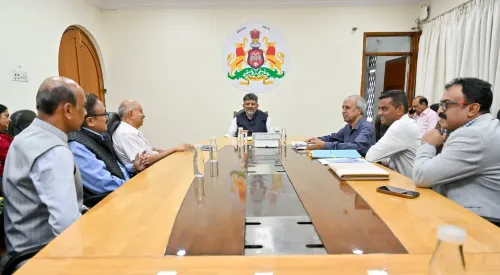
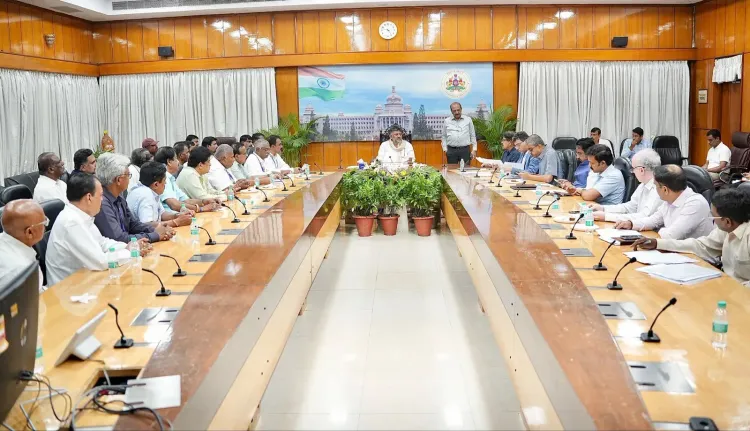
Karnataka CM DK Shivakumar received a delegation from the Karnataka State Contractors Association at his official residence Krishna on November 2, 2026, with senior finance and advisory officials present for discussions on contractor issues.
Key Takeaways
Karnataka State Contractors Association president R.
Manjunath led a delegation to meet CM DK Shivakumar at residence Krishna on November 2, 2026 .
The delegation discussed 'various issues' with the Chief Minister — specific agenda not officially disclosed.
Atheeq (Economic Advisor to CM), Tushar Girinath (Additional Chief Secretary), and Ritesh Kumar Singh (Additional Chief Secretary, Finance) were present.
The Finance Department's direct presence at the meeting signals that financial grievances — likely pending contractor payments — were central to discussions.
Karnataka governments across administrations have routinely held such consultations to address contractor payment delays, tender disputes, and project stalls.
A delegation from the Karnataka State Contractors Association, led by president R. Manjunath, called on Chief Minister DK Shivakumar at his official residence Krishna on Monday, November 2, 2026, for talks on issues affecting contractors working on government projects across the state.
Senior officials present as delegation raises concerns
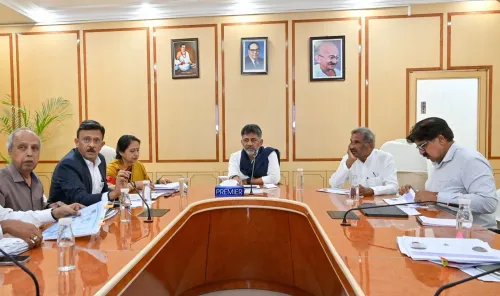
The meeting carried institutional weight: seated alongside the Chief Minister were L.K. Atheeq, Economic Advisor to the Chief Minister; Tushar Girinath, Additional Chief Secretary; and Ritesh Kumar Singh, Additional Chief Secretary in the Finance Department. The presence of finance and economic advisory brass signals that the issues on the table had a clear monetary dimension.
Why contractor consultations matter in Karnataka's infrastructure cycle
Karnataka governments — across party lines — routinely hold structured dialogues with contractors' associations to address recurring pressure points: delayed bill payments, tender process disputes, and stalled public-works timelines. For the state's sprawling infrastructure pipeline, these conversations are not ceremonial — they directly shape whether projects move or stall on the ground.
The Karnataka State Contractors Association is the principal organised voice for firms executing public works, roads, and buildings contracts funded by the state exchequer. When its president walks into the Chief Minister's residence with a full official delegation, it typically signals accumulated grievances that have crossed the level of department-level resolution.
What the Finance Department's presence signals
The direct involvement of the Finance Department's Additional Chief Secretary in what is formally a stakeholder consultation is telling. Contractor complaints in Karnataka have historically centred on pending payments — dues that, when delayed, can choke the cash flow of small and mid-sized construction firms and slow project execution. Budget cycles and treasury rules often sit at the heart of such bottlenecks, making Finance Department presence essential for any meaningful commitment.
Whether Monday's meeting produces revised payment timelines, tender-rule amendments, or new directions ahead of the next budget round will be the real measure of its outcome.
Point of View
Including the Finance Department chief, present for what is framed as a routine consultation. That configuration suggests the government is preparing to respond to financial grievances, not merely hear them. With Karnataka managing a tight fiscal situation, any commitment on contractor dues will be watched closely by infrastructure stakeholders ahead of the next budget.
NationPress
2 Nov 2026
Frequently Asked Questions
Why did the Karnataka Contractors Association meet CM DK Shivakumar?
The Karnataka State Contractors Association, led by president R. Manjunath, met CM DK Shivakumar at Krishna on November 2, 2026 to discuss various issues — likely including pending payments, tender processes, and infrastructure project concerns — though the specific agenda was not officially disclosed.
Who is R. Manjunath of the Karnataka State Contractors Association?
R. Manjunath is the president of the Karnataka State Contractors Association, the principal body representing firms executing government public works, road, and building contracts in the state.
What is Krishna, the Chief Minister's official residence in Bengaluru?
Krishna is the official residence and home office of the Chief Minister of Karnataka, located in Bengaluru, where official delegations and stakeholder meetings are regularly hosted.
Who is L.K. Atheeq in the Karnataka government?
L.K. Atheeq is an IAS officer serving as Economic Advisor to the Chief Minister of Karnataka, DK Shivakumar.
What issues do contractors typically raise with the Karnataka government?
Karnataka contractors' associations have historically flagged delayed bill payments from government departments, disputes over tender processes, and delays in public-works project approvals as their primary concerns.