CM DK Shivakumar Releases Brahmin Board 2026-27 Handbook
Synopsis
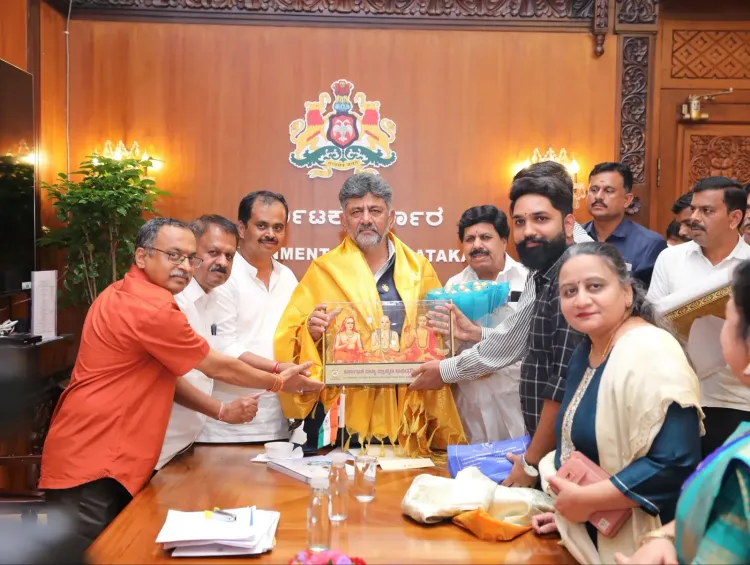
Chief Minister DK Shivakumar met Karnataka State Brahmin Development Board Chairman Asagodu Jayasimha and officials at Vidhana Soudha on 23 July 2026, releasing the board's 2026-2027 handbook outlining welfare schemes for the Brahmin community.
Key Takeaways
CM DK Shivakumar released the Karnataka State Brahmin Development Board's 2026-2027 handbook at Vidhana Soudha on 23 July 2026 .
Board Chairman Asagodu Jayasimha led the delegation of officials who called on the Chief Minister.
The Karnataka State Brahmin Development Board is a state government body mandated to deliver scholarships, skill training, and economic support to the Brahmin community.
Karnataka established dedicated Brahmin welfare structures in the late 2010s, following the model of SC/ST and minority community boards.
The handbook is expected to guide the board's welfare delivery and scheme implementation through the 2026-2027 financial year.
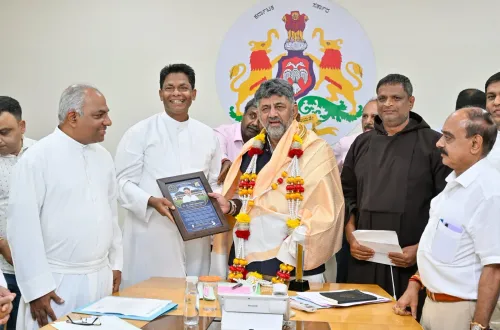
The Chief Minister's Office of Karnataka announced on Thursday, 23 July 2026 that Chief Minister DK Shivakumar met with the Chairman and officials of the Karnataka State Brahmin Development Board at Vidhana Soudha, Bengaluru, and released the board's handbook for 2026-2027.
The post, shared from the official Chief Minister's Office account, states in Kannada: 'ಕರ್ನಾಟಕ ರಾಜ್ಯ ಬ್ರಾಹ್ಮಣ ಅಭಿವೃದ್ಧಿ ಮಂಡಳಿಯ ಅಧ್ಯಕ್ಷರಾದ ಶ್ರೀ ಅಸಗೋಡು ಜಯಸಿಂಹ ಅವರು...' — translating to: Asagodu Jayasimha, Chairman of the Karnataka State Brahmin Development Board, along with board officials, called on Chief Minister Shivakumar at Vidhana Soudha today, on which occasion the Chief Minister released the board's 2026-2027 handbook.
Context
The meeting took place at Vidhana Soudha, the seat of the Karnataka Legislature and the Chief Minister's official office in Bengaluru. Asagodu Jayasimha, appointed Chairman of the Karnataka State Brahmin Development Board by the state government, led the delegation of board officials. The release of the annual handbook signals the board's roadmap for welfare delivery in the coming financial year.
Policy Backdrop
Karnataka established dedicated welfare structures for the Brahmin community in the late 2010s, extending the model of community-specific boards that had long existed for Scheduled Castes, Scheduled Tribes, and minority groups. The Karnataka State Brahmin Development Board is mandated to implement schemes covering scholarships, skill training, and economic support for members of the community. Multiple Indian states have adopted similar board or corporation structures for Brahmin welfare in response to demands from community organisations, mirroring a broader pattern of caste- and community-targeted programmes used to address educational and economic disparities.
Stakeholders and Impact
The primary beneficiaries of the board's programmes are members of the Brahmin community in Karnataka. The handbook released by CM DK Shivakumar is expected to outline the welfare schemes, eligibility criteria, and operational guidelines the board will follow through 2026-2027. Board officials present at the meeting are positioned to begin implementation planning immediately following the handbook's formal release.
What's Next
Attention will now turn to the specific schemes and targets enumerated in the 2026-2027 handbook and whether corresponding budget allocations are presented during the next Karnataka legislative session. The board's ability to disburse scholarships and skill-training support at scale will be a key metric by which community organisations and legislators will assess the government's follow-through.
Point of View
But it carries political signalling in a state where the Congress government must manage a broad coalition of community interests. By personally presiding over the handbook release, Shivakumar reinforces the government's posture of inclusive welfare delivery — extending visible state attention to a community not traditionally seen as a Congress constituency. This fits a wider national pattern in which state governments, regardless of ideological stripe, use community-specific boards as instruments of outreach and political consolidation. The real test will come when the handbook's schemes translate into measurable disbursements before the next electoral cycle.
NationPress
23 Jul 2026
Frequently Asked Questions
What is the Karnataka State Brahmin Development Board?
The Karnataka State Brahmin Development Board is a state government body set up to implement welfare schemes — including scholarships, skill training, and economic support — for members of the Brahmin community in Karnataka.
Who is Asagodu Jayasimha?
Asagodu Jayasimha is the Chairman of the Karnataka State Brahmin Development Board, appointed by the state government to lead the body's welfare activities.
What did CM DK Shivakumar release on 23 July 2026?
CM DK Shivakumar released the Karnataka State Brahmin Development Board's 2026-2027 handbook at Vidhana Soudha in Bengaluru on 23 July 2026.
What is the 2026-2027 Brahmin Development Board handbook?
The handbook is the board's official guide for the financial year 2026-2027, expected to outline welfare schemes, eligibility criteria, and operational plans for beneficiaries.
Where is Vidhana Soudha located?
Vidhana Soudha is located in Bengaluru and serves as the seat of the Karnataka Legislature as well as the office of the Chief Minister.