Kishan Reddy Reviews Mining Sector Progress in New Delhi
Synopsis
Union Mines Minister G. Kishan Reddy and Minister of State Satish Dubey reviewed mineral exploration progress and critical mineral development with senior Ministry of Mines officials in New Delhi on 23 July 2026, framing the discussions within India's Viksit Bharat vision for 2047.
Key Takeaways
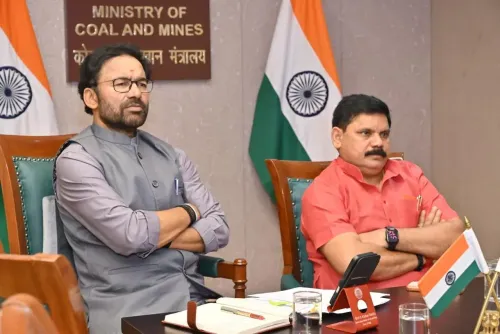
Kishan Reddy and Satish Dubey jointly chaired a Ministry of Mines review meeting in New Delhi on 23 July 2026 .
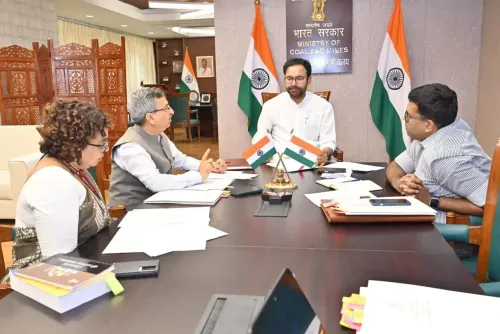
The meeting assessed progress on key initiatives and ongoing projects across India's mining sector.
Priority areas included mineral exploration, critical mineral development, and overall sector growth.
Discussions were anchored in the Viksit Bharat vision — India's goal of becoming a developed nation by 2047 .
The review follows a series of legislative reforms including the MMDR Amendment Act 2021 and the National Mineral Policy 2019 .
Outcomes could influence upcoming critical mineral block auctions and exploration policy announcements.
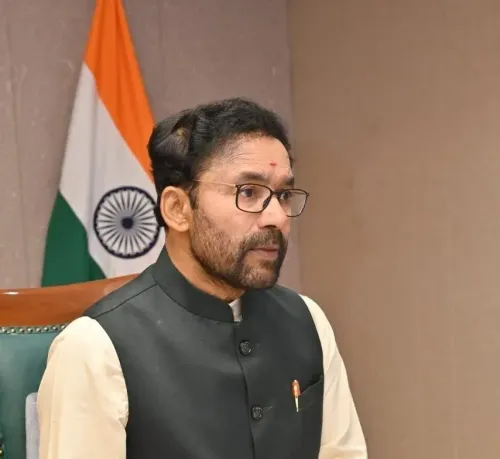
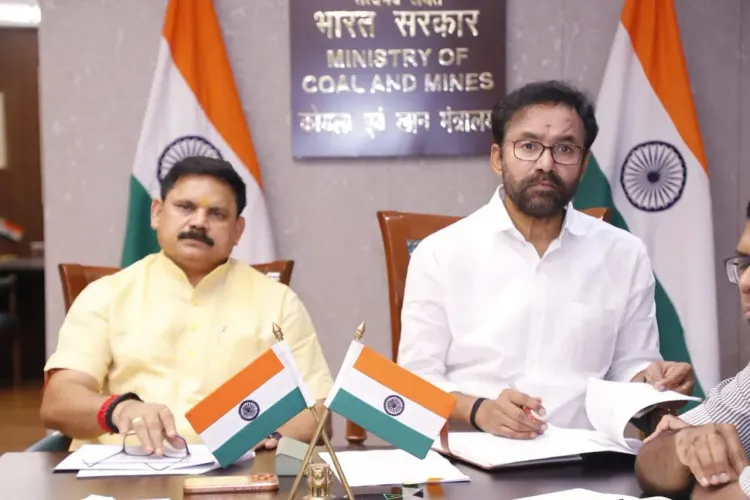
Union Coal and Mines Minister G. Kishan Reddy on Thursday, 23 July 2026, chaired a high-level review meeting with senior officials of the Ministry of Mines in New Delhi, taking stock of key initiatives and ongoing projects in India's mining sector. The minister was joined by Union Minister of State for Coal and Mines Satish Dubey, who co-led the review alongside him.
Context
The meeting focused on three priority areas: strengthening mineral exploration, accelerating development of critical minerals, and driving overall growth in India's mining sector. Kishan Reddy noted that the discussions were framed within the broader national vision of a Viksit Bharat — the government's long-term goal of a fully developed India by 2047. The Ministry of Mines oversees the regulation, exploration, and development of all non-coal mineral resources across the country.
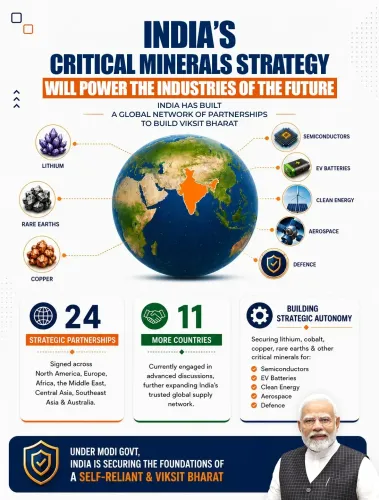
Critical minerals — including lithium, cobalt, nickel, and rare earth elements — have become a central concern for India's industrial and energy security, given their importance to electronics, defence manufacturing, and clean energy technologies. Reducing import dependence for these materials has been a stated priority of the central government.
Policy Backdrop
India's mineral governance framework has undergone significant reform in recent years. The National Mineral Policy 2019 updated an older framework to place greater emphasis on exploration, sustainable practices, and private sector participation. The Mines and Minerals (Development and Regulation) Amendment Act, 2021 further eased the auctioning of mineral blocks and expanded exploration activity across the country.
These legislative changes have been accompanied by dedicated block auctions for critical minerals and a push to align state-level implementation with national production targets. Regular high-level review meetings of this kind reflect the centre's effort to monitor progress and address bottlenecks in a sector that underpins India's Atmanirbhar Bharat manufacturing ambitions.
Stakeholders and Impact
The outcomes of such reviews directly affect mining companies — both public sector undertakings and private players — as well as state governments that hold jurisdiction over land and are partners in block allocations. Faster exploration and smoother regulatory processes can unlock investment and create employment in mineral-rich states.
For industries downstream — including steel, cement, electronics, and renewable energy — the pace of domestic mineral development determines input costs and supply reliability. Any acceleration in critical mineral block auctions or exploration licensing emerging from this review could have material consequences for these sectors.
What's Next
Observers will watch for concrete announcements arising from the review, including new exploration policy directives, updated timelines for critical mineral block auctions, or revised budget allocations for the Ministry of Mines. The meeting's emphasis on aligning sector growth with Viksit Bharat targets suggests that further policy measures to deepen domestic mineral production capacity may follow in the near term.
Point of View
Hands-on priority rather than a routine administrative function. With critical minerals sitting at the intersection of clean energy, defence, and electronics supply chains, the meeting reflects India's growing awareness that domestic resource security is a strategic imperative. The framing of the discussion within the Viksit Bharat vision also suggests that the Ministry of Mines is being positioned as a contributor to India's 2047 development narrative — not merely a regulatory body. Sustained high-level attention of this kind typically precedes concrete policy moves such as new auction rounds or revised exploration incentives.
NationPress
24 Jul 2026
Frequently Asked Questions
What was discussed in the Ministry of Mines review meeting on 23 July 2026?
The meeting, chaired by Union Minister G. Kishan Reddy and MoS Satish Dubey, covered the progress of key ministry initiatives, measures to strengthen mineral exploration, acceleration of critical mineral development, and overall growth of India's mining sector.
Who is Satish Dubey in the Ministry of Mines?
Satish Dubey is the Union Minister of State for Coal and Mines, who assists Cabinet Minister G. Kishan Reddy in overseeing the ministry's functions and participates in high-level sector reviews.
What are critical minerals and why does India focus on them?
Critical minerals such as lithium, cobalt, nickel, and rare earth elements are essential for electronics, defence, and clean energy technologies. India focuses on their domestic development to reduce import dependence and support its manufacturing and energy transition goals.
What is the Viksit Bharat vision mentioned in the mining context?
Viksit Bharat is the Indian government's long-term vision for a fully developed nation by 2047. In the mining sector, it frames policy goals around self-reliance in mineral resources, expanded exploration, and boosting domestic production to support industrial growth.
What reforms has India made to its mining sector in recent years?
India enacted the National Mineral Policy 2019 and the Mines and Minerals (Development and Regulation) Amendment Act 2021, which simplified mineral block auctions, encouraged private sector participation, and expanded exploration activity to boost domestic mineral production.