Ramaswamy Promises Ohio Manufacturers Economic Boom After November Win
Synopsis
Vivek Ramaswamy, Strive Asset Management founder and former DOGE co-lead, thanked Ohio manufacturers on 23 July 2026 and pledged an 'economic boom' after a November 2026 electoral win, continuing the Republican playbook of tying Midwest manufacturing revival to electoral outcomes.
Key Takeaways
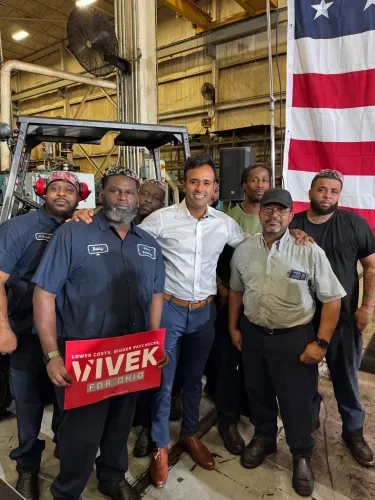
Entrepreneur Vivek Ramaswamy posted on 23 July 2026 thanking Ohio 's manufacturers and industry workers for their support.
He explicitly promised an 'economic boom' contingent on winning in November 2026 .
Ramaswamy is the founder and executive chairman of Strive Asset Management and former co-lead of the DOGE advisory effort.
Ohio 's manufacturing sector spans automotive, steel, and heavy machinery industries, making it a key Republican target constituency.
The messaging mirrors Republican electoral strategy deployed in 2016 and 2024 campaigns targeting Midwestern industrial states.
The November 2026 election results and any subsequent manufacturing-focused legislation will be the key accountability benchmark.
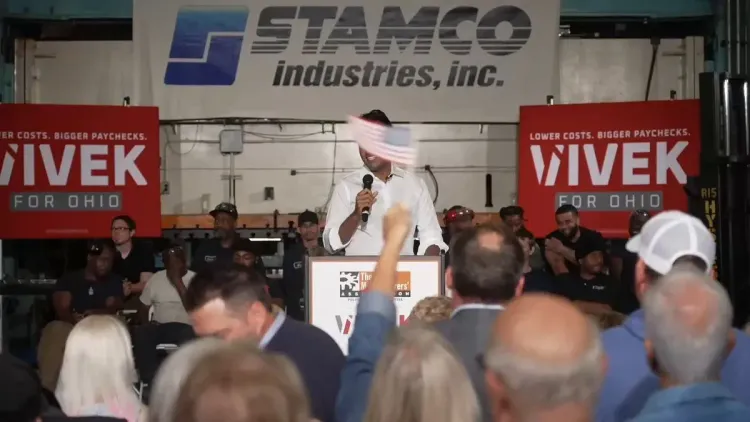
Entrepreneur Vivek Ramaswamy — founder and executive chairman of Strive Asset Management and former co-lead of the US Department of Government Efficiency (DOGE) advisory effort — thanked Ohio's manufacturers and industry workers on Thursday, 23 July 2026, pledging an 'economic boom' contingent on an electoral victory in November 2026.
Context
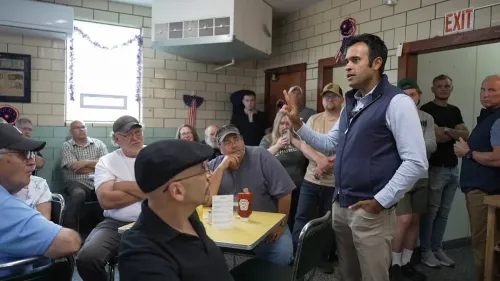
In the post, Ramaswamy wrote: 'Thank you to Ohio's manufacturers and industry workers for your support. There's an economic boom coming after we win in November.' The message signals an active political campaign push in Ohio, a Midwestern state whose large manufacturing base — spanning automotive, steel, and heavy machinery sectors — has long been a focal point of Republican economic messaging.
Ramaswamy rose to national prominence as a 2024 Republican presidential candidate before pivoting to lead the DOGE advisory effort alongside Elon Musk. His return to direct electoral campaigning in Ohio marks a significant moment in his post-DOGE political trajectory.
Policy Backdrop
Throughout the 2024 presidential campaign cycle, Ramaswamy consistently advocated tax cuts, aggressive deregulation, and trade policies designed to revive domestic manufacturing in industrial states including Ohio. Those positions formed the backbone of his pitch to blue-collar voters in the Midwest.
The broader Republican playbook of tying manufacturing revival to electoral outcomes has deep roots: similar messaging anchored campaigns in 2016 and 2024, targeting Ohio and neighbouring industrial states with promises of reduced regulation and expanded domestic energy production. Ramaswamy's 23 July post continues that pattern, explicitly linking a November victory to economic uplift for the state's factory floor.
Stakeholders and Impact
Ohio's manufacturing sector employs hundreds of thousands of workers in industries sensitive to federal tax and trade policy. For these workers, campaign promises of deregulation and incentives carry direct implications for job security, wages, and plant investment decisions.
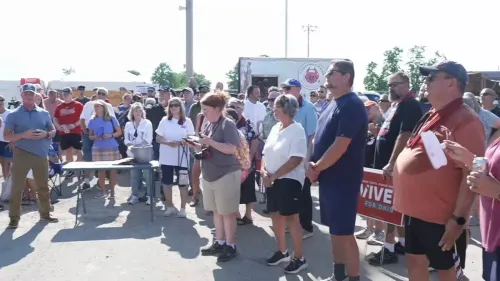
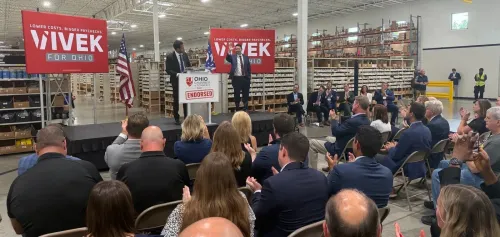
Ramaswamy's public acknowledgement of support from Ohio manufacturers also suggests organised outreach — or at minimum, visible enthusiasm — from the state's industrial community ahead of the November 2026 elections. That dynamic could influence how other Republican figures position themselves on manufacturing policy in the lead-up to the vote.
What's Next
All eyes will be on the November 2026 election results in Ohio and any subsequent movement on state or federal legislation touching manufacturing incentives, tax relief, or deregulation. Should Ramaswamy or allied candidates prevail, the pressure to deliver a tangible 'economic boom' for Ohio's industry workers will be immediate and measurable.
For now, the post underscores that Ramaswamy views Ohio's manufacturing belt as a critical constituency — and that he is willing to make explicit economic promises tied to electoral outcomes, a high-stakes rhetorical gambit with a clear accountability deadline in November.
Point of View
Creating a built-in accountability test. By explicitly naming Ohio's manufacturers and tying their fortunes to a November outcome, he is staking political credibility on a measurable benchmark, not a vague aspiration. This mirrors the strategy that proved decisive in Ohio in 2016 and remained central in 2024, suggesting Ramaswamy is positioning himself as a credible economic messenger in the state's industrial belt. The move also signals that his post-DOGE political ambitions remain very much alive and Ohio-focused.
NationPress
24 Jul 2026
Frequently Asked Questions
What did Vivek Ramaswamy say about Ohio manufacturers?
Ramaswamy thanked Ohio's manufacturers and industry workers for their support and promised that 'there's an economic boom coming after we win in November,' in a post dated 23 July 2026 .
Who is Vivek Ramaswamy?
Vivek Ramaswamy is the founder and executive chairman of Strive Asset Management , a former 2024 Republican presidential candidate , and former co-lead of the US Department of Government Efficiency (DOGE) advisory effort.
What is Ramaswamy's economic plan for Ohio?
During the 2024 campaign cycle, Ramaswamy advocated tax cuts, deregulation, and trade policies aimed at reviving domestic manufacturing in states like Ohio . His July 2026 post reaffirms that economic vision tied to a November 2026 electoral win.
Why is Ohio important for Republican candidates?
Ohio is a key Midwestern battleground state with a large manufacturing sector covering automotive, steel, and machinery industries. Republican candidates have repeatedly targeted Ohio's industrial workers with promises of manufacturing revival since at least 2016 .
What is the significance of the November 2026 election for Ohio?
The November 2026 elections will serve as a direct accountability test for Ramaswamy's promise: if he or allied candidates win, the pressure to deliver tangible manufacturing and economic benefits to Ohio 's industry workers becomes immediate and measurable.