CM Fadnavis: 75% of World's Tigers Now Live in India

Synopsis
On International Tiger Day 2026, Maharashtra Chief Minister Devendra Fadnavis highlighted from Nagpur that India hosts roughly 75% of the world's wild tigers and credited Maharashtra's sustained conservation efforts for a continuously rising state tiger count.
Key Takeaways
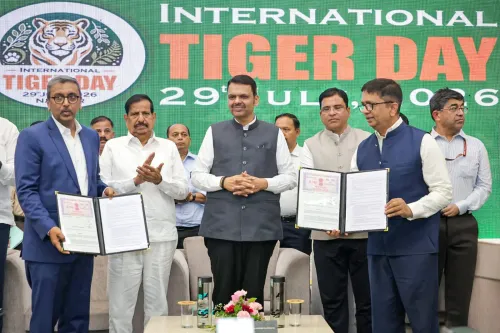
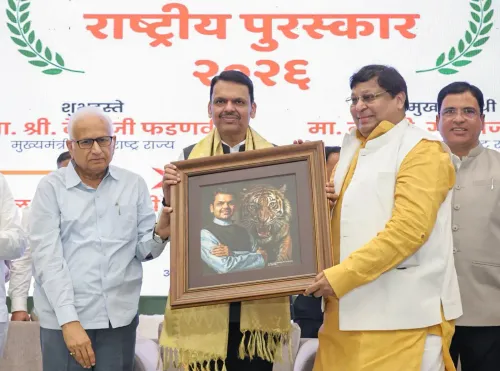
Maharashtra Chief Minister Devendra Fadnavis marked International Tiger Day on 29 July 2026 with a post from Nagpur .
India is home to approximately 75% of the world's total wild tiger population , according to Fadnavis's statement.
Maharashtra's tiger population is continuously rising , with the state credited for 'remarkable work' in conservation.
Project Tiger , launched in 1973 , underpins India's national tiger protection framework through dedicated reserves and anti-poaching measures.
The next All India Tiger Estimation will be a key indicator of whether Maharashtra's conservation gains are holding.
India is home to roughly three out of every four wild tigers on the planet — and on International Tiger Day, 29 July 2026, Maharashtra Chief Minister Devendra Fadnavis used that extraordinary statistic to spotlight the state's own quietly growing role in the global conservation story.
Posting from Nagpur — the city that sits at the heart of India's tiger country — Fadnavis wrote in Marathi and Hindi: 'जगातील एकूण वाघांपैकी सुमारे 75% वाघ भारतात आहेत' ('About 75 per cent of the world's total tigers are in India'). He added that Maharashtra has delivered 'remarkable work' in tiger conservation and that the state's tiger population 'is continuously rising.'
How India built the world's biggest tiger stronghold
The turnaround did not happen overnight. Project Tiger, launched by the central government in 1973, created a network of dedicated reserves, tightened anti-poaching enforcement, and mandated periodic population surveys. Over successive All India Tiger Estimation exercises — the first modern baseline was set in 2006 — the national count has climbed steadily, a trajectory that has made India the reference point for large-cat conservation worldwide.
The framework works because it is structural: buffer zones protect core habitats, forest communities are brought into the management loop, and census methodology has grown more rigorous with each cycle. India's commitments under international tiger conservation declarations have kept political attention — and funding — anchored to the numbers.
Maharashtra's stake in the tiger map
Nagpur is not a coincidental venue for this message. The city sits close to Tadoba-Andhari Tiger Reserve, one of Maharashtra's flagship protected areas and among the most densely tigered reserves in the country. The state has expanded its reserve network and monitoring capacity in step with national targets, and Fadnavis's post signals that conservation performance is now a point of political pride — not just an administrative brief.
The next national tiger estimation will be the real test. If Maharashtra's numbers hold or climb, it will validate the reserve-management investments made over the past decade. Conservation groups and forest-department officials will be watching closely for any state notification expanding protected corridors — the kind of move that turns a good census into a durable trend.
India once faced the genuine prospect of losing its wild tigers entirely. That it now shelters the overwhelming majority of the species' global population is one of conservation's most striking reversals — and on International Tiger Day, Devendra Fadnavis made sure Maharashtra claimed its share of that story.
Point of View
Anchoring environmental messaging to hard population data rather than policy announcements reflects a broader shift toward outcome-based political communication. The Nagpur setting is strategic: it places Maharashtra at the geographic centre of India's tiger belt, reinforcing the state's claim on the narrative. With the next national tiger census on the horizon, this kind of pre-emptive credit-building positions the state government to share in any positive headline the numbers deliver.
NationPress
29 Jul 2026
Frequently Asked Questions
What percentage of the world's tigers are in India?
According to Maharashtra Chief Minister Devendra Fadnavis's statement on International Tiger Day 2026, approximately 75% of the world's total wild tigers are found in India, making it the single largest habitat for the species globally.
What is Project Tiger in India?
Project Tiger is a central government programme launched in 1973 to protect tigers through dedicated reserves, anti-poaching enforcement, and periodic population surveys. It is widely credited with reversing the decline of India's wild tiger population.
Which tiger reserves are in Maharashtra?
Maharashtra hosts several tiger reserves, with Tadoba-Andhari Tiger Reserve being one of the most prominent. The state has expanded its reserve network in line with national conservation targets under Project Tiger.
Why is Nagpur important for tiger conservation?
Nagpur is located near key tiger habitats in central India, including Tadoba-Andhari Tiger Reserve, making it a natural hub for wildlife conservation events and policy discussions related to tigers in Maharashtra.
When is International Tiger Day observed?
International Tiger Day is observed every year on 29 July. It was established to raise awareness about tiger conservation and the need to protect wild tiger habitats around the world.