CM Fadnavis Activates 12-Point Drought Relief for 265 Maharashtra Talukas
Synopsis
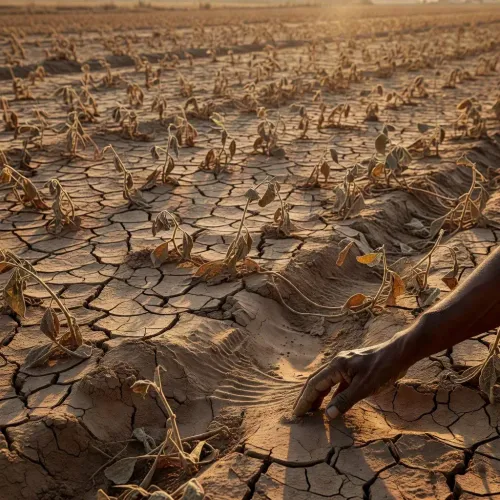
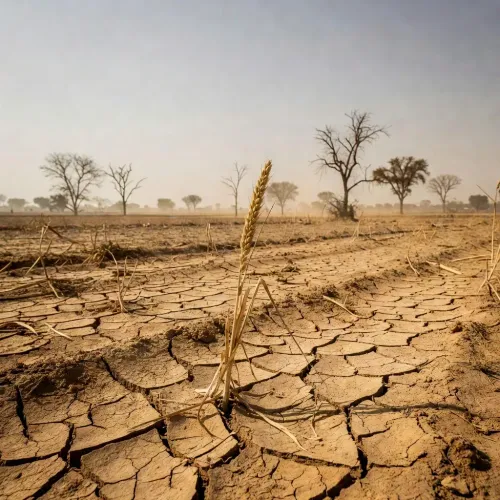
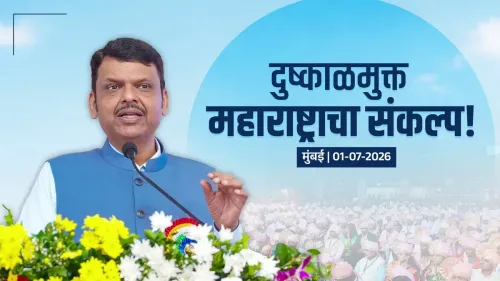
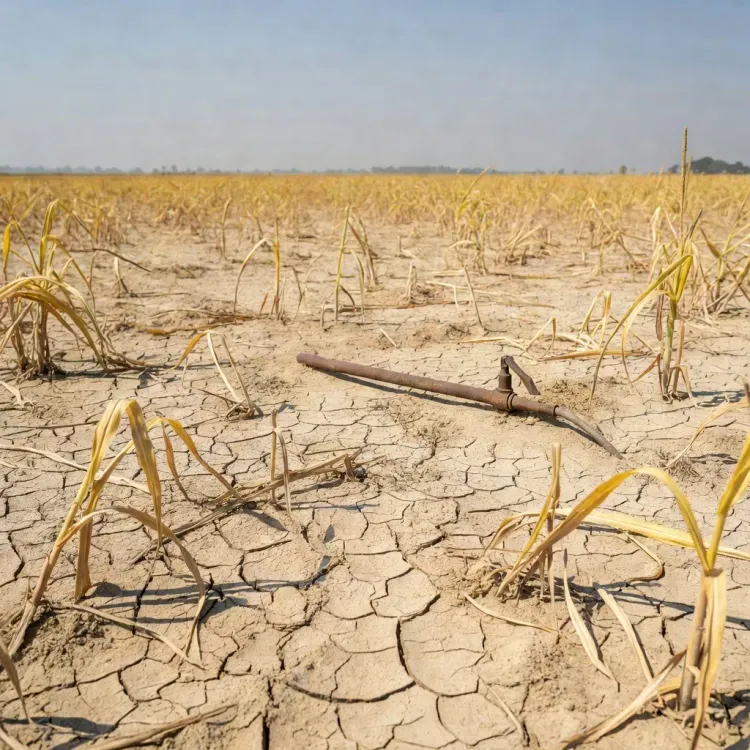
Maharashtra CM Devendra Fadnavis has activated Trigger-1 of the Drought Management Code, 2016, rolling out 12 relief measures — from loan freezes to tankers — across 265 drought-affected talukas spanning all six revenue divisions, while ordering panchanamas before issuing crop-loss compensation.
Key Takeaways
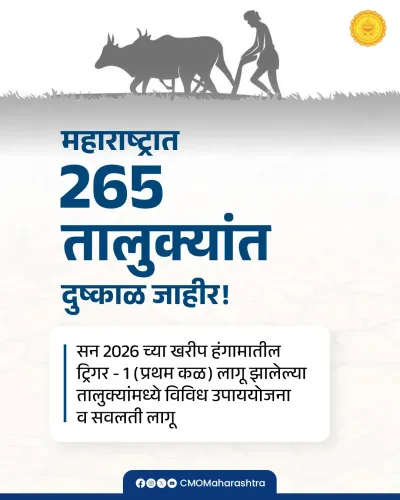
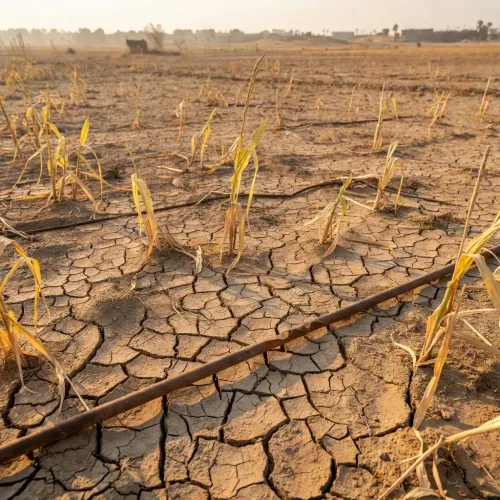
265 talukas across Maharashtra have been adversely affected by drought due to severe rainfall deficiency this year.
The government has activated Trigger-1 under the Drought Management Code, 2016 , initiating field surveys (panchanamas) to assess crop conditions.
12 relief measures have been announced, covering land revenue concessions, crop loan restructuring, loan recovery stays, electricity bill concessions, student fee waivers, MNREGA relaxation, tanker deployment, foodgrain supply, and livestock fodder.
The Chhatrapati Sambhajinagar Division is the worst-hit with 74 talukas affected, followed by Amravati ( 56 ), Nagpur ( 39 ), Nashik ( 49 ), Pune ( 35 ), and Thane ( 12 ).
A separate Government Resolution on crop-loss compensation will be issued after panchanamas are completed and crop conditions verified.
District Collectors, Revenue Department, Agriculture Department, and all field agencies have been directed to act immediately and coordinate at the ground level.
With rainfall failing across swathes of Maharashtra this monsoon season, Chief Minister Devendra Fadnavis has moved the state's full drought-response machinery into action — issuing a Government Resolution on 26 September 2026 that triggers 12 relief measures for 265 talukas hit hardest by the deficiency, spanning every revenue division from Thane to Nagpur.
Trigger-1 fires across six revenue divisions
The resolution invokes Trigger-1 — the first formal threshold — under Maharashtra's Drought Management Code, 2016, the state's graded framework for assessing and responding to rainfall shortfalls. Panchanamas (official field surveys) covering crop conditions, GPS coordinates, and photographic evidence are now being conducted in all 265 talukas to build the evidentiary record required before crop-loss compensation can follow. The division-wise spread tells the story of where the drought bites deepest: 74 talukas in Chhatrapati Sambhajinagar Division (the Marathwada heartland), 56 in Amravati Division (Vidarbha's agrarian belt), 39 in Nagpur Division, 49 in Nashik Division, 35 in Pune Division, and 12 in Thane Division.
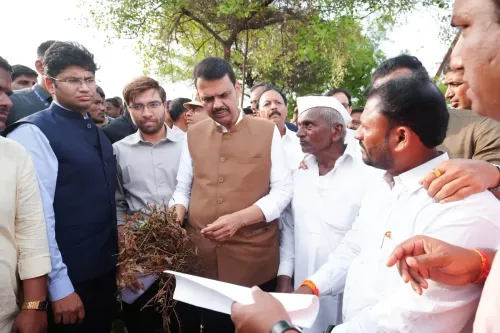
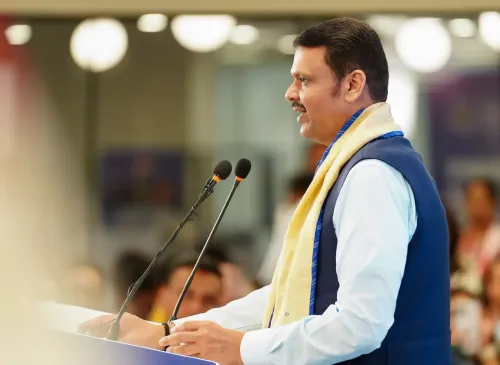
Fadnavis noted that he personally toured drought-affected farmers' fields, inspected crop damage, and heard directly from cultivators before directing the government to act. District Collectors have been ordered to begin panchanamas immediately.
The 12 measures: from loan freezes to tankers
The relief package spans financial, utility, education, and welfare dimensions. On the financial side, it includes a concession in land revenue, restructuring of crop loans, and a stay on recovery of agriculture-related loans. Electricity bills for agricultural pump sets above 7.5 horsepower will receive a concession — those up to that capacity have already been waived. The package also waives examination fees for school and college students in affected talukas and relaxes MNREGA norms to maximise the number of works that can be taken up, providing immediate wage income to rural households.
On the ground-level survival side, the government has mandated tanker deployment wherever drinking water is scarce, a ban on disconnecting electricity to agricultural pumps in water-scarce villages, guaranteed supply of foodgrains for farmers and agricultural labourers, arrangements to ensure adequate fodder for livestock, and dedicated water conservation and drinking-water planning works. The Revenue Department, Agriculture Department, and all field agencies have been directed to coordinate with sensitivity and maintain active communication at the taluka level.
Marathwada and Vidarbha at the core — a familiar pattern
Maharashtra's rain-fed agriculture has long made the state one of India's most drought-vulnerable. The Marathwada and Vidarbha regions in particular — together accounting for 130 of the 265 affected talukas — have suffered recurring monsoon failures that push farmers into debt distress and trigger waves of rural hardship. The 2016 Drought Management Code was designed precisely to replace ad hoc responses with a structured, trigger-based system: survey first, compensate with verified data, prevent panic procurement and tanker corruption. The current activation follows that established sequence faithfully.
Crucially, the government has separated immediate relief from crop-loss compensation. A separate Government Resolution on crop-loss assistance will follow only after panchanamas are complete — a deliberate sequencing meant to ensure accuracy over speed. The Revenue and Agriculture departments have been tasked with conducting those surveys 'meticulously', per the Chief Minister's directive.
With the survey clock now running and field teams deployed across six divisions, the real test is delivery speed — because in a drought year, every day of delay is a day of loss farmers absorb alone.
Point of View
And its geographic concentration in Marathwada and Vidarbha underscores the structural vulnerability of Maharashtra's rain-fed agriculture belt. Fadnavis's decision to front-load visible relief measures — loan freezes, fee waivers, tankers — while deliberately sequencing crop-loss compensation after verified panchanamas reflects a dual political and administrative calculation: managing rural distress optics now while avoiding the fiscal and legal risks of unverified payouts. The Chief Minister's personal field tour, cited in the announcement, signals the government is treating this as a high-stakes political priority ahead of what could become a prolonged agrarian crisis. Whether the Revenue and Agriculture departments can execute 265 taluka-level surveys with the required speed and accuracy will determine if the Code's promise of structured relief translates into actual farmer welfare.
NationPress
26 Sept 2026
Frequently Asked Questions
Which talukas are affected by drought in Maharashtra in 2026?
265 talukas across Maharashtra have been declared drought-affected, spread across six revenue divisions: 74 in Chhatrapati Sambhajinagar , 56 in Amravati , 49 in Nashik , 39 in Nagpur , 35 in Pune , and 12 in Thane .
What are the 12 drought relief measures announced by the Maharashtra government?
The 12 measures include concessions in land revenue, crop loan restructuring, a stay on loan recovery, electricity bill concessions for agricultural pumps above 7.5 HP, waiver of student exam fees, MNREGA norms relaxation, tanker deployment for drinking water, no electricity disconnection for pumps in water-scarce villages, foodgrain supply guarantees, livestock fodder arrangements, water conservation works, and drinking-water planning.
What is the Drought Management Code 2016 and what is Trigger-1?
The Drought Management Code, 2016 is Maharashtra's structured framework for assessing and responding to drought conditions in graded stages. Trigger-1 is the first formal threshold, activated when rainfall deficiency and related indicators cross a set level, initiating field surveys (panchanamas) and immediate relief measures.
When will Maharashtra farmers receive crop loss compensation for the drought?
Crop-loss compensation will be announced through a separate Government Resolution only after the mandatory panchanamas (field surveys with photographs and GPS data) are completed and crop conditions are formally assessed, as required under the Drought Management Code.
What is a panchanama in the context of Maharashtra drought relief?
A panchanama is an official field inspection carried out by government officials — typically at the taluka or village level — to document crop conditions, record GPS coordinates, and collect photographic evidence. It forms the verified basis on which crop-loss assistance amounts are calculated and disbursed.