Fadnavis launches river-linking push to make Maharashtra drought-free
Synopsis
Maharashtra is betting on a network of river-linking projects to end decades of drought in Marathwada, Vidarbha, and North Maharashtra. CM Fadnavis put a timeline on it — construction starts late 2025 or early 2026 — and backed it with a 2024-updated Integrated Water Plan covering six major basins. The Wainganga-Nalganga link alone could reshape water access for an entire region.
Key Takeaways
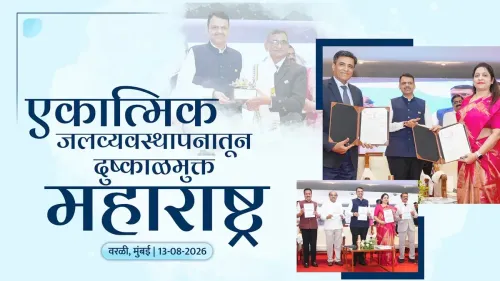
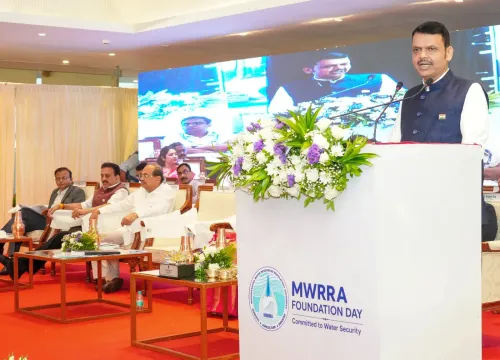
CM Devendra Fadnavis announced river-linking projects on 13 August at the MWRRA 21st anniversary event in Mumbai .
Construction will begin late 2025 or early 2026 , subject to Central Water Commission (CWC) approval.
The Wainganga-Nalganga river-link is a flagship project targeting drought elimination in Vidarbha .
Maharashtra's Integrated Water Plan , first created in October 2018 covering six basins , was updated in 2024 to include river-linking initiatives.
A 30-to-40-year water plan for the Mumbai and Pune metropolitan regions is also proposed.
An MoU was signed between Mazagon Dock Shipbuilders Limited and MWRRA to evaluate water tariff impacts and project remediation.
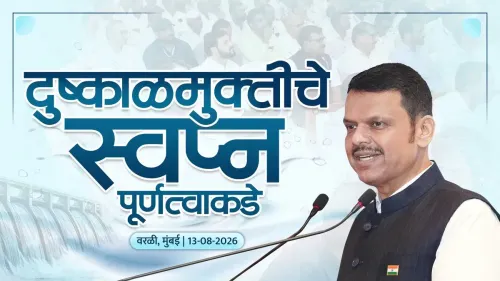
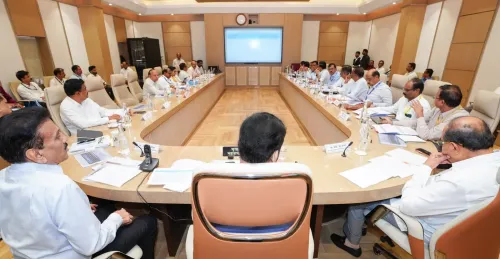
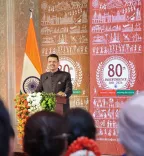
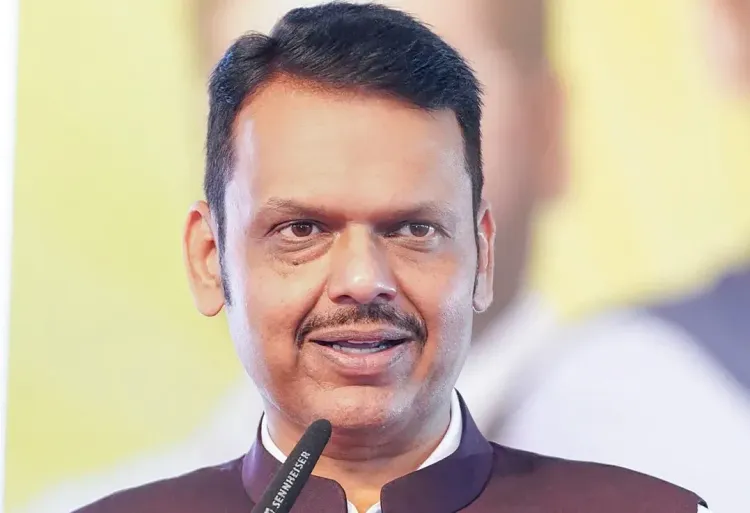
Chief Minister Devendra Fadnavis on Thursday, 13 August announced that the Government of Maharashtra will implement a series of ambitious river-linking projects aimed at making every region of the state drought-free through integrated water management. Speaking at the 21st anniversary event of the Maharashtra Water Resources Regulatory Authority (MWRRA) in Mumbai, Fadnavis said ground-level work on these projects will begin either late 2025 or early 2026, pending final clearance from the Central Water Commission (CWC).
The River-Linking Vision
At the heart of the plan is the diversion of surplus water from west-flowing rivers — which currently drain unused into the Arabian Sea — into the Godavari basin. This redirection, Fadnavis argued, would address chronic water deficits in North Maharashtra and Marathwada, two of the state's most drought-vulnerable regions. Several projects have already received administrative approval, while others remain at the Detailed Project Report (DPR) stage.
Among the flagship initiatives is the Wainganga-Nalganga river-link, which Fadnavis described as critical to eliminating drought conditions across the Vidarbha region. He asserted that Maharashtra is the first state in India to undertake water management work at this scale.
Maharashtra's Integrated Water Plan
Fadnavis recalled that Maharashtra was also the first state in the country to establish a Water Resources Regulatory Authority. In October 2018, the state consolidated individual plans for six major river basins — Godavari, Krishna, Tapi, Narmada, west-flowing rivers, and Mahanadi — into a single Integrated Water Plan. That plan was updated in 2024 to formally incorporate the major river-linking projects now being pursued.
Water Resources Minister Radhakrishna Vikhe Patil noted that while MWRRA was established in 2005, significant operational momentum built only after 2015, when drafting of the Integrated Water Plan began with the Godavari river basin — which accounts for nearly 50 per cent of the state's rivers and tributaries. Minister Girish Mahajan added that the 2018 water plan was designed to ensure water resources reach the last farmer in the state.
Efficiency Measures and Future Planning
Fadnavis stressed the importance of maximising the state's 40 lakh hectares of irrigation potential through optimal crop patterns and water-use efficiency. He recalled that in 2017, open-canal systems were replaced with Pipe Distribution Networks (PDN), a transition that saved enough water to supply severely drought-prone areas such as Man-Khatav.
Looking further ahead, the Chief Minister called for a 30-to-40-year Integrated Water Plan tailored specifically for the Mumbai Metropolitan Region (MMR) and the Pune Metropolitan Region (PMR), covering drinking, agricultural, and industrial water needs. He also proposed tertiary treatment of municipal wastewater to supply data centres through private investment partnerships, and the use of modern technology to enable year-round agricultural water supply in arid zones.
MoU Signed at MWRRA Event
A notable development at the event was the signing of a Memorandum of Understanding (MoU) between Mazagon Dock Shipbuilders Limited and the MWRRA. The agreement was signed by Captain Vasudev Puranik, Director of Mazagon Dock, and Shwetali Thackeray, Chairperson of MWRRA. The MoU focuses on evaluating the impact of water tariffs, assessing current project status, and implementing remedial measures, according to an official government release.
With CWC approval expected to unlock construction timelines, Maharashtra's river-linking ambition is moving from policy blueprint to physical infrastructure — a test of both administrative coordination and long-term political will.
Point of View
Yet Marathwada and Vidarbha remain among India's most drought-battered regions. The river-linking push is not new in concept — what is different this time is a stated construction timeline and a 2024-updated plan that formally embeds these projects. The real accountability test will come when CWC approval lands: whether disbursements follow through or the DPR stage becomes a permanent holding pattern. With 40 lakh hectares of irrigation potential still under-optimised, Maharashtra's water crisis is as much a governance problem as an engineering one.
NationPress
14 Aug 2026
Frequently Asked Questions
What river-linking projects did CM Fadnavis announce for Maharashtra?
CM Devendra Fadnavis announced a series of river-linking projects aimed at diverting surplus water from west-flowing rivers into the Godavari basin to address drought in North Maharashtra and Marathwada. The Wainganga-Nalganga river-link is among the flagship projects, targeting Vidarbha's drought-prone areas. Work is expected to begin late 2025 or early 2026 after Central Water Commission approval.
When will Maharashtra's river-linking project construction begin?
According to CM Fadnavis, actual construction will commence either late 2025 or early 2026, following final approval from the Central Water Commission (CWC). Several projects have already received administrative approval, while others are still at the Detailed Project Report stage.
What is Maharashtra's Integrated Water Plan?
Maharashtra's Integrated Water Plan, created in October 2018, consolidates individual water management plans for six major river basins — Godavari, Krishna, Tapi, Narmada, west-flowing rivers, and Mahanadi. It was updated in 2024 to formally incorporate the major river-linking projects. Maharashtra was the first state in India to establish a Water Resources Regulatory Authority, in 2005.
Which regions of Maharashtra will benefit from the river-linking projects?
The projects are primarily aimed at drought-prone regions including Marathwada, North Maharashtra, and Vidarbha. The diversion of west-flowing river surplus into the Godavari basin is specifically designed to bring water security to these chronically water-deficient areas.
What was the MoU signed at the MWRRA anniversary event?
A Memorandum of Understanding was signed between Mazagon Dock Shipbuilders Limited and the Maharashtra Water Resources Regulatory Authority (MWRRA). It was executed by Captain Vasudev Puranik, Director of Mazagon Dock, and Shwetali Thackeray, Chairperson of MWRRA, focusing on evaluating water tariff impacts, assessing project status, and implementing remedial measures.