CM Fadnavis Announces Waste-to-Energy Plant for Mumbai
Synopsis
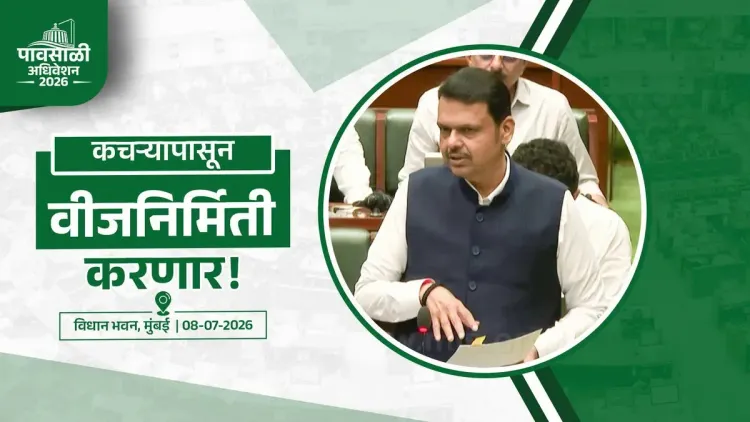
Maharashtra Chief Minister Devendra Fadnavis announced a new Waste-to-Energy project for Mumbai from the Vidhan Sabha floor on 8 July 2026, aimed at scientifically disposing of the city's solid waste and reducing pressure on its overburdened landfill sites.
Key Takeaways
Chief Minister Devendra Fadnavis announced a new Waste-to-Energy project for Mumbai on 8 July 2026 .
The announcement was made inside the Maharashtra Vidhan Sabha during the Monsoon Session 2026 .
The project aims to scientifically dispose of Mumbai's municipal solid waste , reducing reliance on landfills.
The Brihanmumbai Municipal Corporation (BMC) is the civic body that manages waste operations across Mumbai and would be central to implementation.
The initiative aligns with the national Swachh Bharat Mission framework supporting Waste-to-Energy infrastructure.
Tendering, site selection, and environmental clearances are yet to be announced.
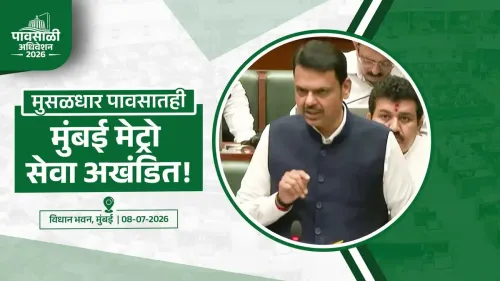
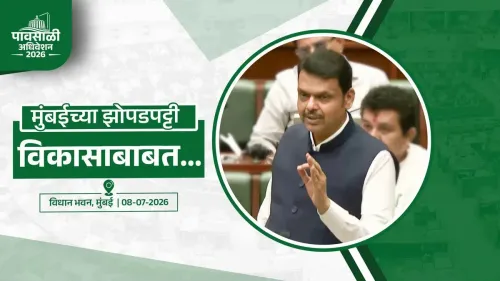
Maharashtra Chief Minister Devendra Fadnavis announced on Wednesday, 8 July 2026, that a new Waste-to-Energy project will be set up in Mumbai to scientifically dispose of the city's solid waste, making the declaration from the floor of the Maharashtra Vidhan Sabha during the ongoing Monsoon Session 2026.
Context
Fadnavis posted in both English and Marathi, stating: 'मुंबईतील कचऱ्याची शास्त्रशुद्ध विल्हेवाट लावण्यासाठी नवीन वेस्ट टू एनर्जी प्रकल्प उभारला जाणार आहे' ['A new Waste-to-Energy project will be set up for the scientific disposal of Mumbai's waste']. The announcement was made inside the Vidhan Sabha, signalling that the project carries legislative-session-level prominence rather than being a routine administrative communication.
Mumbai, India's financial capital and most populous city, has long struggled with mounting pressure on its landfill sites. The Brihanmumbai Municipal Corporation (BMC), the civic body responsible for waste collection and disposal across the city, manages one of the largest volumes of municipal solid waste of any urban local body in the country.
Policy Backdrop
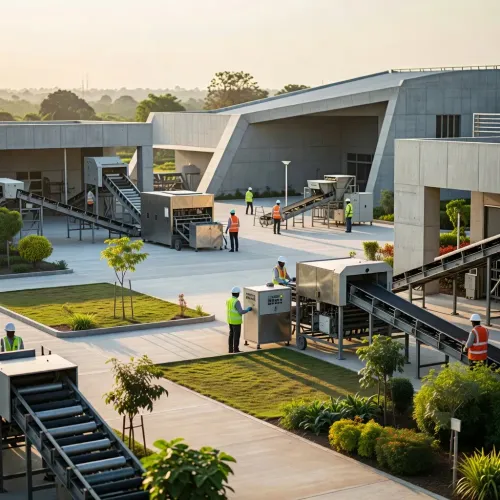
The announcement aligns with the broader thrust of the Swachh Bharat Mission, launched in 2014, which has actively encouraged Waste-to-Energy plants as a component of urban solid waste management reform. Under this framework, municipal solid waste is processed in high-temperature combustion or gasification units to generate electricity, reducing the volume of material sent to landfills.
Maharashtra has previously explored similar facilities in other cities as part of its renewable energy and urban governance agenda. The state's interest in Waste-to-Energy technology fits within national targets for increasing the share of non-fossil energy sources and reducing the environmental burden of unscientific waste dumping.
Stakeholders and Impact
The primary beneficiaries of the project, if executed, would be Mumbai's residents, who have endured the odour, health hazards, and land-use consequences of overflowing landfill sites for decades. The BMC would be the implementing agency on the ground, coordinating site selection, tendering, and operational oversight.
Environmental groups and urban planners have historically flagged both the promise and the risks of Waste-to-Energy technology — praising its potential to cut landfill use and generate power, while calling for strict emission controls and transparent environmental clearance processes. The scale and technology type of the proposed Mumbai plant will be closely watched by these stakeholders once formal project documents are released.
What's Next
Key milestones to track include the tendering process, site selection, and environmental clearances from the relevant state and central authorities. Capacity details — including how many tonnes of waste the plant will process daily and how much electricity it aims to generate — are expected to emerge through subsequent government notifications or further disclosures during the Monsoon Session 2026. The pace of these steps will determine whether the project moves from announcement to ground-breaking within the current government's term.
Point of View
Suggesting the Fadnavis government intends to make urban infrastructure a legislative priority during the Monsoon Session. Mumbai's chronic landfill crisis — centred on sites that have long exceeded their designed capacity — makes this a high-visibility commitment with direct electoral resonance in a city that returned a decisive mandate for the ruling coalition. The move also fits a broader Maharashtra pattern of using state legislative sessions to signal flagship urban projects, linking local civic pain-points to national schemes like Swachh Bharat. Delivery, however, will hinge on how quickly the BMC can navigate site selection and environmental clearances, two stages where similar projects across Indian cities have historically stalled.
NationPress
8 Jul 2026
Frequently Asked Questions
What is the Mumbai Waste-to-Energy project announced by CM Fadnavis?
Maharashtra Chief Minister Devendra Fadnavis announced on 8 July 2026 that a new Waste-to-Energy plant will be set up in Mumbai to scientifically process and dispose of the city's municipal solid waste, converting it into energy rather than sending it to landfills.
Where was the Mumbai Waste-to-Energy project announced?
The project was announced by CM Devendra Fadnavis from the floor of the Maharashtra Vidhan Sabha in Mumbai during the Monsoon Session 2026 on 8 July 2026.
Who will implement the Mumbai Waste-to-Energy plant?
The Brihanmumbai Municipal Corporation (BMC), which is responsible for waste collection and disposal across Mumbai, is expected to be the primary implementing agency for the project.
How does the Mumbai Waste-to-Energy project relate to Swachh Bharat Mission?
The project aligns with the Swachh Bharat Mission launched in 2014, which has supported Waste-to-Energy plants as part of urban solid waste management reform across Indian cities.
What are the next steps for the Mumbai Waste-to-Energy project?
The next steps include the tendering process, site selection, and obtaining environmental clearances. Capacity and technology details are expected to be disclosed through subsequent government notifications or further announcements during the Monsoon Session 2026.