CM Fadnavis appoints MHADA to develop Akkalkot Swami Samarth temple

Synopsis
Chief Minister Devendra Fadnavis has directed MHADA's appointment as Special Planning Authority for the Shri Swami Samarth temple precinct in Akkalkot, Solapur, to deliver planned infrastructure, essential amenities, and comprehensive beautification for the lakhs of pilgrims who visit each year.
Key Takeaways
MHADA has been appointed 'Special Planning Authority' for the Shri Swami Samarth temple precinct in Akkalkot .
The move was directed by Chief Minister Devendra Fadnavis and announced on 30 July 2026 .
The mandate covers planned development, essential infrastructure construction, and comprehensive beautification of the temple precinct.
Akkalkot, in Solapur district , draws lakhs of pilgrims annually to the Shri Swami Samarth temple.
MHADA's next step is publishing a detailed development plan with timelines and budget allocations.
The appointment follows Maharashtra's established practice of using special planning authorities for high-footfall religious sites.
Millions of pilgrims descend on Akkalkot every year seeking the blessings of Shri Swami Samarth — and now, for the first time, the town's sacred precinct is getting a dedicated planning authority to match that scale. On Thursday, 30 July 2026, the Chief Minister's Office of Maharashtra announced that Chief Minister Devendra Fadnavis has directed the appointment of the Maharashtra Housing and Area Development Authority (MHADA) as the 'Special Planning Authority' for the planned and comprehensive development of the Shri Swami Samarth temple precinct in Akkalkot.
Why MHADA, and why now
MHADA is no stranger to large-scale area development — it has long been Maharashtra's go-to body for coordinating land use, housing, and infrastructure across complex urban and semi-urban zones. Appointing it as a Special Planning Authority gives it statutory teeth: the power to prepare, approve, and implement a development plan specifically for the temple precinct, cutting through the jurisdictional overlaps that typically slow pilgrim-town upgrades. The CMO's announcement frames the mandate clearly — planned development of the temple surroundings, construction of essential infrastructure, and comprehensive beautification of the precinct.
Maharashtra has used this administrative tool before, deploying special planning authorities under urban development statutes to bring order to high-footfall religious sites where regular municipal machinery struggles to keep pace with pilgrim volumes. The Akkalkot appointment follows that established playbook, but the explicit direction from the Chief Minister's desk signals political priority.
Akkalkot and the Swami Samarth legacy
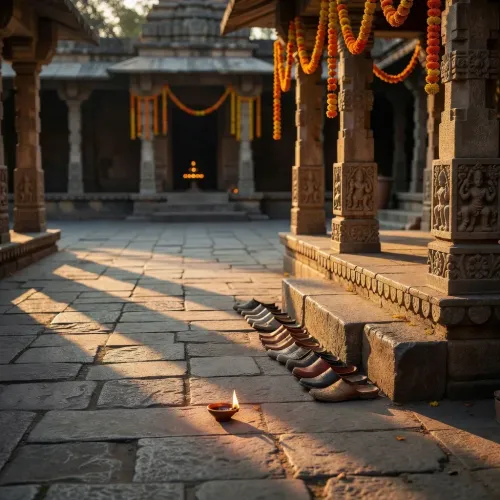
Akkalkot, a town in Solapur district, holds deep spiritual significance across Maharashtra and beyond. The Shri Swami Samarth temple is dedicated to a revered 19th-century saint whose followers span the length of the Marathi-speaking world. Lakhs of devotees — hundreds of thousands — make the pilgrimage each year, and the infrastructure around the temple has long struggled to absorb that footfall gracefully. Congested access roads, inadequate sanitation, and limited amenities have been persistent pain points for both pilgrims and residents.
The new development push promises to address exactly those gaps: better facilities for devotees, upgraded infrastructure, and a beautified precinct worthy of the site's spiritual stature.
What MHADA's plan will need to deliver
The immediate next step is MHADA publishing a detailed development plan for the precinct — with timelines, scope of the planning area, and budget allocations. Those specifics are yet to be announced. What is clear is the ambition: a coordinated, phased upgrade that balances the religious character of the site with the practical demands of mass pilgrimage. Roads, parking, sanitation, and visitor amenities will all be on the table.
For the residents of Akkalkot, the appointment is also an economic signal — a well-managed pilgrimage precinct draws more visitors and sustains local livelihoods that depend on the temple economy.
The plan is set; the blueprint is next. How quickly MHADA moves from appointment to action will determine whether Akkalkot's millions of annual pilgrims see change on the ground — or just on paper.
Point of View
Directing this move carries clear political logic in a state where religious tourism and devotee welfare are high-visibility issues. The real test, however, is execution: MHADA's track record in complex urban projects is mixed, and translating a planning mandate into on-ground change at a sensitive religious site will require careful stakeholder management. Akkalkot's residents and pilgrims will be watching whether this appointment produces a blueprint or a bottleneck.
NationPress
30 Jul 2026
Frequently Asked Questions
What is MHADA's new role at the Akkalkot Swami Samarth temple?
MHADA has been appointed 'Special Planning Authority' for the Shri Swami Samarth temple precinct in Akkalkot, giving it statutory authority to plan, develop, and beautify the area around the temple.
Who directed the appointment of MHADA for Akkalkot temple development?
Chief Minister Devendra Fadnavis directed the appointment, which was announced by the Chief Minister's Office of Maharashtra on 30 July 2026.
What development work is planned for the Akkalkot Swami Samarth temple precinct?
The plan includes structured development of the temple precinct, construction of essential infrastructure such as roads, sanitation, and parking, and comprehensive beautification of the surrounding area to improve facilities for pilgrims.
Where is Akkalkot and why is the Swami Samarth temple significant?
Akkalkot is a town in Solapur district, Maharashtra. The Shri Swami Samarth temple is dedicated to a revered 19th-century saint and draws lakhs of devotees from across the Marathi-speaking world every year.
When will the Akkalkot temple development work begin?
Specific timelines have not yet been announced. MHADA is expected to publish a detailed development plan for the precinct, including scope, timelines, and budget allocations, as the next step.