CM Saini Hails Lok Sabha Passage of National Honour Amendment Bill

Synopsis
Haryana CM Nayab Singh Saini welcomed the Lok Sabha's passage of the National Honour Insult Prevention (Amendment) Bill, 2026 on 30 July, praising PM Modi's leadership and calling the move a decisive step to protect India's constitutional dignity and cultural heritage, including Vande Mataram.
Key Takeaways
The National Honour Insult Prevention (Amendment) Bill, 2026 was passed in the Lok Sabha on 30 July 2026 .
Haryana CM Nayab Singh Saini hailed the passage as a decisive step to protect India's national honour, Constitution, and cultural heritage.
The bill amends the foundational Prevention of Insults to National Honour Act, 1971 , which covers the national flag, anthem, and Constitution.
Vande Mataram was adopted as India's national song by the Constituent Assembly in 1950 and is central to the bill's framing.
The bill must now clear the Rajya Sabha before it can become law.
The move aligns with the BJP-led government's consistent legislative focus on strengthening protections for national symbols.
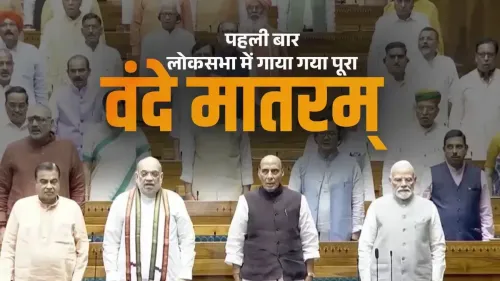
A bill aimed at strengthening legal protections for India's national symbols cleared the Lok Sabha on Thursday, 30 July 2026 — and Haryana Chief Minister Nayab Singh Saini was swift to mark the moment, calling it a decisive step in defending the nation's constitutional dignity and cultural heritage.
Posting on X, CM Saini described Vande Mataram — the national song — as 'the voice of India's soul and the eternal symbol of self-respect,' framing the bill's passage as a direct expression of that sentiment. He extended his gratitude to Prime Minister Narendra Modi, crediting the PM's leadership for continuously strengthening the 'nation first' spirit and renewing energy around India's cultural consciousness.
What the Amendment Bill Seeks to Do
The 'Rashtriya Samman Apmaan Nivaran (Sanshodhan) Vidheyak, 2026' — the National Honour Insult Prevention (Amendment) Bill, 2026 — is an amendment to the foundational Prevention of Insults to National Honour Act, 1971. That parent law, enacted over five decades ago, established penalties for acts of disrespect toward the national flag, the national anthem, and the Constitution of India.
Vande Mataram itself carries a long constitutional lineage: the Constituent Assembly adopted it as India's national song in 1950, giving it a status parallel in sentiment — if not identical in law — to the national anthem, Jana Gana Mana. The amendment, by invoking both the song and broader national honour, signals an intent to sharpen the legal teeth around such protections.
BJP's 'Nation First' Legislative Pattern
The bill fits squarely within a consistent legislative and rhetorical track the BJP-led central government has pursued since 2014 — reinforcing legal and cultural frameworks around national symbols, sovereignty emblems, and icons tied to the independence movement. From flag-code revisions to constitutional commemoration drives, the approach has been to pair 'nation first' messaging with concrete legislative action.
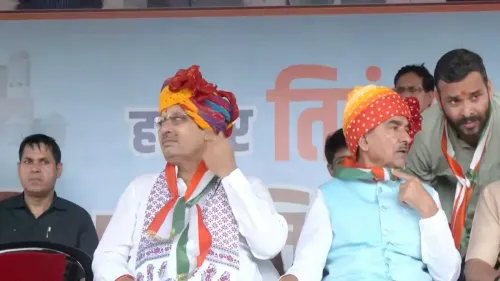
CM Saini's statement from Chandigarh amplifies that narrative at the state level, signalling alignment between the Haryana government and the Centre on cultural-nationalist policy priorities.
Next Stop: Rajya Sabha
Lok Sabha passage is only half the journey. The bill must now clear the Rajya Sabha — the upper house — before it can receive Presidential assent and become law. Enforcement notifications and implementing rules, if any, would follow. How the opposition engages with the bill in the upper house will be the real test of its legislative momentum.
A song that once galvanised a freedom movement now sits at the centre of a parliamentary debate. The Lok Sabha has spoken — the Rajya Sabha will have the final word.
Point of View
2026 in the Lok Sabha represents a continuation of the BJP's deliberate strategy of anchoring legislative activity to cultural-nationalist themes — a pattern that has proven electorally durable since 2014. CM Saini's public endorsement from Haryana is not incidental; it reinforces vertical alignment between state BJP governments and the Centre on identity-linked legislation. The invocation of Vande Mataram is particularly pointed, given the song's historical contestation across religious and political lines — framing the bill as its protector carries clear symbolic weight. The real political test arrives in the Rajya Sabha, where the amendment's specific provisions will face closer scrutiny and opposition pushback.
NationPress
13 Sept 2026
Frequently Asked Questions
What is the National Honour Insult Prevention Amendment Bill 2026?
It is an amendment to the Prevention of Insults to National Honour Act, 1971, passed by the Lok Sabha on 30 July 2026, aimed at strengthening legal protections for India's national symbols, including Vande Mataram, the national flag, anthem, and Constitution.
What did Haryana CM Nayab Singh Saini say about the bill?
CM Saini called the bill's passage an 'extremely inspiring and decisive step' toward protecting national honour, constitutional dignity, and cultural heritage, and thanked PM Modi for his leadership.
What is the Prevention of Insults to National Honour Act, 1971?
It is a central law that establishes penalties for acts of disrespect toward India's national flag, national anthem, and the Constitution. The 2026 amendment seeks to update and strengthen its provisions.
What is the status of the National Honour Amendment Bill — has it become law?
As of 30 July 2026, the bill has passed the Lok Sabha. It still needs to be passed by the Rajya Sabha and receive Presidential assent before it becomes law.
Why is Vande Mataram significant in the context of this bill?
Vande Mataram was adopted as India's national song by the Constituent Assembly in 1950. The bill's proponents have invoked it as a symbol of national self-respect, making its legal protection a central argument for the amendment.