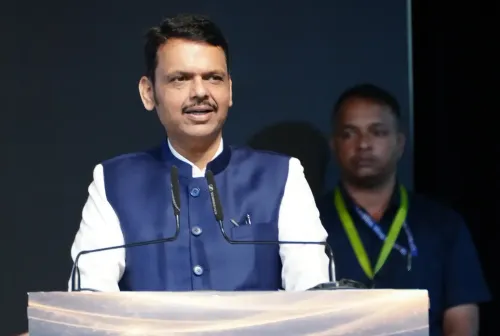
CM Fadnavis backs SIR to clean Maharashtra's voter rolls
Synopsis
Maharashtra Chief Minister Devendra Fadnavis publicly backed the Election Commission's Special Intensive Revision (SIR) on 7 October 2026, calling on voters to support the drive to eliminate duplicate entries and dead-voter names from electoral rolls, framing clean lists as essential to democratic integrity.
Key Takeaways
CM Devendra Fadnavis publicly endorsed the Election Commission's Special Intensive Revision (SIR) of voter rolls on 7 October 2026 .
SIR targets duplicate registrations and names of deceased persons on Maharashtra's electoral roll.
Fadnavis argued that ghost-voter entries allow impersonation, diluting the franchise of legitimate citizens.
The Chief Minister framed supporting SIR as an act of democratic respect — 'your vote must be used only by you.' Maharashtra has one of India's largest and most complex electorates, spanning 36 districts .
The post urges ordinary voters to engage with the revision process, not treat it as administrative routine.
Duplicate entries, votes cast in dead people's names, and genuine electors whose franchise quietly disappears — Maharashtra Chief Minister Devendra Fadnavis says one process can fix all three, and he wants voters to understand exactly why. On Wednesday, 7 October 2026, Fadnavis took to X to mount a pointed defence of the Special Intensive Revision (SIR) of electoral rolls, arguing that a clean voter list is the bedrock of a fair election.
Writing in Marathi, the Chief Minister posed a direct question to citizens: 'आपल्या नावाने दुसरेच कुणी मत टाकत नाही ना?' ('Is someone else voting in your name?'). He followed it with another: is bogus voting happening in the names of deceased electors? His answer was crisp — SIR.
What SIR does — and why Fadnavis says it matters
The Special Intensive Revision is an Election Commission of India exercise that combs through voter lists to weed out duplicate registrations and entries of people who have died. Fadnavis spelled out the stakes plainly: when an ineligible name stays on the roll, it creates the opportunity for someone else to impersonate that voter. Every fraudulent vote, he argued, dilutes the vote of a legitimate citizen and weakens democracy itself.
The Chief Minister framed SIR not as a bureaucratic drill but as an act of democratic respect. 'Supporting SIR means honouring the vote of every eligible citizen,' he wrote, making explicit the link between list hygiene and electoral integrity.
The problem SIR is designed to solve
Duplicate entries on voter rolls have long been a documented vulnerability in Indian elections. Ghost voters — names that linger after death or migration — can be exploited to cast fictitious ballots before genuine voters arrive at polling booths. The Election Commission periodically orders intensive revisions to catch these anomalies, but awareness among ordinary voters about why the exercise matters has historically been low.
Fadnavis's intervention is aimed squarely at that awareness gap. By framing SIR in the language of personal rights — 'आपले मत फक्त आपणच वापरावे' ('your vote must be used only by you') — he is urging Maharashtra's voters to engage with the revision process rather than treat it as administrative background noise.
Maharashtra's electoral context
Maharashtra, with its massive and diverse electorate spread across 36 districts, has one of the most complex voter rolls in the country. Ensuring its accuracy is both a logistical challenge and a political flashpoint — roll deletions and additions routinely draw scrutiny from all parties. A sitting Chief Minister publicly championing the integrity of the revision process adds political weight to what is otherwise a technical administrative exercise.
The push arrives as the Election Commission continues its nationwide effort to modernise and clean electoral databases ahead of future polls. Fadnavis's post amplifies that effort directly to Maharashtra's citizens, bypassing intermediaries and anchoring the argument in the fundamental democratic principle: one eligible voter, one counted vote.
Clean lists do not guarantee clean elections — but without them, the starting line is already compromised.
Point of View
Especially ahead of future Maharashtra polls. The framing — rights-based rather than procedural — is deliberate, designed to build citizen buy-in for deletions that opposition parties often contest as targeting their voters. Fadnavis is simultaneously positioning himself as a guardian of democratic process and pre-empting criticism of roll purges by anchoring the argument in the universal principle of one-person-one-vote. Whether the SIR exercise itself is conducted transparently will be the real test of these stated intentions.
NationPress
7 Oct 2026
Frequently Asked Questions
What is SIR in elections?
SIR stands for Special Intensive Revision, an Election Commission of India exercise that thoroughly reviews and cleans voter rolls by removing duplicate entries and names of deceased individuals to ensure accuracy.
Why is Devendra Fadnavis supporting SIR?
CM Fadnavis posted on X on 7 October 2026 supporting SIR, arguing that duplicate and dead-voter entries allow fraudulent votes that dilute the rights of genuine voters and weaken democracy in Maharashtra.
How does bogus voting through dead voters' names happen?
When names of deceased persons remain on electoral rolls, individuals can impersonate those voters at polling booths and cast fraudulent ballots before the legitimate electoral process is complete. SIR aims to remove such entries.
What is the voter roll situation in Maharashtra?
Maharashtra has one of India's largest electorates spread across 36 districts, making its voter list complex and prone to accumulated errors such as duplicate registrations and outdated entries — exactly what SIR seeks to address.
What does the Election Commission's voter roll revision mean for ordinary voters?
For ordinary voters it means their registered vote is less likely to be fraudulently cast by someone else, and the overall electoral outcome more accurately reflects the will of eligible citizens in their constituency.